


You can test a childcare marketplace before hiring staff, leasing space, or building custom booking software.
How to start a babysitting agency is a better question than how to become a babysitter. A babysitter sells personal time. An agency builds trust, matches families with vetted sitters, and coordinates bookings, payments, and service quality.
The lean version is a branded local platform, a small group of carefully screened independent sitters, a simple parent offer, and a tight process for requests, matching, scheduling, updates, and payouts. The first goal is to prove that parents in one market will book through you.
What’s in this article?
- Why a babysitting agency can work as a low-overhead service business
- What you need before accepting the first parent request
- How to price bookings, memberships, and placement-style services
- How to find parents and recruit independent sitters
- How Workhint can become the branded operating platform for the agency
Why this business works
Parents need childcare that feels safe, fast, and reliable. Date nights, work events, travel gaps, school closures, and backup care all create moments when families need help quickly. The pain is not only finding a sitter. It is trusting the sitter, confirming availability, handling payment, and knowing what happens if plans change.
A babysitting agency creates value by making that process easier. You are selling a trusted local network, a clear booking process, and consistent service standards.
The business is attractive because it can start narrow. You can launch in one city, one neighborhood, one parent segment, or one use case such as weekend babysitting, event childcare, hotel guest childcare, or backup care for working parents. That focus keeps the first version small enough to validate before adding more sitters or service lines.
What you need to launch
Start with the trust and operations layer, not payroll. You need a business entity, local compliance review, insurance guidance, sitter screening standards, parent terms, and a branded place where parents can request care. Childcare rules vary by state and city, so check local requirements before taking bookings.
Your first provider network can be small. Recruit sitters who already have childcare experience, references, CPR or first aid training, and availability windows that match parent demand. Treat background checks, identity checks, reference calls, and written expectations as core launch work, not admin details.
| Launch item | Lean budget | Why it matters |
|---|---|---|
| Business registration and local compliance review | $100-$500 | Creates the legal foundation and identifies license requirements |
| Insurance and contract review | $300-$1,000+ | Protects the agency and clarifies parent and sitter responsibilities |
| Background checks and reference process | $25-$150 per sitter | Builds trust before a sitter is visible to parents |
| Branded booking platform | Platform-first setup | Handles requests, scheduling, communication, payments, and payouts |
| Local launch marketing | $100-$500 | Tests demand through parent groups, partnerships, and referrals |
Avoid leasing an office, hiring coordinators, or building custom software before demand is proven. The first version should answer one question: can you consistently match vetted sitters with paying families in a specific local market?
How to price it
Pricing depends on whether you operate as a booking agency, referral network, or placement-style service. Keep the first model simple.
| Model | Example price | Best use |
|---|---|---|
| Booking fee | $10-$25 per completed booking | Occasional babysitting and date-night care |
| Hourly margin | $5-$12 per sitter hour | Managed bookings where the agency coordinates payment |
| Parent membership | $19-$49 per month | Families that want priority access or recurring backup care |
| Placement fee | Flat fee or percentage of first-month compensation | Longer-term nanny or recurring family placements |
Do not underprice trust. Parents are paying for screening, reliability, convenience, and a smoother process. If you handle matching, reminders, payments, and issue resolution, price for that work.
How to get first customers
Start where parents already ask for help. Local parent Facebook groups, school communities, neighborhood newsletters, pediatric offices, coworking spaces, hotels, churches, gyms, and event venues can all produce early demand. Your pitch should be specific: vetted sitters for Saturday nights, backup care for work events, or childcare support for weddings and local events.
Recruit sitters and parents at the same time. A provider network with no parent demand will go cold. Parent demand with no available sitters will damage trust.
Use early conversations to validate the offer. Ask when parents struggle to find care, what makes them trust a sitter, what they pay, and what would make them book through a new agency.
How Workhint helps launch it
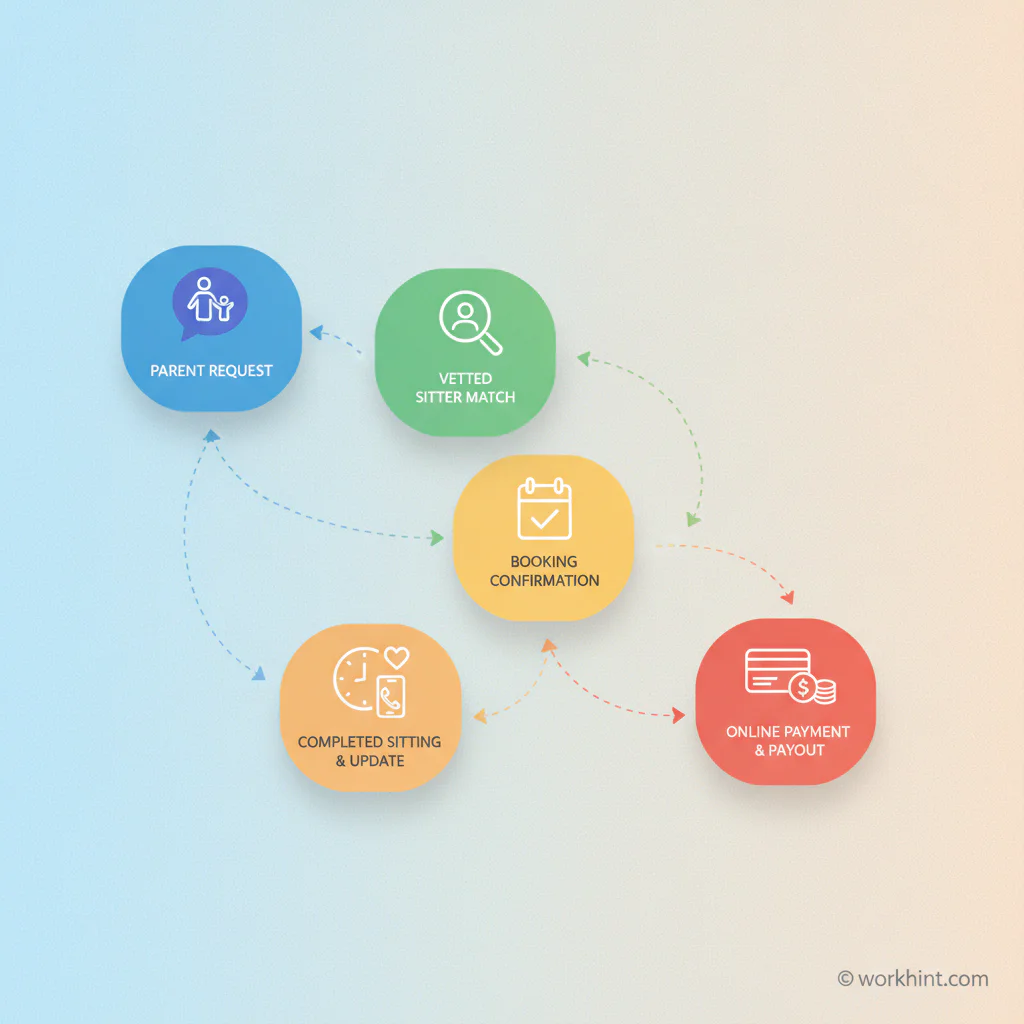
Workhint can give the babysitting agency a branded operating platform before you invest in custom software or a traditional admin team. Parents can submit care requests through your branded portal, share child and household notes, choose preferred times, approve quotes, and pay online.
Independent sitters can join the network, complete onboarding, upload documents, add availability, accept assignments, and receive payout records. The owner can review requests, match sitters, confirm bookings, send reminders, track completion, collect feedback, and manage reporting from one system.
That matters because a babysitting agency is an operations business. The hard part is not creating a website. It is coordinating trust-sensitive work across parents, sitters, schedules, approvals, payments, and follow-up. Workhint becomes the launch foundation for that process while you focus on acquiring families and building a reliable sitter network.
First 7-day launch plan
- Day 1: Choose the first market, parent segment, and care use case. Avoid trying to serve every family need at once.
- Day 2: Set up the branded Workhint platform basics: parent request form, sitter profile, booking status, and internal dashboard.
- Day 3: Define pricing, screening steps, parent terms, cancellation rules, payment flow, and sitter payout process.
- Day 4: Recruit the first independent sitters and start reference checks, background checks, and availability collection.
- Day 5: Contact parent groups, local businesses, schools, event venues, and referral partners with one clear offer.
- Day 6: Route early requests through the platform, test matching, confirm response times, and fix unclear steps.
- Day 7: Review demand, sitter readiness, pricing, parent feedback, and compliance gaps before spending more.
Final launch checklist
- Choose one local launch market and one clear babysitting use case
- Register the business and check city, county, and state childcare rules
- Speak with an insurance provider about liability, bonding, and worker classification risk
- Create parent terms, sitter expectations, cancellation rules, and safety standards
- Build the branded Workhint request, matching, scheduling, payment, and payout flow
- Recruit and screen the first independent sitters
- Run background checks, reference checks, and document collection before listing providers
- Contact parents and partners before investing in offices, staff, or custom software
- Validate paid demand before expanding into more neighborhoods or service lines
FAQ
How much does it cost to start a babysitting agency?
A lean launch may start with a few hundred to a few thousand dollars for registration, insurance guidance, contracts, background checks, branding, and local marketing. Costs rise if you hire staff, lease space, or build custom software too early.
Do I need a license to start a babysitting agency?
It depends on your location and operating model. A referral or booking platform may be treated differently from a licensed childcare facility. Check state and local rules before accepting bookings.
Can a babysitting agency use independent contractors?
Many marketplace-style service businesses work with independent providers, but worker classification rules matter. Get local legal and tax guidance, define the operating model clearly, and avoid treating contractors like employees if they are not employees.
What checks should sitters complete?
Common steps include identity verification, criminal background checks, reference checks, childcare experience review, CPR or first aid training review, interview notes, and agreement to written service standards.
How do babysitting agencies make money?
Common models include booking fees, hourly margins, parent memberships, event childcare packages, or placement fees for recurring nanny-style arrangements.
How do I get the first parents to book?
Start with parent groups, schools, neighborhoods, hotels, event venues, coworking spaces, and referrals. Lead with a narrow promise, such as vetted sitters for weekend nights or backup childcare for working parents.
Conclusion
A babysitting agency does not need to begin as a large childcare company. It can start as a focused local platform with vetted independent sitters, clear parent requests, safe operating rules, and a simple process for booking and payment.
Launch small, validate demand, protect trust, and build the operational foundation before adding overhead. If parents book and sitters want to stay active, you can expand the network with far more confidence.
Leave a Reply