


A travel policy is useful only when employees can follow it before they book, spend, or submit an expense.
A company travel policy template gives employees, managers, finance, and operations one clear standard for business trips. It defines who can travel, what needs approval, how bookings should happen, what expenses are covered, which receipts are required, and how exceptions are handled.
This resource is a practical starting point for small and mid-sized teams. It is not tax, employment, immigration, safety, or legal advice. Travel rules vary by country, state, industry, worker type, and tax treatment, so have finance, HR, and counsel review the final policy before rollout.
What’s included
- A copy-ready company travel policy template.
- A section-by-section guide for travel approval, booking, lodging, meals, ground transportation, safety, and reimbursement.
- A simple approval matrix for routine, high-cost, international, and exception travel.
- Common mistakes that create overspending, tax confusion, or employee frustration.
- A workflow for turning the policy into an operational process.
How to use this company travel policy template
Use this template when employees travel for customer meetings, conferences, site visits, training, recruiting, sales trips, vendor work, executive meetings, or field operations. Start by deciding what the policy should control: cost, traveler safety, approval discipline, tax documentation, booking consistency, or all of the above.
Ground the policy in real operating rules. The IRS explains business travel, meals, and recordkeeping in Publication 463, and employers should keep enough documentation to support business purpose, dates, places, and amounts. For U.S. government per diem benchmarks, the GSA per diem rate tool is a useful reference point even when a private employer sets its own limits.
For international travel, add a safety review. The U.S. Department of State publishes travel advisories by destination, and the CDC maintains travel health notices. These sources do not replace your company’s risk process, but they help managers avoid approving travel without checking current conditions.
Company travel policy template
Copy the structure below into your handbook, HR system, finance policy, or operating workflow and adapt it to your business.
| Policy section | What to define | Owner |
|---|---|---|
| Purpose and scope | Who the policy applies to, which trips are covered, and whether contractors or consultants are included. | HR and finance |
| Pre-trip approval | Required approvals, budget thresholds, business purpose, estimated cost, and exception process. | Manager |
| Booking rules | Approved booking tool, flight class, hotel limits, advance booking expectations, and preferred vendors. | Operations or travel admin |
| Covered expenses | Airfare, lodging, ground transport, meals, mileage, parking, visas, conference fees, and business calls. | Finance |
| Non-covered expenses | Personal upgrades, family travel, entertainment outside policy, fines, lost items, and unsupported purchases. | Finance |
| Receipts and records | Receipt threshold, required documentation, business purpose, submission deadline, and missing receipt process. | Employee and finance |
| Safety and duty of care | Emergency contact, destination risk review, insurance, medical needs, international travel checks, and escalation. | HR and operations |
| Reimbursement workflow | Expense report submission, manager review, finance approval, payment timeline, and dispute process. | Finance |
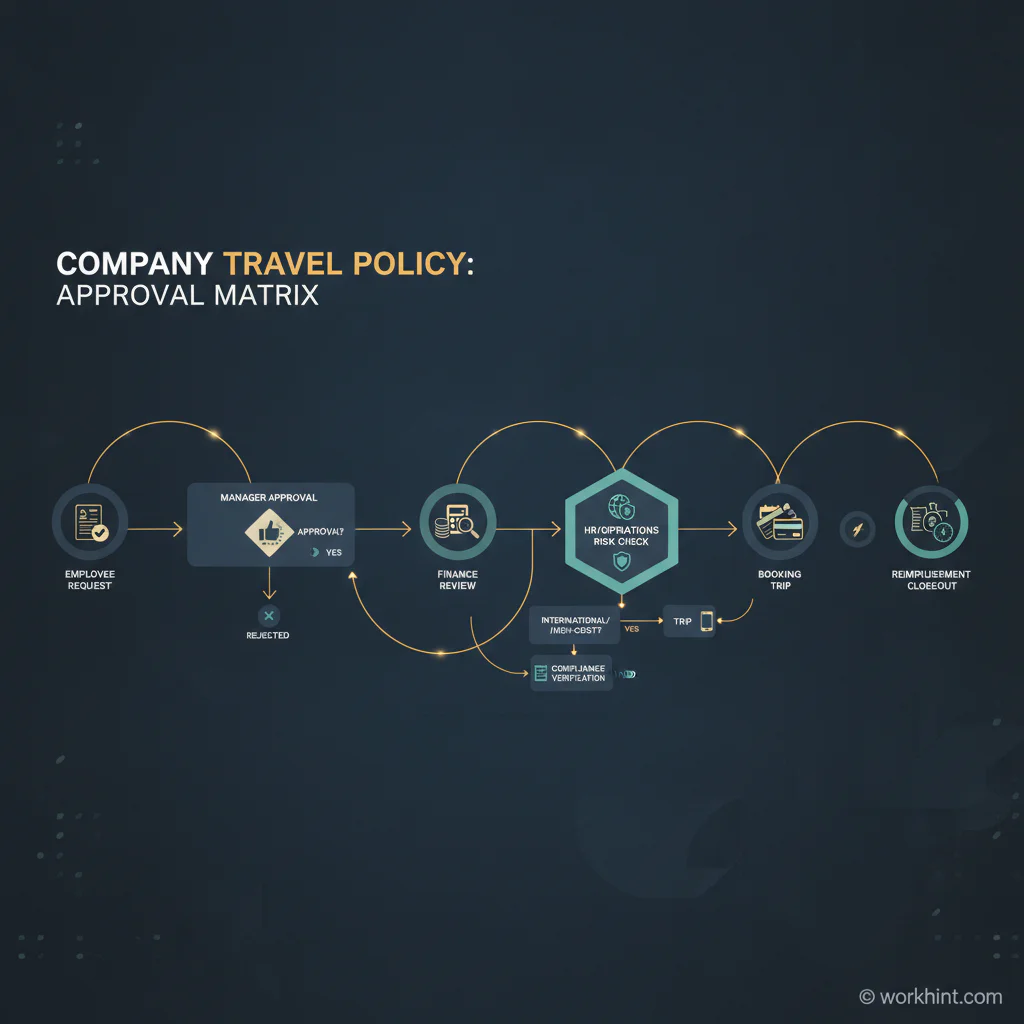
Approval matrix
A policy works better when employees know the approval path before they spend money. Use this matrix as a baseline.
| Trip type | Required approval | Notes |
|---|---|---|
| Routine domestic travel within budget | Direct manager | Employee submits business purpose, dates, destination, and estimated cost. |
| Travel above budget threshold | Manager and finance | Finance confirms budget, category, and any cost-control requirements. |
| International travel | Manager, finance, HR, and operations | Review advisories, visas, insurance, data security, medical needs, and emergency contacts. |
| Out-of-policy booking | Department lead and finance | Document why the exception is necessary before booking when possible. |
| Customer-billable travel | Project owner and finance | Confirm contract terms, client approval, documentation, and invoice timing. |
Example policy language
Purpose. This policy explains how employees request, book, pay for, and report company-approved business travel. The goal is to support necessary business trips while controlling cost, protecting travelers, and keeping accurate records.
Approval. All business travel must be approved before booking. The travel request must include the business purpose, destination, dates, estimated cost, customer or project reference when relevant, and any known risks or exceptions.
Booking. Employees should use the company’s approved booking process unless an exception is approved. Travelers should choose reasonable fares, standard lodging, and practical transportation based on business need, safety, availability, and total trip cost.
Expenses. Covered expenses may include airfare, lodging, ground transportation, reasonable meals, parking, mileage, business calls, visa fees, conference fees, and approved customer or project expenses. Personal costs, fines, family travel, personal upgrades, and unsupported purchases are not reimbursable unless explicitly approved.
Receipts. Employees must submit receipts, business purpose, trip dates, destination, and any required project or customer code within the stated deadline. Missing receipts require a written explanation and may delay reimbursement.
Common mistakes
- Publishing limits without an approval workflow. People need to know who decides, not just what the rule says.
- Ignoring international risk. International trips may involve safety, immigration, tax, health, data security, and insurance issues.
- Using vague words like reasonable. Give examples, thresholds, and exception paths where possible.
- Separating travel requests from reimbursement records. Finance should be able to connect approval, booking, receipt, and payment.
- Forgetting customer-billable travel. Client contracts may require pre-approval, specific receipt details, or invoice timing.
Where Workhint fits
Workhint helps organizations turn a company travel policy template into a live travel workflow. A team can digitize the request form, route approvals by trip type, collect budget estimates, attach advisories or customer approvals, assign finance review, track receipts, and keep reimbursement status visible.
That is useful when travel touches several teams: the employee needs approval, the manager needs budget context, finance needs documentation, HR may need safety checks, operations may need customer or site details, and leadership may need spend reporting. Workhint keeps the policy connected to the actual work instead of leaving it as a static handbook page.
FAQ
What should a company travel policy include?
It should include scope, approval rules, booking guidelines, covered and non-covered expenses, receipt requirements, safety checks, reimbursement timing, exception handling, and ownership for each step.
Should a travel policy include per diem rates?
It can. Some companies use per diem rates, some reimburse actual reasonable expenses, and some use category limits. Finance should decide the approach and document how it affects tax and reimbursement handling.
Who should approve business travel?
Routine travel may only need a direct manager. High-cost, international, customer-billable, or out-of-policy travel should usually include finance, HR, operations, or a department leader depending on risk.
How often should the policy be updated?
Review it at least annually and whenever travel volume, remote work patterns, preferred vendors, tax rules, safety conditions, or reimbursement tools change.
Can contractors use the same travel policy?
Only if the contract and operating model support it. Contractor travel should be handled carefully so payment terms, approvals, reimbursable costs, and documentation match the agreement and do not blur worker classification boundaries.
Conclusion
A company travel policy template should make business travel easier to approve, book, document, and reimburse. Keep the policy practical: define scope, set approval rules, name covered expenses, require records, handle exceptions, and connect every trip to a clear business purpose. The strongest policy is not the longest one. It is the one employees can follow before the trip starts and finance can verify after the trip ends.
Leave a Reply