


You can validate mobile bike repair demand before buying a van, hiring staff, or opening a shop.
A mobile bike repair business is a practical service startup because customers already understand the problem: bikes break, tune-ups get delayed, and taking a bike to a shop is inconvenient. The opportunity is to bring qualified mechanics to homes, offices, apartment buildings, campuses, events, and cycling communities.
The best way to start is not to copy a traditional bike shop. Start with a branded service platform, a tight first offer, and a small network of independent bike mechanics. That lets you test demand, take bookings, schedule work, collect payments, and coordinate providers before investing heavily in a vehicle, inventory, or employees.
What’s in this article?
- Why a mobile bike repair business works
- What you need before launch
- How to price mobile bike repair services
- How to get your first customers
- How Workhint helps launch the operating platform
- A first 7-day launch plan
- A final checklist and FAQ
Why this business works
Mobile bike repair works because it sells convenience, safety, and saved time. A rider with a flat tire, noisy brake, skipping gear, loose headset, or overdue tune-up may not want to load a bike into a car, wait days for a shop appointment, or lose a weekend ride.
There is also a clear provider-network model. Many skilled mechanics want flexible work, side income, seasonal jobs, or local repair appointments without running a full shop. Your job is to create the branded customer experience, recruit reliable mechanics, define service standards, and route demand to the right provider.
Industry content also supports the demand signal. The National Bicycle Dealers Association has described mobile bike shops as a growing model with independent operators, retailer-run vans, and franchises serving repair, fulfillment, corporate service, and event work. Startup guides commonly cover tools, licensing, insurance, vehicle setup, service menus, and customer acquisition, but they often under-explain the operational system that connects customer requests to mechanics, schedules, payments, and follow-up.
What you need to launch
Start with the smallest version that can deliver paid appointments safely. You do not need a retail storefront. You may not need a dedicated van on day one if independent providers can travel with their own tools and you keep the first services simple.
Your first offer should focus on high-demand, low-complexity services: safety checks, flat repair, basic tune-ups, brake adjustments, gear adjustments, chain replacement, accessory installs, and assembly. Avoid deep suspension work, frame repair, complicated e-bike diagnostics, or specialty services until you have the right mechanic and parts process.
| Launch item | Lean approach | Estimated budget |
|---|---|---|
| Branded service platform | Customer request form, booking flow, mechanic routing, payments, and reviews | $100 to $500 |
| Business setup | LLC or local registration, business bank account, basic bookkeeping | $150 to $800 |
| Insurance | General liability and any required commercial auto coverage for operators | $500 to $2,000+ |
| Provider network | Recruit 3 to 5 independent bike mechanics and verify skills, tools, and availability | $0 to $300 |
| Essential supplies | Only common tubes, cables, brake pads, lubricant, and small replacement parts if you stock inventory | $200 to $1,000 |
| Local marketing | Google Business Profile, landing page, flyers, partnerships, community posts, and referral offers | $100 to $750 |
Licensing and insurance vary by location. Check local business license rules, sales tax requirements, mobile service permits, waste disposal rules, and insurance needs before taking paid work. If mechanics handle customer property or travel to private locations, documentation and liability coverage matter.
How to price it
Mobile bike repair pricing should combine a service menu with a travel or minimum appointment rule. The customer is not only buying repair labor. They are buying an appointment at their location.
Use simple packages first. Keep parts separate unless you know the part cost and margin. If a job requires diagnostics, quote a paid inspection that can be credited toward the approved repair.
| Service | Example price | Best use |
|---|---|---|
| Mobile visit fee | $25 to $75 | Covers travel, routing, and minimum appointment value |
| Safety check | $35 to $60 | Entry offer for casual riders and families |
| Flat repair | $30 to $60 plus tube | Fast urgent service with high repeat potential |
| Basic tune-up | $90 to $150 | Core recurring service before riding season |
| Premium tune-up | $175 to $250+ | Higher-value service for frequent riders and higher-end bikes |
| Apartment or office pop-up | $300 to $1,000+ per event | Batch multiple bikes in one location and reduce travel time |
The strongest early model is not one-off repairs scattered across a huge service area. It is clustered demand: apartment buildings, coworking offices, corporate wellness days, bike clubs, schools, campuses, neighborhood associations, cycling events, and residential communities.
How to get first customers
Start by selling convenience to places where bikes already concentrate. Ask property managers, employers, gyms, universities, bike clubs, and local events if they want a scheduled mobile bike repair day. A pop-up lets one mechanic complete several jobs in one stop, which improves margin and reduces travel time.
For direct customers, create a simple offer: book a mobile safety check, flat repair, or tune-up online. Use local SEO, Google Business Profile, neighborhood groups, cycling communities, and referral cards. Early proof matters more than looking large. Your goal is to confirm that people will book, pay, and rebook.
Ask every first customer three questions: what bike problem made them book, what almost stopped them from booking, and where they would expect to find this service. Those answers shape your service menu, pricing, and marketing faster than generic market research.
How Workhint helps launch it
Workhint helps turn the mobile bike repair idea into a branded operating platform before you invest in heavy infrastructure. Instead of stitching together forms, calendars, payment links, spreadsheets, mechanic texts, and customer follow-ups, you can create one system for the business.
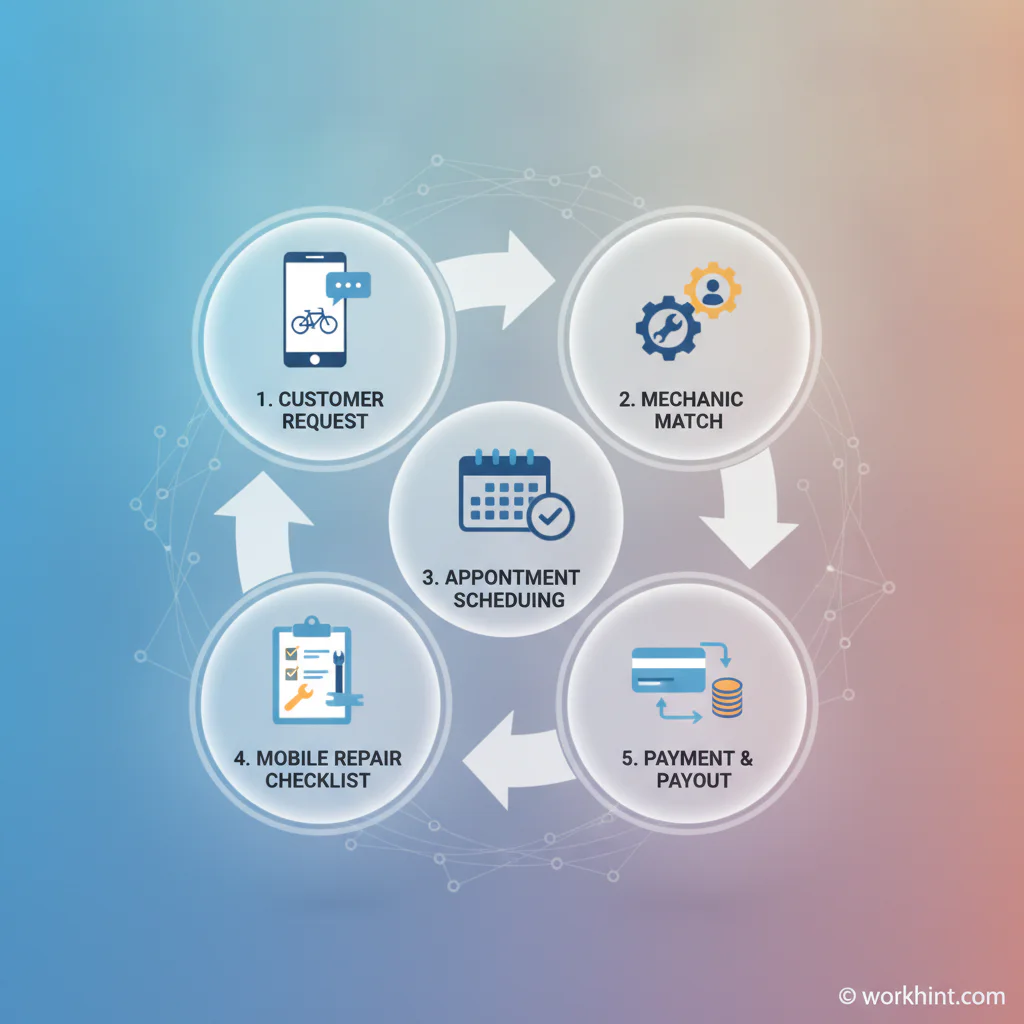
A customer visits your branded portal, chooses a service, shares bike details, uploads photos if needed, enters a location, and requests appointment windows. Workhint routes the request to available independent mechanics based on service area, skills, schedule, and job type. The mechanic accepts the job, the customer receives confirmation, and the appointment moves into the operations dashboard.
During the job, the mechanic can use mobile checklists for safety inspection, work completed, parts used, photos, and customer notes. If the repair needs approval, Workhint can route the quote to the customer before work continues. After completion, the platform can collect payment, trigger the provider payout, request a review, and keep the service history attached to that customer and bike.
This matters because the business is really a coordination business. The repair skill is essential, but growth depends on routing requests, protecting quality, managing provider availability, handling approvals, taking payments, and keeping customers confident. Workhint gives you that foundation while you focus on demand, provider quality, and local partnerships.
First 7-day launch plan
- Day 1: Choose one launch market, define your first three services, and decide which customers you will target first.
- Day 2: Set up the branded Workhint platform basics: customer intake, service menu, provider roles, and booking fields.
- Day 3: Configure quote approval, scheduling, payment, provider payout, service checklist, and customer review flows.
- Day 4: Recruit 3 to 5 independent bike mechanics. Confirm skills, tools, insurance expectations, service area, and availability.
- Day 5: Contact property managers, employers, bike clubs, gyms, campuses, and local cycling groups with a simple pop-up offer.
- Day 6: Follow up, book the first requests, and route every inquiry through the platform instead of managing jobs by text.
- Day 7: Review booked demand, provider readiness, pricing, travel time, parts issues, and customer objections before spending more.
Final launch checklist
- Pick the launch city or neighborhood.
- Create a simple service menu and define what is out of scope.
- Check local registration, tax, permit, and insurance requirements.
- Build the branded customer portal in Workhint.
- Set up intake, scheduling, quote approval, payment, and provider payout flows.
- Recruit and qualify independent mechanics.
- Create the service checklist and quality standards.
- Launch a Google Business Profile and simple local landing page.
- Pitch apartment buildings, offices, campuses, bike clubs, and local events.
- Validate demand before buying a dedicated van, carrying large inventory, or hiring employees.
FAQ
How much does it cost to start a mobile bike repair business?
A lean launch can start with a few hundred to a few thousand dollars if you use a branded platform, recruit independent mechanics, and avoid buying a dedicated vehicle or large inventory upfront. Costs rise when you buy a van, specialty tools, insurance, inventory, and paid advertising.
Do I need to be a bike mechanic myself?
It helps, but it is not always required if you are building a provider-network business. You still need to understand service quality, customer expectations, safety, pricing, and mechanic qualifications. If you are not the mechanic, recruit experienced providers first and keep the first offer narrow.
Do mobile bike repair businesses need licenses?
Usually you need basic business registration, and some locations may require local permits, sales tax setup, or rules for mobile operations. Requirements vary by city, county, and state, so verify locally before accepting paid jobs.
What insurance does a mobile bike repair business need?
Start by researching general liability insurance, coverage for customer property, and commercial auto requirements if vehicles are used for the business. If you work with independent providers, define insurance expectations in the provider agreement.
What services should I offer first?
Start with safety checks, flat repair, basic tune-ups, brake adjustments, gear adjustments, chain replacement, assembly, and accessory installs. Add advanced repairs only when you have the right mechanic, tools, parts process, and liability coverage.
How do I find the first customers?
Target clustered demand. Apartment buildings, offices, campuses, schools, gyms, cycling clubs, and local events are better starting points than driving across town for one small repair at a time.
Can I run this business with independent contractors?
Yes, but structure it carefully. Independent providers should control their own tools, schedule, and work methods where appropriate, and you should get legal guidance on contractor classification, agreements, insurance, and payout rules.
Conclusion
A mobile bike repair business is attractive because it can start small, validate demand quickly, and grow through a network of skilled independent mechanics. The key is to avoid building like a traditional shop too early.
Start with a branded platform, a simple service menu, a qualified provider network, and a clear process for requests, scheduling, approvals, payments, and follow-up. Once customers are booking and mechanics can fulfill reliably, you can decide whether owned vehicles, more inventory, pop-up events, or additional cities are worth the investment.
Leave a Reply