


Property preservation can start as a lean vendor network before you own trucks, hire crews, or chase every service line.
How to start a property preservation business with no staff comes down to coordinating reliable field work for vacant, foreclosed, inherited, or investor-owned properties before you build a traditional crew-heavy operation.
The opportunity is practical. Banks, asset managers, real estate investors, landlords, and property managers need vacant properties secured, inspected, documented, and kept from falling into worse condition.
A platform-first launch reduces risk. Instead of buying a truck, leasing storage, and hiring employees before the first work order, you can define a narrow first offer, recruit vetted independent field vendors, and use a branded operating platform to manage requests, approvals, assignments, photos, payments, and vendor payouts.
What’s in this article?
- Why property preservation works as a service business
- What you need to launch without staff
- How to price common preservation work
- How to get first clients and vendor partners
- How Workhint can power the operating platform
- A 7-day launch plan, checklist, and FAQ
Why this business works
Property preservation works because neglected properties create real risk. A vacant home can attract damage, code violations, weather problems, unpaid utilities, security issues, and complaints from neighbors. Owners need someone who can inspect the property, document conditions, complete approved work, and report back clearly.
The best entry point is not trying to offer every possible service on day one. Start with a simple preservation package: exterior condition checks, lock changes through qualified vendors, debris photos, yard maintenance coordination, basic cleaning coordination, winterization referral where needed, and recurring inspection reports.
Customers buy speed, coverage, and documentation. Vendors join because you send organized work orders, clear scopes, photo requirements, and reliable payout rules.
This makes the business a strong no-staff launch. You operate as the brand and coordinator while independent contractors, cleaners, landscapers, locksmiths, and specialty providers complete field work within your standards.
What you need to launch
Start with compliance, insurance, vendor standards, and the operating process. Requirements vary by state, city, client, and service type, so verify licensing before selling regulated tasks.
Most serious clients expect a business entity, general liability insurance, vendor agreements, photo documentation, work order tracking, and professional status updates.
| Typical early budget | Lean launch range | Why it matters |
|---|---|---|
| Business registration and local license check | $50-$500 | Confirms what services you can legally sell in your market. |
| General liability and E&O review | $150-$300/month | Many asset managers and vendor networks require coverage. |
| Branded platform, domain, intake, payments | $100-$1,000+ | Lets clients submit work orders and track job status. |
| Vendor onboarding and agreements | $0-$500 | Creates standards before independent providers enter the field. |
| Photo checklist and inspection templates | $0-$200 | Protects quality and gives clients evidence of completed work. |
| Launch outreach and local marketing | $100-$750 | Supports outreach to investors, property managers, and agents. |
Avoid buying trucks, trailers, storage, or heavy tools until customer volume proves which work lines are worth owning.
How to price it
Property preservation pricing depends on property condition, local labor cost, scope, urgency, photos required, access complexity, disposal fees, and client rules. Start with services that are easy to define, then quote heavier work after inspection.
Use fixed prices for standard work and custom quotes for variable jobs. Build margin into every job so coordination and quality control are paid.
| Service | Example pricing model | Best use |
|---|---|---|
| Initial exterior inspection | $50-$125 per property | Condition photos, access notes, visible risks, and report. |
| Recurring vacant property check | $75-$200/month | Monthly or biweekly documentation for owners and managers. |
| Lawn care coordination | $75-$250 per visit | Routine exterior maintenance with before-and-after photos. |
| Lock change coordination | $100-$300+ per order | Completed by qualified locksmith or approved vendor. |
| Debris removal or cleanout | Custom quote | Requires photos, disposal estimate, labor scope, and approval. |
| Winterization or repair referral | Custom quote | Use licensed specialists where required. |
Your first pricing goal is proving clients will send work orders, approve scopes, accept documentation, and pay reliably.
How to get first customers
Start with buyers who already feel the pain of remote property coordination: landlords, investors, property managers, probate attorneys, agents with vacant listings, small banks, and portfolio owners.
Offer a clear first promise: a documented vacant property inspection with photos, risk notes, next steps, and optional vendor coordination.
Use direct outreach, investor groups, Google Business Profile, LinkedIn, referral partners, and property manager lists. Show sample reports, turnaround time, insurance status, and approval steps.
How Workhint helps launch it
Workhint can become the branded operating platform for a property preservation business before you build custom software or hire a back office.
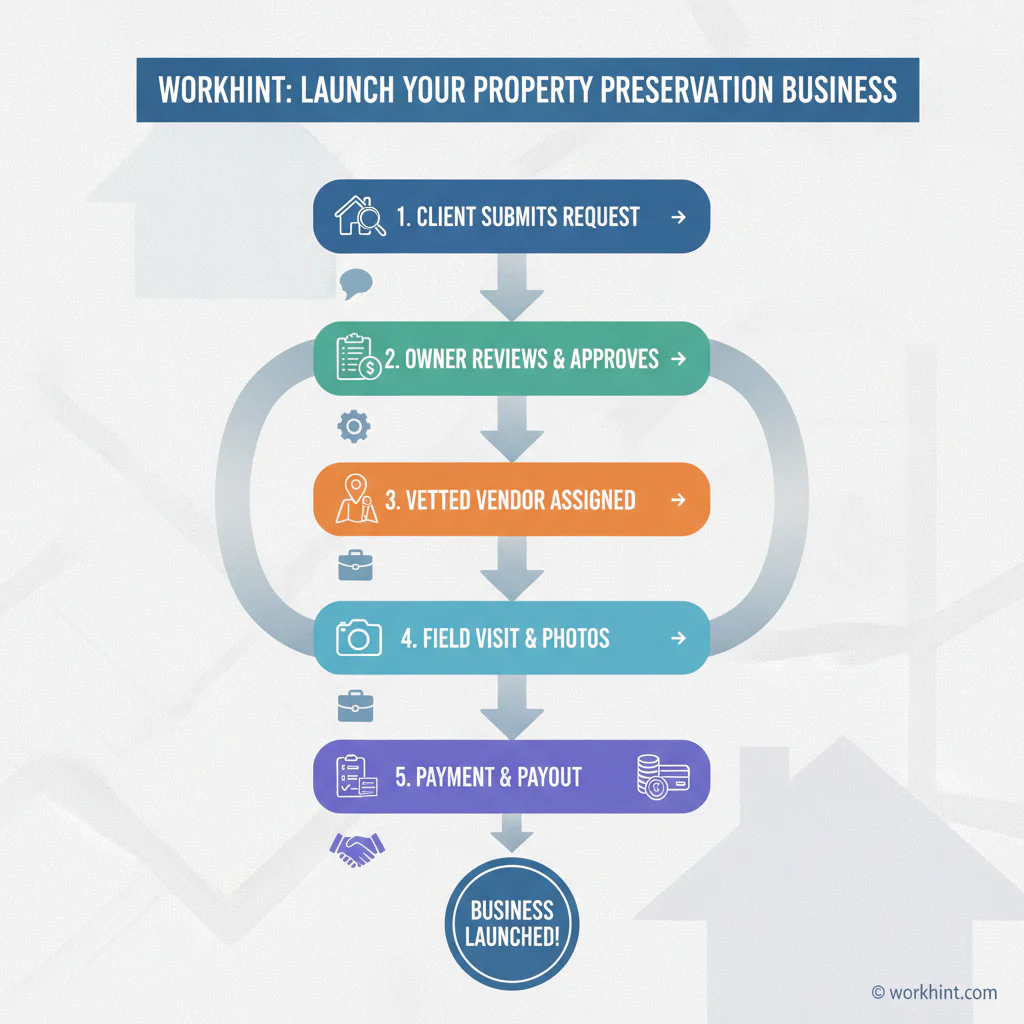
A client submits a preservation request through your branded portal with the property address, access notes, urgency, photos, and requested service. Workhint turns that request into a structured job record for inspection, standard service, or custom quote.
Independent vendors can join your private network with service areas, insurance documents, licenses, availability, payout terms, and standards. When a job is approved, Workhint can assign the right provider, send the checklist, collect photos, track status, manage approval, issue invoices, collect payment, and handle vendor payout.
This makes a no-staff launch credible. Clients see a professional platform. Vendors see organized work. You see every property, request, approval, document, invoice, and payout in one place.
First 7-day launch plan
Day 1: Choose one launch market, one customer type, and one narrow first offer, such as vacant property inspections plus approved vendor coordination.
Day 2: Set up the branded Workhint platform basics: request form, client dashboard, property profile, vendor profile, and inspection checklist.
Day 3: Build pricing rules, quote approval, photo requirements, payment collection, vendor payout flow, and status update templates.
Day 4: Recruit the first independent vendors: cleaners, landscapers, locksmiths, debris haulers, and licensed specialists where needed.
Day 5: Contact local property managers, investors, agents, probate attorneys, banks, and landlords with a sample inspection report.
Day 6: Route first requests through the platform, test vendor assignment, verify photo documentation, and tighten the checklist.
Day 7: Review demand, pricing, vendor reliability, scope accuracy, and feedback before investing in equipment or staff.
Final launch checklist
- Choose the first property type and service area.
- Register the business and check local licensing rules.
- Confirm insurance requirements for the work you will sell.
- Create the branded Workhint request portal and client dashboard.
- Build inspection, photo, quote, approval, invoice, and payout flows.
- Recruit independent vendors with clear standards and documents.
- Create sample reports for outreach.
- Contact property managers, investors, agents, landlords, and banks.
- Validate demand before buying trucks, trailers, storage, or equipment.
FAQ
How much does it cost to start a property preservation business?
A lean launch can often start with business registration, insurance, a branded platform, vendor onboarding, templates, and local outreach. Heavy equipment, trucks, trailers, and storage should wait until demand proves which services are worth owning.
Do I need a license for property preservation?
It depends on the state, city, client, and work type. Basic inspections may be simple, while locksmith work, repairs, winterization, electrical, plumbing, and contractor tasks may require licensed providers.
Can I start a property preservation business with no staff?
Yes, if you start as the customer-facing coordinator and build a vetted network of independent providers. The key is strong vendor onboarding, clear work orders, photo proof, approvals, payments, and quality control.
Who hires property preservation companies?
Common buyers include banks, asset managers, property managers, real estate investors, landlords, agents with vacant listings, probate attorneys, and owners managing properties from a distance.
What services should I offer first?
Start with documented inspections, recurring vacant property checks, yard care coordination, simple cleaning coordination, and quote-based vendor referrals. Add specialized work only when qualified providers are available.
How do property preservation businesses make money?
They charge clients for inspections, recurring checks, maintenance coordination, vendor-managed services, cleanouts, securing work, and approved repairs. Margin comes from organized coordination and reliable field execution.
What should I avoid buying early?
Avoid buying trucks, trailers, expensive tools, storage units, and bulk supplies before you know which clients, neighborhoods, and job types create repeatable revenue.
Conclusion
A property preservation business does not have to begin as a traditional crew, fleet, and equipment operation. The smarter first version is a branded platform, a narrow offer, a vetted vendor network, and a disciplined way to document every property.
Use Workhint to create the operating foundation first. Then use real demand to decide where to add owned assets, deeper vendor capacity, and additional service lines.
Leave a Reply