


A CPR training business can start as a lean instructor network before you rent classrooms, hire employees, or buy too much gear.
How to start a CPR training business is a practical question because demand is tied to compliance, workplace safety, childcare, fitness, healthcare, and community needs. Many organizations need CPR, AED, first aid, or basic life support training, but do not want to coordinate instructors, schedules, certificates, reminders, and payments.
The faster path is not to open a training center first. Start with a branded platform, a clear first offer, and a small network of certified independent instructors. Use the first few bookings to validate demand before investing in dedicated space or a large equipment library.
What’s in this article?
- Why this business works
- What you need to launch
- Pricing, first customers, Workhint, and the 7-day plan
Why this business works
CPR training is attractive because customers often buy for a specific reason: compliance, workplace readiness, certification renewal, parent safety, school requirements, camp staffing, fitness rules, or emergency preparation. That creates repeat demand when certifications expire or new people join an organization.
Search results show clear intent around becoming an independent CPR instructor, startup costs, legal requirements, training provider approval, equipment, and marketing. The American Red Cross describes independent CPR and first aid instructors as certified providers who can teach lifesaving courses.
The gap is operations. Most startup advice explains how to become certified, but spends less time on requests, instructor availability, class scheduling, student rosters, renewals, payment, and payouts.
Customers buy convenience and trust. Instructors join because the platform brings them classes and handles admin. The owner makes money by packaging demand, coordinating certified instructors, and keeping the customer experience consistent.
What you need to launch
You need enough structure to sell safely and deliver professionally. You do not need a lease, full-time staff, or a warehouse of equipment on day one.
Start with a business entity, insurance, a recognized training-provider path, a clear policy for instructor credentials, and a simple first offer. Requirements vary by course type, location, and provider, so verify the rules before advertising certification-bearing classes.
| Launch item | Lean approach | Estimated early budget |
|---|---|---|
| Business setup | Register the business, obtain tax setup, define refund and class policies | $100 to $600 |
| Insurance | General liability and professional liability as appropriate | $300 to $1,500 |
| Training credentials | Owner certification plus approved instructor or provider route | $500 to $3,500 |
| Equipment | Borrow, rent, or buy only enough manikins, AED trainers, masks, and supplies for first classes | $500 to $3,000 |
| Platform and brand | Branded intake, booking, payments, instructor onboarding, and class management | $300 to $1,500 |
| Customer acquisition | Local outreach, website, Google Business Profile, partnerships, and small paid tests | $200 to $1,500 |
The leanest model is mobile and partner-based. Hold classes at customer locations, community rooms, schools, gyms, or rented classrooms only when a booking justifies it. Add owned equipment after class volume proves which formats sell.
How to price it
CPR training can be priced per student, per private group, per workplace session, or as recurring training for organizations with ongoing certification needs. The right model depends on class size, instructor pay, certification costs, travel, materials, and room expenses.
| Offer | Best customer | Example pricing logic |
|---|---|---|
| Open enrollment class | Individuals, parents, job seekers | Charge per student and set a minimum enrollment before confirming the room |
| Private workplace class | Offices, gyms, warehouses, schools | Charge a session minimum plus per-student certification fees |
| Childcare and camp package | Daycares, camps, youth programs | Bundle CPR, first aid, roster tracking, and renewal reminders |
| Recurring compliance plan | Multi-location employers | Monthly or quarterly billing for scheduled classes and certification tracking |
A simple starting offer could be a private onsite CPR and first-aid class for small teams, with a minimum fee that covers instructor pay, travel, materials, and platform costs. Sell coordination, reliable instructors, documentation, and renewal reminders.
How to get first customers
Begin with customers that already have a reason to train people: childcare centers, gyms, youth sports programs, senior care providers, warehouses, schools, churches, camps, dental offices, and small medical practices.
Your first outreach should be direct. Offer a simple onsite class, ask when their next renewal cycle is, and make booking easy through your branded platform. Partnerships with insurance agents, HR consultants, safety consultants, local chambers, gyms, and community centers can also work.
The goal is to prove that local organizations will request classes, accept your pricing, and trust your instructor network.
How Workhint helps launch it
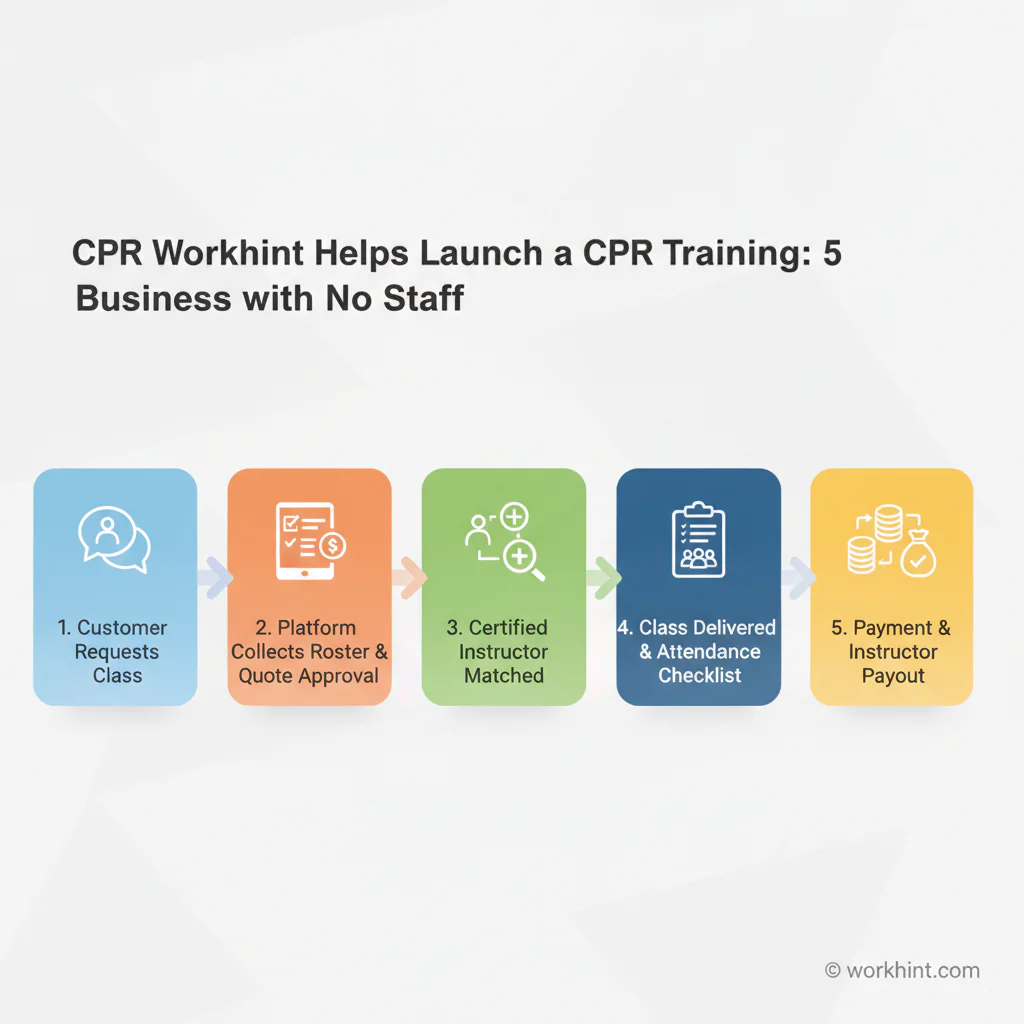
Workhint lets you launch the branded operating platform for the CPR training business before you invest in custom software, full-time admin, or a permanent classroom.
A customer can request CPR, AED, first aid, or workplace safety training through your branded portal. The request captures location, dates, class size, course type, certification needs, and billing details. Inside Workhint, the request becomes an operations record with quoting, instructor matching, scheduling, roster collection, payment, and follow-up tasks attached.
Independent instructors can join your private provider network, upload certifications, set availability, accept assignments, complete class checklists, submit attendance, and trigger payout steps. Customers can approve quotes, pay online, see scheduled classes, receive reminders, and return later when renewals are due.
That matters because a CPR training business is really a coordination business. Workhint gives you the customer portal, instructor onboarding, class workflow, approvals, payments, payouts, and reporting layer in one branded system.
First 7-day launch plan
- Day 1: Choose the first market, course focus, customer type, and launch offer.
- Day 2: Set up the branded Workhint platform with customer request forms and basic class records.
- Day 3: Create quote, booking, roster, payment, instructor assignment, and payout steps.
- Day 4: Recruit the first certified independent instructors or confirm your own instructor path.
- Day 5: Contact 30 local organizations with a clear onsite training offer.
- Day 6: Follow up, route interested customers through the platform, and test pricing.
- Day 7: Review demand, instructor readiness, equipment needs, and class economics before spending more.
Final launch checklist
- Choose a specific CPR training niche and local market.
- Verify instructor, curriculum, certification, insurance, and local business requirements.
- Create a branded customer request and booking experience.
- Build a private network of qualified independent instructors.
- Set class minimums, cancellation rules, travel fees, and payment timing.
- Configure roster collection, class checklists, certificate tracking, and renewal reminders.
- Sell first to organizations with obvious compliance or safety needs.
- Validate demand before leasing space, hiring employees, or buying a large equipment set.
FAQ
How much does it cost to start a CPR training business?
A lean launch can often start in the low thousands if you avoid a permanent classroom and buy only essential equipment. Exact costs depend on credentials, insurance, manikins, AED trainers, materials, local requirements, and marketing.
Do I need to be a certified CPR instructor?
If you personally teach certification-bearing classes, yes. If you operate a platform with independent instructors, you still need a strict process for verifying each instructor’s credentials and authority to teach.
Can I start a CPR training business with no employees?
Yes. A no-staff model can use certified independent instructors, rented or customer-provided locations, and a branded platform for bookings, rosters, payments, assignments, and payouts.
What equipment is essential at the beginning?
Usually the essentials include compliant training manikins, AED trainers, barrier devices, cleaning supplies, course materials, and any provider-required supplies. Start with enough for booked classes, then expand after demand is proven.
Who are the best first customers?
Good early customers include childcare centers, gyms, schools, camps, small healthcare offices, warehouses, churches, community groups, and employers that need recurring safety training.
How do CPR training businesses make money?
They make money through per-student class fees, private group sessions, workplace packages, certification renewals, and recurring training plans for organizations with ongoing staff turnover or compliance needs.
What is the biggest mistake to avoid?
The biggest mistake is investing like a traditional training center before proving demand. Validate bookings, pricing, instructor availability, and customer repeat potential first.
Conclusion
A CPR training business is easier to launch when you treat it as a branded training platform instead of a classroom-first company. Start with the customer request flow, instructor network, scheduling process, payment setup, and renewal system.
Once customers are booking classes and instructors can fulfill them reliably, you can decide whether to add more equipment, course types, dedicated training space, or new cities. Workhint gives you the operating foundation to test quickly and grow only after demand is real.
Leave a Reply