


Client reporting breaks down when reports are built as slides instead of a repeatable operating workflow.
A good client reporting process helps agencies show progress, surface decisions, and keep work moving without turning every update into another status meeting. The report itself matters, but the process behind it matters more. If data arrives late, owners disagree, approvals happen after the client call, or next steps are not assigned, the report becomes a performance artifact instead of a management tool.
For agencies, consultants, creative teams, and other external partners, client reporting is also a trust system. It shows what was done, what changed, what is blocked, what needs approval, and how the next cycle should adjust. That requires a cadence, clear owners, source-of-truth data, review gates, and a way to turn client feedback into assigned work.
What’s in this article?
- A practical client reporting workflow for agency teams and clients
- The reporting cadence, owners, and inputs to define before the first report
- A table for mapping report sections to business decisions
- Common mistakes that make client reporting feel performative
- Where Workhint fits when reporting needs to connect with assignments, approvals, and payments
Why client reporting matters for agency work
Client reporting is often treated as a recap, but the best reports are decision tools. They help a client understand whether the agency is on track, whether spend and effort are producing expected outcomes, and which decisions need attention. For marketing and growth work, official platform reports such as Google Analytics reports or Google Ads conversion tracking can support performance claims, but raw dashboards rarely explain the operational story.
The agency also needs reporting discipline internally. Account managers, strategists, delivery leads, analysts, freelancers, and client stakeholders may all contribute pieces of the update. Without a shared process, reporting becomes a scramble that creates inconsistent numbers, vague next steps, and conversations that drift away from scope.
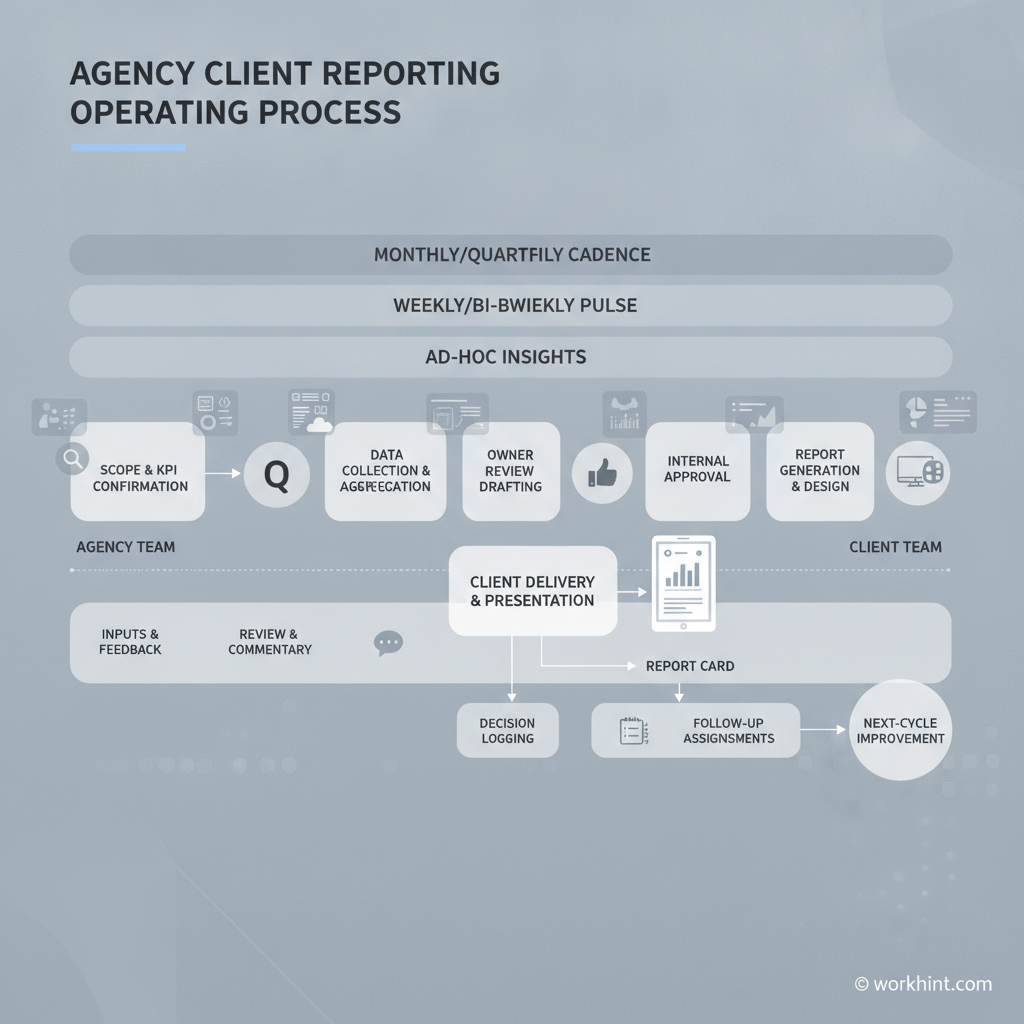
A client reporting workflow agencies can run
The client reporting process should start before the first reporting cycle. Agree on the goals, audience, cadence, and data sources. Then turn reporting into a recurring workflow that moves from data collection to internal review, client delivery, feedback, and follow-up assignments.
- Confirm the reporting purpose. Decide whether the report is for executive visibility, campaign optimization, delivery governance, budget approval, renewal planning, or issue escalation.
- Define the audience. A founder, finance lead, marketing director, and operations manager do not need the same report. Keep the main report useful for the primary decision maker.
- Lock the cadence. Weekly reports are useful for active delivery and blockers. Monthly reports are better for trends, budget, and performance review. Quarterly reports should connect work to strategy and renewal decisions.
- Assign data owners. Every metric, milestone, risk, and next step needs a named owner before the reporting window closes.
- Run an internal review. The agency should check numbers, scope changes, budget movement, delivery status, and client-sensitive commentary before sending.
- Deliver the report with decisions highlighted. Put actions, approvals, and risks above raw detail. Attach supporting detail only where it helps the client decide.
- Log client feedback. Every question, approval, objection, and decision should become a record the delivery team can act on.
- Assign follow-up work. Reporting is incomplete until next steps have owners, due dates, and status tracking.
Map each report section to a decision
A report should not include a metric just because the agency can export it. Each section should answer a business question. Project management research from the Project Management Institute consistently emphasizes the value of disciplined communication and execution practices; client reporting is one place where that discipline becomes visible.
| Report section | What it should answer | Who owns it |
|---|---|---|
| Executive summary | Are we on track, off track, or waiting on a decision? | Account lead |
| Work completed | What shipped, what changed, and what moved since the last report? | Delivery lead |
| Performance metrics | Which outcomes changed, and what explains the movement? | Analyst or strategist |
| Risks and blockers | What could delay results, increase cost, or require client input? | Project owner |
| Approvals needed | What must the client approve before work continues? | Account lead and client owner |
| Next cycle plan | What will happen next, who owns it, and by when? | Agency and client owners |
Build the report around cadence and thresholds
The cadence should match the pace of work. A weekly implementation report may focus on blockers, approvals, and near-term delivery. A monthly performance report should focus on trends, spend, and decisions. A quarterly review should connect the work to goals, contract scope, staffing levels, and renewal direction.
Thresholds are just as important as cadence. Define what counts as on track, at risk, or off track before the report is written. For example, an agency might flag work as at risk when spend pacing is more than 15 percent ahead of plan, a client approval is overdue by five business days, or a dependent deliverable misses two reporting cycles. Reporting should trigger action before the client has to discover the problem.
Common mistakes in agency client reporting
- Reporting too much. Long reports can hide the real decision. Lead with the answer, then show supporting detail.
- Mixing delivery updates and strategic review. Keep routine status separate from larger business conversations unless the same audience needs both.
- Using unclear metric definitions. If a metric changes because of attribution, source changes, or manual cleanup, say so clearly.
- Skipping internal approval. Reports that bypass review can expose incomplete work, inconsistent numbers, or unapproved commitments.
- Failing to assign next steps. A useful report ends with owners, deadlines, and decisions, not just observations.
Where Workhint fits
Workhint fits when client reporting needs to become a live operating workflow instead of a document chase. An agency can use Workhint to structure client intake, define roles, assign reporting inputs, route approvals, track client decisions, and connect follow-up tasks to the next cycle.
For external teams, that matters because the reporting workflow often crosses employees, freelancers, agency partners, client stakeholders, and finance or procurement owners. Workhint can help coordinate who submits updates, who approves the report, which decisions are pending, which work is blocked, and which payment or contract milestones depend on accepted deliverables. The goal is not to make the report more complicated. It is to make the work behind the report easier to trust.
FAQ
How often should agencies send client reports?
Most agency teams should use weekly reporting for active delivery, monthly reporting for performance trends, and quarterly reporting for strategy, budget, and renewal conversations. The right cadence depends on project pace and client decision needs.
What should be included in an agency client report?
Include a short summary, work completed, key metrics, risks, blockers, approvals needed, next steps, owners, and deadlines. Only include detailed dashboards when they support a decision the client needs to make.
Who should approve a client report before it is sent?
The account owner should approve the narrative, the delivery lead should confirm work status, and the metric owner should verify data. For sensitive accounts, finance, legal, or leadership may also need review.
How can agencies make client reporting less manual?
Standardize the reporting cadence, define metric owners, use consistent data sources, automate reminders, and turn approvals and follow-ups into assigned workflow steps. Automation works best after the operating process is clear.
Conclusion
A strong client reporting process gives agencies and clients a shared operating rhythm. It clarifies what happened, what changed, what needs attention, and who owns the next step. The report is only the visible output. The real value comes from the workflow that makes the report accurate, timely, and actionable.
Industry groups such as the Association of National Advertisers continue to focus on agency relationship quality because the agency-client model depends on trust, governance, and clear communication. A practical reporting process supports all three by making performance, delivery, decisions, and accountability easier to see.
Leave a Reply