


Use this creative brief template to turn vague requests into focused creative work your team can actually approve.
A creative brief template gives marketers, founders, agencies, designers, writers, product teams, and operations leaders one shared record before creative work begins. The goal is not to write a long strategy document. The goal is to define the business problem, audience, message, deliverables, constraints, owners, and approval path clearly enough that the team can execute without guessing.
This resource is practical by design. Copy the template into a document, spreadsheet, project workspace, or operating system and adapt it to your campaign, launch, website, sales asset, event, recruiting push, brand project, or client deliverable. Creative standards vary by company and industry, so use this as a starting point, not legal, brand, or compliance advice.
What is included
- A copy-ready creative brief template for business teams.
- A field-by-field guide for objectives, audience, deliverables, timelines, and approvals.
- A simple review workflow from request to final approval.
- An example brief for a B2B campaign.
- Common mistakes that create rework, weak feedback, or stalled approvals.
How to use this creative brief template
Use the brief before production starts, not after the team has already picked concepts. Adobe describes a creative brief as a document that defines project scope and goals, which is the right baseline: the brief should create shared direction before creative execution begins. The American Marketing Association also frames a creative brief template as a way to define goals, audience insights, messaging, and creative direction. Those inputs matter because creative work usually fails in handoffs, not in isolated design decisions.
Assign one brief owner. That person gathers input, resolves conflicts, and confirms the final version. If everyone edits the brief without ownership, the creative team receives a pile of preferences instead of a decision-ready direction.
Creative brief template
Copy the structure below and complete each field in plain business language. Keep the brief short enough that reviewers will actually read it, but specific enough that the creative team can make tradeoffs.
| Field | What to capture | Owner |
|---|---|---|
| Project name | The campaign, asset, launch, client, or initiative name. | Brief owner |
| Business problem | The reason this work exists: demand generation, retention, hiring, conversion, education, trust, or launch support. | Requester |
| Objective | The measurable outcome the creative work should support. | Marketing or project lead |
| Audience | Primary audience, current belief, pain point, buying stage, and decision role. | Marketing or sales |
| Core message | The one idea the audience should remember. | Strategy lead |
| Offer or CTA | The action the audience should take next. | Campaign owner |
| Deliverables | Assets needed, formats, dimensions, channels, versions, and localization needs. | Creative lead |
| Proof points | Customer evidence, product details, claims, stats, screenshots, approvals, or references the team can use. | Requester |
| Brand and legal constraints | Voice, required language, restricted claims, logo rules, compliance notes, and accessibility requirements. | Brand, legal, or compliance |
| Timeline | Draft due date, review dates, final approval date, launch date, and dependency deadlines. | Project manager |
| Approvers | Who reviews strategy, copy, design, legal, budget, and final release. | Brief owner |
| Success metric | The metric used after launch: conversion, qualified leads, activation, attendance, pipeline influence, retention, or engagement. | Campaign owner |
Creative brief workflow
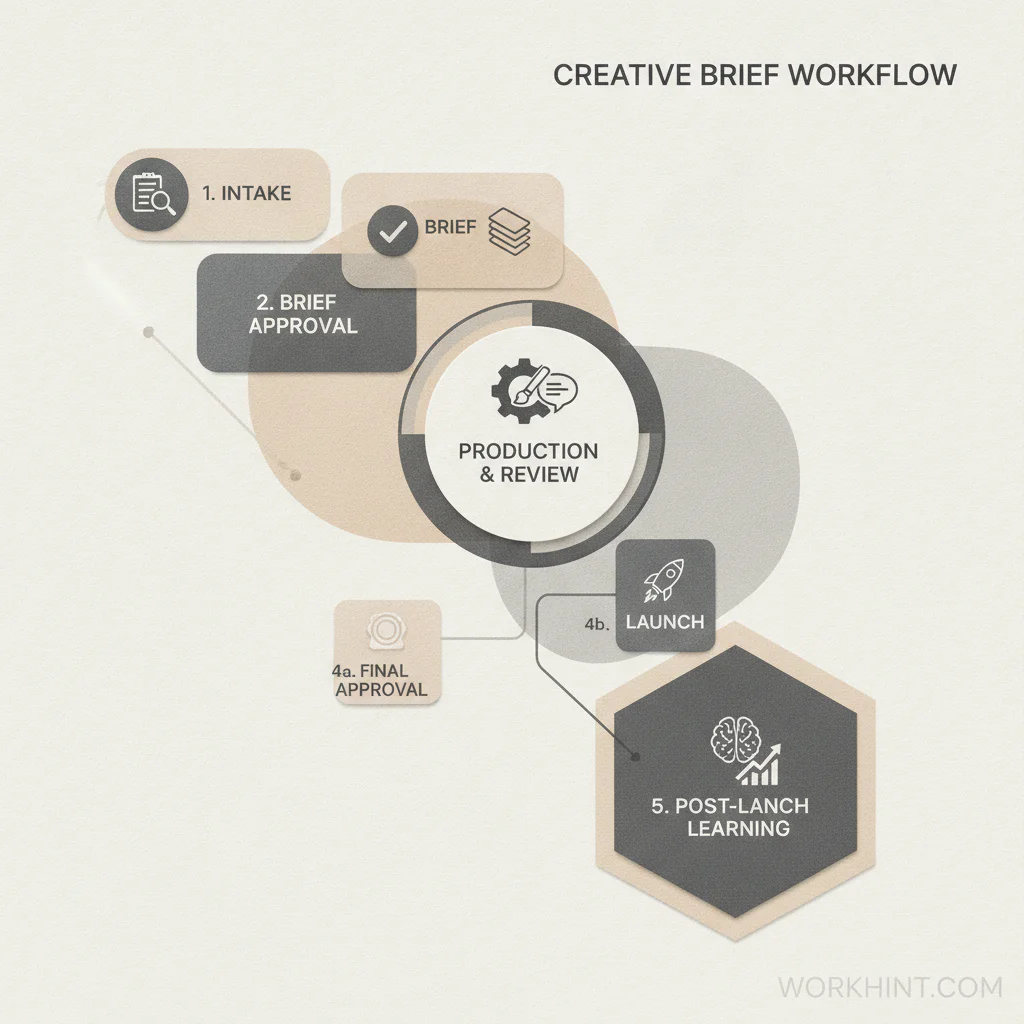
- Receive the request. Capture the initial ask, business reason, deadline, and requested deliverables.
- Clarify the objective. Translate the ask into one primary outcome and one primary audience.
- Collect inputs. Gather product facts, customer evidence, brand rules, examples, prior assets, and channel requirements.
- Draft the brief. Fill the template with decisions, not open-ended brainstorming notes.
- Review before production. Ask approvers to confirm the objective, message, deliverables, timeline, and constraints.
- Lock the working version. Mark the approved brief as the reference point for creative work.
- Route creative review against the brief. Feedback should explain what is off-brief or what new decision changed.
- Close the loop after launch. Record what shipped, what changed, and what the performance data says.
Example creative brief
Here is a condensed example for a B2B services team launching a webinar campaign.
| Brief item | Example |
|---|---|
| Business problem | Operations leaders understand the pain of manual onboarding but do not know how to evaluate alternatives. |
| Objective | Generate qualified demo requests from operations and HR leaders managing external workers. |
| Audience | COOs, HR directors, and program managers at companies coordinating contractors, agencies, or service providers. |
| Core message | Manual onboarding breaks when ownership, documents, approvals, and payment setup live in separate tools. |
| Deliverables | Landing page copy, three LinkedIn posts, email invite, sales follow-up script, and webinar slide cover. |
| Success metric | Demo requests from target accounts and qualified webinar attendees. |
Common mistakes
- Writing a brief that is only a task list. Deliverables matter, but the team also needs audience, message, proof, and success criteria.
- Using multiple primary audiences. A brief aimed at buyers, users, executives, partners, and candidates usually becomes generic.
- Skipping approval ownership. If nobody knows who can approve the final asset, creative review turns into opinion collection.
- Adding strategy after design starts. Late strategy changes create rework and make quality look like a production problem.
- Letting feedback ignore the brief. Reviewers should connect feedback to objective, audience, message, brand rules, or constraints.
Where Workhint fits
Workhint helps teams turn a creative brief template into a live workflow. A marketing or operations lead can digitize the intake form, assign the brief owner, route approvals, collect assets, manage version history, track due dates, and keep every reviewer tied to the same operating record. That is especially useful when creative work crosses marketing, sales, product, legal, agencies, freelancers, and leadership.
The template still matters. Workhint does not replace clear thinking. It helps the team operationalize that thinking so the brief moves from request to production to approval without disappearing into email threads, duplicated documents, or disconnected task comments.
FAQ
What should a creative brief include?
A useful creative brief should include the business problem, objective, audience, core message, deliverables, proof points, brand constraints, timeline, approvers, and success metric.
Who should write the creative brief?
One accountable brief owner should write it with input from the requester, marketing, creative, sales, product, legal, or client stakeholders as needed. Ownership matters more than job title.
How long should a creative brief be?
Most business briefs should fit on one to three pages. Complex campaigns may need more detail, but the working brief should remain easy to scan and approve.
Is a creative brief the same as a project brief?
No. A project brief usually covers broader scope, timeline, budget, roles, and delivery. A creative brief focuses on creative direction: audience, message, offer, proof, deliverables, and brand constraints.
When should a creative brief be approved?
Approve the brief before production begins. Minor clarifications can happen later, but changes to audience, message, offer, budget, or launch timing should be treated as controlled changes.
Conclusion
A creative brief template helps business teams replace vague creative requests with clear operating direction. Define the problem, audience, message, deliverables, constraints, timeline, approvers, and success metric before production starts. The strongest brief is not the longest one. It is the one that gives creative teams enough clarity to make good decisions and gives reviewers a shared standard for useful feedback.
Leave a Reply