


A tutoring business can launch fast when you sell the outcome first and build the tutor network around proven demand.
How to start a tutoring business is a practical question because the model can be simple: find a focused student need, package the service clearly, recruit qualified independent tutors, and route every request through a branded platform before you invest in a center, payroll, or custom software.
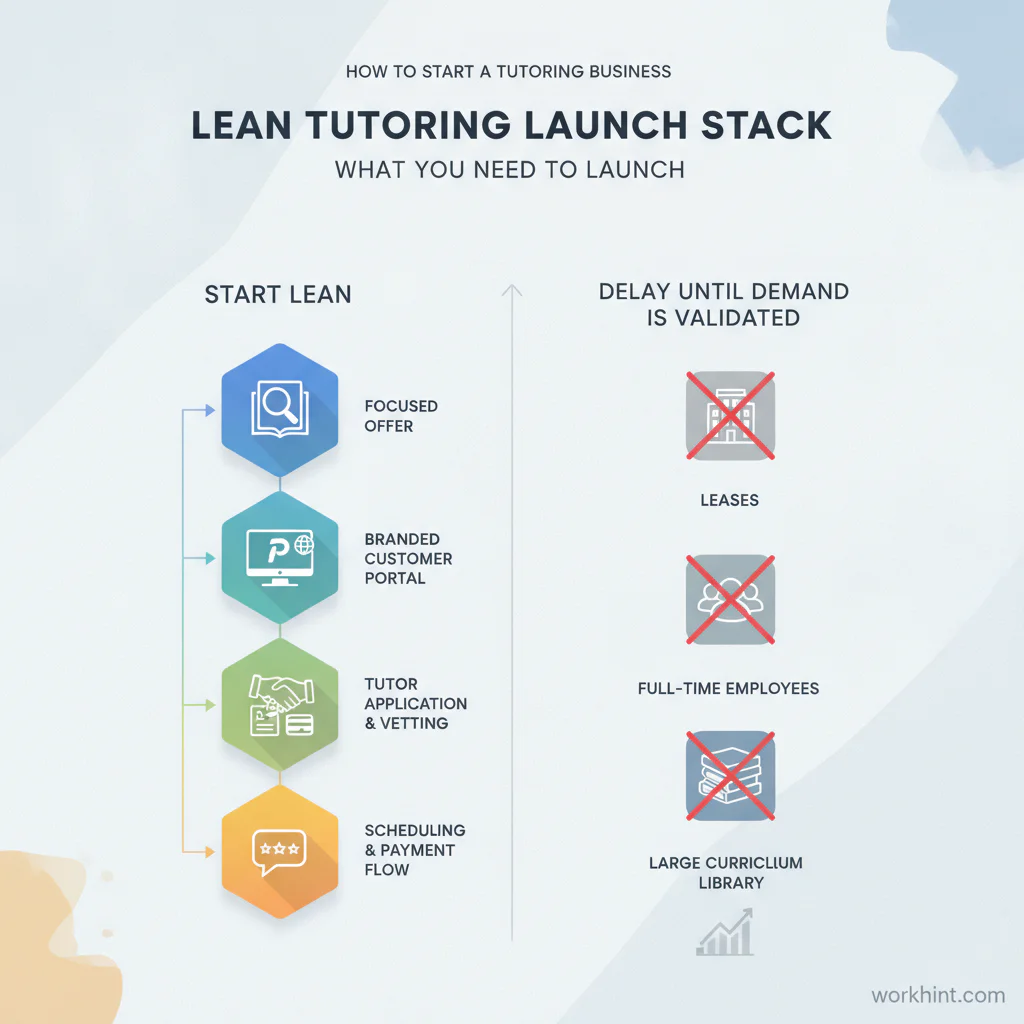
The mistake is trying to look like a large education company too early. You do not need a leased classroom, full-time staff, or a giant curriculum library to validate demand. You need a specific offer, a small tutor network, and an operating system for requests, matching, scheduling, payment, and follow-up.
What’s in this article?
- Why tutoring is a strong low-capital service business
- What you need to launch without overbuilding
- How to price sessions and packages
- How to get the first customers
- How Workhint helps launch a branded tutoring platform
- A 7-day launch plan, checklist, and FAQ
Why this business works
Tutoring works because customers buy a clear result: better grades, stronger confidence, test preparation, language practice, homework support, or skill improvement. Parents and learners usually care less about the founder’s office and more about trust, tutor quality, schedule reliability, and visible progress.
Search results in 2026 show steady intent around tutoring startup costs, online tutoring, tutor pricing, tutoring business plans, and how to find students. Competing guides commonly cover niche selection, business registration, pricing, marketing, and software. The gap is operations: how to run the business as a branded service platform with a network of independent tutors instead of becoming the only person delivering every session.
The first offer should be narrow. Examples include elementary math support, SAT or ACT prep, English for professionals, beginner coding, homeschool support, or executive function coaching. A focused offer is easier to sell, recruit for, and measure.
What you need to launch
Start with the smallest operating model that can serve real customers. Build the brand, intake form, tutor application, matching rules, scheduling process, payment flow, and session feedback loop. Then recruit a few independent tutors with subject expertise and availability.
Licensing requirements vary by location. Many private tutoring businesses do not need a special teaching license, but check local registration, tax, insurance, background check, child safety, privacy, and contractor classification requirements before taking payment.
| Launch item | Lean first version | Typical early budget |
|---|---|---|
| Business setup | Registration, basic bookkeeping, terms, tutor agreement review | $100 to $700 |
| Branded platform | Customer intake, tutor onboarding, scheduling, payments, feedback | $0 to $500 to configure |
| Insurance and checks | General liability, background checks where appropriate | $200 to $1,000 |
| Teaching tools | Video account, shared documents, diagnostic templates, lesson notes | $50 to $300 |
| Customer acquisition | Local landing page, referral outreach, school-adjacent partnerships | $100 to $800 |
A physical tutoring center is a later decision. Validate demand online, in homes, libraries, schools, or partner spaces before you carry rent. Hire employees later only when volume, supervision needs, and margin justify it.
How to price it
Pricing depends on subject, tutor quality, location, format, and urgency. Recent guides commonly place private tutoring around $25 to $80 per hour, with specialized test prep charging more in some markets. Your first job is to create a package that feels trustworthy and easy to buy.
| Offer | Customer price | Tutor payout | Best use |
|---|---|---|---|
| Single 60-minute session | $45 to $90 | $25 to $55 | Trial lessons and flexible support |
| Four-session package | $180 to $340 | $100 to $220 | Homework help or subject support |
| Test prep package | $600 to $1,500 | $350 to $900 | SAT, ACT, admissions, certification exams |
| Small group session | $25 to $45 per student | $40 to $90 per session | Higher margin when demand clusters |
Keep pricing simple at launch. Offer a diagnostic call, one clear package, and one add-on such as progress reports. Track conversion, tutor acceptance, completion, satisfaction, and repeat bookings before changing prices.
How to get first customers
Your first customers usually come from trust channels, not ads alone. Start with parents, teachers, homeschool groups, community organizations, local groups, LinkedIn, neighborhood newsletters, college departments, and small businesses that need language or software training.
Sell a specific outcome. “Middle school math rescue before fall semester” is easier to understand than “general tutoring.” “SAT math intensive for rising juniors” is easier to refer than “academic support.” Each campaign should point to a branded intake form where the customer chooses subject, grade level, goal, location or online preference, schedule, and urgency.

How Workhint helps launch a tutoring platform
Workhint helps you launch the tutoring business as a fully branded operating system before you build custom software or stitch together forms, calendars, spreadsheets, payment links, and chat threads. A tutoring business can use mentoring software to manage tutor profiles, student matching, session scheduling, progress notes, parent updates, and reporting.
A customer can request tutoring through your branded portal, describe the student’s goal, upload notes, select availability, and approve a package. Inside the owner dashboard, you can review the request, match it to a qualified independent tutor, send the tutor an assignment, confirm schedule, collect payment, trigger session reminders, capture lesson notes, request parent feedback, and calculate tutor payout.
For tutors, Workhint can handle invitations, onboarding documents, subject profiles, availability, role-based access, session checklists, progress notes, payment status, and performance reporting. For customers, it creates a clean experience that feels like a real education service from day one. That lets you focus on demand, tutor quality, and repeatable outcomes instead of building the operational foundation from scratch.
First 7-day launch plan
- Day 1: Choose the niche, launch market, customer, and first offer. Avoid broad tutoring until demand proves where to expand.
- Day 2: Set up the branded Workhint platform basics: intake, tutor application, customer dashboard, and admin view.
- Day 3: Create pricing, quote approval, scheduling, payment, session feedback, and tutor payout flows.
- Day 4: Recruit three to five independent tutors with subject proof, references, availability, and communication standards.
- Day 5: Contact parent groups, schools-adjacent partners, neighborhood communities, and local professionals with one specific offer.
- Day 6: Route every inquiry through the platform, match prospects to tutors, and book first diagnostic calls or sessions.
- Day 7: Review demand, tutor readiness, pricing, fulfillment quality, and follow-up before spending more on ads or assets.
Final launch checklist
- Choose one tutoring niche and one first customer segment
- Register the business and check local requirements
- Create a branded platform with intake, scheduling, payments, and tutor onboarding
- Write tutor standards, session checklist, and parent update template
- Recruit a small independent tutor network before accepting too many customers
- Publish one clear landing page and one referral message
- Book first sessions and collect structured feedback
- Validate demand before leasing space, hiring employees, or buying expensive curriculum
FAQ
How much does it cost to start a tutoring business?
A lean tutoring business can often launch with a few hundred to a few thousand dollars, depending on business setup, insurance, background checks, software, marketing, and teaching tools. A physical center costs much more and should usually wait until demand is proven.
Do I need a teaching license to start a tutoring business?
Many private tutoring businesses do not require a teaching license, but rules vary by location and service type. Check local business licensing, child safety, background check, tax, and insurance requirements before launch.
Can I start with independent tutors instead of employees?
Yes, many tutoring companies start with independent tutors, but the working relationship must be structured carefully. Use clear agreements, avoid misclassification, define deliverables, and get local legal or tax advice if you are unsure.
How do tutoring businesses get clients?
The best early channels are referrals, parent communities, school-adjacent partnerships, local SEO, neighborhood groups, niche landing pages, and direct outreach to people who already feel the pain your offer solves.
What should I charge for tutoring?
Many tutoring offers fall somewhere around $25 to $80 per hour, with advanced subjects, test prep, and specialized tutors often charging more. Package pricing can make buying easier and improve retention.
Is online tutoring or in-person tutoring better?
Online tutoring is faster and cheaper to launch. In-person tutoring can command trust in some local markets. A hybrid model is often best once you understand customer preferences and tutor availability.
Conclusion
A tutoring business is worth starting when you treat it like a focused service platform, not just a personal side hustle. Validate one clear offer, build a small network of qualified tutors, route every request through a branded operating system, and invest only after demand, quality, and repeat bookings are visible.
Leave a Reply