


A layered process audit checklist helps teams catch process drift before it becomes a customer, quality, or compliance problem.
A layered process audit checklist is a structured set of questions used by different levels of a team to verify whether critical work is happening the way the process was designed. It is a repeatable operating mechanism for checking standards, finding gaps, assigning corrective action, and learning where the system needs to improve.
Layered process audits are common in manufacturing and quality environments, but the pattern is useful anywhere a team depends on repeatable work: service delivery, compliance reviews, field operations, customer onboarding, finance approvals, support operations, and internal request workflows. If the process matters, leaders should not wait for an incident or missed SLA to discover that the process is no longer being followed.
What’s in this article?
This guide covers what the checklist should include, how to define audit layers, how to structure corrective action, and how to turn audit findings into a live operating loop.
Why a Layered Process Audit Checklist Matters
Most process failures start as small drift. A handoff happens outside the system. A required field gets skipped. An approver signs off without evidence. A workaround becomes normal. Quality and process-improvement organizations such as ASQ treat process discipline as something teams must measure, review, and improve rather than assume.
A layered audit gives the organization a scheduled way to see those gaps. Common layered process audit guidance describes LPAs as repeated checks by multiple levels of the organization, not just one quality or compliance team. The value comes from frequency, visibility, and shared ownership.
This is why the checklist matters. Broad questions create audit theater. Observable questions tied to standards, evidence, ownership, and response rules create a practical control system.
The Core Elements of a Layered Process Audit Checklist
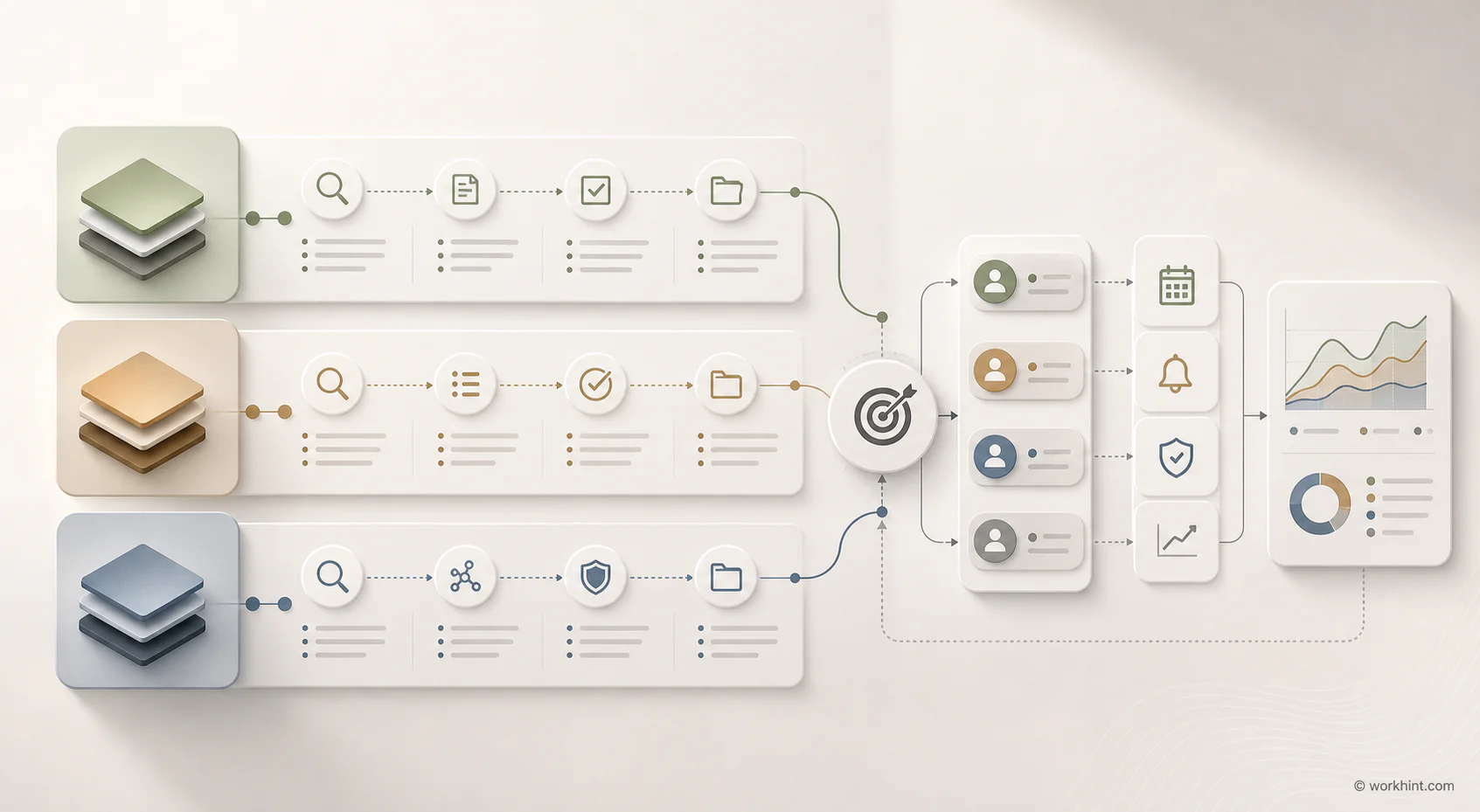
A good checklist is short enough to use consistently and specific enough to expose real risk. For most operations teams, that means 10 to 20 questions per process, grouped around the few behaviors that protect customer value, quality, safety, compliance, or delivery reliability. Current LPA advice from Augmentir similarly emphasizes clear scope, concise questions, and follow-up when audit results need to become action.
| Checklist element | What to define | Example |
|---|---|---|
| Process scope | The workflow, location, team, or service being audited | New customer onboarding from contract signed to first live user |
| Standard | The expected behavior or rule | Every onboarding request must include owner, due date, access needs, and approval status |
| Observable check | A question that can be answered with evidence | Does the latest request contain all required fields before assignment? |
| Response options | Consistent pass, fail, not applicable, or needs review values | Pass, Fail, N/A |
| Corrective action | What happens when the check fails | Assign owner, due date, severity, and follow-up review |
| Trend metric | The measure used to see whether the process is improving | Repeat findings by step, team, location, or root cause |
How to Build the Checklist
1. Start with the process risk
Do not begin by asking, “What should we audit?” Begin with, “What failure would hurt customers, quality, compliance, revenue, or delivery?” The best audit questions come from real risk. If late approvals create missed launches, audit approval evidence. If incomplete intake creates rework, audit request quality.
2. Define the standard before the question
A checklist question is only useful if there is a clear standard behind it. “Was the request handled properly?” is weak. “Was the request assigned to a named owner within one business day?” is stronger because it is observable.
3. Use layers that match responsibility
Layered does not mean every leader audits everything. Each layer should check the standards it can influence. Frontline leads check daily execution. Managers check patterns and corrective actions. Senior leaders check whether repeated findings point to resource, design, training, or governance problems.
4. Keep the checklist short
A long checklist feels thorough until people stop using it. Focus on the few checks that protect the process. Keep routine checks short and move deeper investigation into follow-up work when a failure appears.
5. Tie every failure to action
An audit finding without an owner is just a note. Every failed check should create a corrective action with severity, owner, due date, evidence requirement, and escalation rule. Recent software guides, including GoAudits’ 2026 overview of layered process audit tools, show the same market pull toward assigned inspections, corrective actions, and trend visibility.
Example Checklist for an Operations Workflow
Here is a simple example for a cross-functional customer onboarding process.
- Was the request submitted through the approved intake path?
- Does the request include the required customer, scope, date, and owner fields?
- Was the request reviewed before work started?
- Are approvals documented in the system of record?
- Is every active task assigned to a named owner?
- Are blockers logged with a current status?
- Did any handoff wait longer than the agreed threshold?
- Is customer-facing communication current?
- Are exceptions escalated through the defined path?
- Is completion supported by required evidence?
This kind of checklist works because each question can be answered from evidence. The auditor is not judging effort or intent. They are checking whether the operating system is working.
Common Mistakes to Avoid
The first mistake is auditing too much. If the checklist covers every policy and edge case, it becomes too heavy for routine use.
The second mistake is letting only one function design the audit. Quality, compliance, or operations may own the method, but the people doing the work should help define the questions. They know where standards are unclear and where exceptions actually happen.
The third mistake is treating the audit as a scorecard only. Scores are useful, but the real value is the response loop. Repeated failures should trigger workflow redesign, training, clearer ownership, or automation.
Where Workhint Fits
Workhint helps turn a layered process audit checklist from a static document into a live work system. A team can define the audited process, roles, permissions, audit schedule, questions, evidence fields, corrective action workflow, escalation rules, dashboards, and reviews in one connected system.
That matters because audit work breaks when the checklist lives in one place, assignments happen in another, evidence is stored elsewhere, and follow-up depends on manual reminders. Workhint can connect the audit to the operating workflow so findings become owned work and patterns become visible.
FAQ
What is a layered process audit checklist?
It is a repeatable checklist used by multiple levels of an organization to verify whether important process standards are being followed. It includes observable questions, standard responses, evidence checks, and corrective action rules.
How many questions should an LPA checklist include?
Most teams should start with 10 to 20 focused questions for one process. The checklist should be short enough to complete consistently and specific enough to catch drift.
Who should perform layered process audits?
Different layers should participate: frontline leads, managers, functional owners, and sometimes senior leaders. Each layer should audit the standards it can realistically understand, verify, and improve.
Can layered process audits work outside manufacturing?
Yes. The method is most common in manufacturing and quality operations, but it can be adapted to service delivery, compliance workflows, field operations, onboarding, finance approvals, support processes, and internal operations.
Conclusion
A layered process audit checklist is not paperwork for its own sake. It keeps important work from drifting away from the designed process. The best checklists are short, evidence-based, tied to risk, and connected to corrective action.
If your team depends on repeatable work, start with one critical process. Define the standard, choose the audit layers, write observable questions, and make every failed check create owned follow-up. That is how a checklist becomes a work system instead of another document people forget to use.
Leave a Reply