

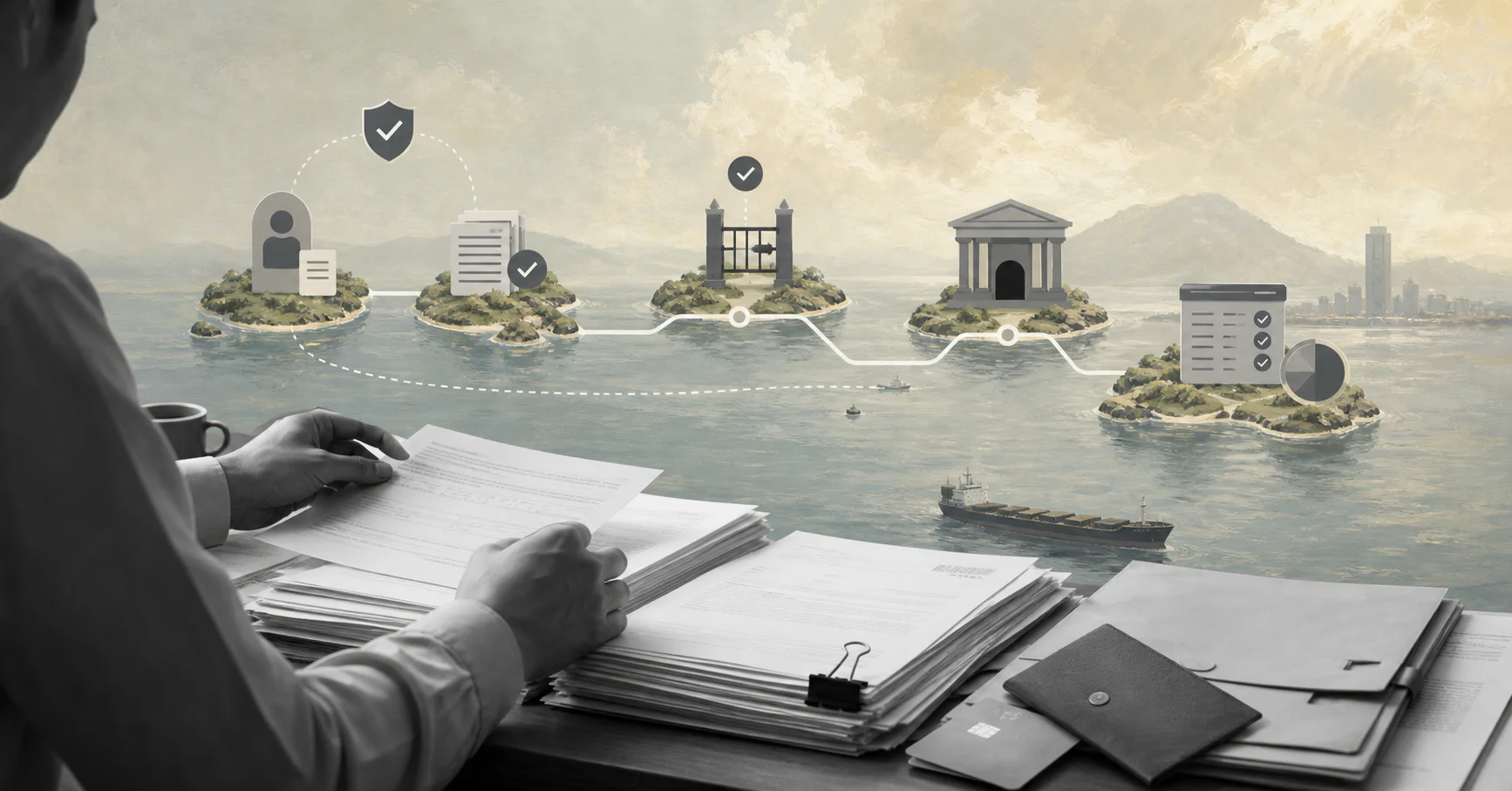
Paying Filipino contractors works best when finance treats every payout as a documented cross-border workflow, not a one-off transfer.
If your company needs to pay contractors in the Philippines, the payment method matters, but it is not the whole finance process. A clean workflow should confirm contractor status, collect tax and payment records, agree on currency, route invoice approvals, release funds through the right rail, and reconcile the payment back to the project and ledger.
The Philippines is a major source of global contractor talent for support, operations, design, development, marketing, and virtual assistant work. For a small test project, a familiar payment app may work. For a company paying multiple Filipino contractors every month, weak payment operations can create late payouts, duplicate payments, unclear FX costs, missing tax records, and messy month-end close. This article is educational guidance, not legal, tax, or employment advice.
What’s in this article?
- Common ways to pay contractors in the Philippines
- Records finance should collect before the first payout
- How W-8BEN, Philippine tax records, PHP, USD, and local transfer timing affect the workflow
- A practical contractor payment process for recurring teams
- Common mistakes that create finance and compliance risk
How to pay contractors in the Philippines
The operating answer is straightforward: approve the engagement, collect contractor and tax records, define the invoice and currency terms, receive a complete invoice, validate the work, approve the amount, send the payment, and reconcile the result.
The best payment rail depends on payment size, frequency, currency, contractor preference, transfer speed, and documentation quality. A single freelancer may prefer a digital wallet or transfer app. A business paying a team of contractors needs repeatable approvals, payment cutoffs, bank-detail verification, and status tracking.
Philippines contractor payment methods compared
| Method | Best for | Finance watchout |
|---|---|---|
| International bank wire | Larger or less frequent contractor payments | Higher fees, intermediary-bank delays, and FX spread can make the final received amount unclear |
| Cross-border payment platform | Recurring international contractor programs | Platform fees should be weighed against saved admin work, reporting, and payout reliability |
| Digital wallet | Smaller payments where the contractor prefers wallet access | Limits, withdrawal costs, business documentation, and account-name matching need review |
| Local Philippine bank transfer | Payers with local banking or platform support | Requires accurate bank details and a clear process for failed or returned transfers |
| Marketplace or contractor platform payout | Contractors already managed through a platform | Finance still needs invoices, approval evidence, fees, and reconciliation records |
Documents to collect before payment
Before the first payout, finance should know who is being paid, what work was approved, which currency controls, and which records support the payment. At minimum, collect the contractor’s legal name or business name, address, contract or statement of work, scope, rate, payment schedule, invoice requirements, tax documentation, bank or wallet details, payment currency, and budget owner.
For U.S. companies paying a Filipino contractor who is a non-U.S. individual, Form W-8BEN is commonly used to document foreign status. The IRS describes Form W-8BEN as a certificate used by foreign individuals to establish foreign status and beneficial ownership. If the contractor operates through an entity, a different W-8 form may apply. Collect the correct form before payment and keep it with the contractor record.
Philippine tax and payment considerations
Filipino contractors generally manage their own local tax obligations, but the payer still needs an organized record of the commercial relationship. The Philippines Bureau of Internal Revenue lists income tax return forms for people engaged in trade, business, or profession, including BIR Form 1701. Contractor payments should be supported by proper invoices and business records.
VAT or percentage-tax status can affect how invoices look. BIR guidance for percentage tax returns refers to persons whose gross annual sales or receipts do not exceed PHP 3,000,000 and are not VAT-registered. If an invoice includes VAT details, percentage tax references, or unfamiliar local tax terms, route it to a finance or tax owner before release.
Currency and local transfer timing
Many Filipino contractors can invoice in USD, PHP, or another agreed currency. USD may be simpler for a U.S. payer, while PHP can make the contractor’s received amount more predictable. The contract should define the invoice currency, exchange-rate source, who absorbs transfer fees, and short-pay handling.
Local Philippine transfers also have timing differences. Bangko Sentral ng Pilipinas describes InstaPay as a real-time low-value electronic fund transfer scheme for transaction amounts up to PHP 50,000. Larger payments, bank wires, platform transfers, and first-time compliance checks may take longer. Build a payment calendar around Philippine holidays, payer cutoffs, and the contractor’s billing cycle.
A practical Philippines contractor payment workflow
- Approve the contractor engagement. Confirm scope, rate, deliverables, location, independence, data access, budget owner, and payment schedule.
- Collect onboarding records. Store the agreement, W-8 form if applicable, invoice instructions, legal name, address, banking or wallet details, and primary contact.
- Set currency rules. Decide whether invoices are in PHP, USD, or another currency, and document FX source, transfer fees, and short-pay handling.
- Receive a complete invoice. Require invoice number, service period, description, amount, currency, payee name, tax details when applicable, and payment instructions.
- Validate the work. Have the project owner confirm hours, milestones, deliverables, expenses, deductions, and acceptance before finance approves.
- Run payment controls. Check duplicate invoices, budget availability, bank-detail changes, approval thresholds, tax records, and payment cutoff timing.
- Release the payout. Use the approved rail and keep confirmation details, fees, exchange rate, and expected receipt date tied to the invoice.
- Reconcile and archive. Match the transfer to the invoice, project, ledger entry, contractor record, and any year-end reporting file.
Common mistakes to avoid
- Paying before the contractor record, tax form, and invoice rules are complete
- Letting contractors change bank or wallet details by email without independent verification
- Agreeing to USD in chat while the invoice, contract, and payment platform use different currencies
- Skipping work confirmation because the contractor is paid on a recurring schedule
- Ignoring fees and FX spread when comparing payment methods
- Using screenshots as the only payment evidence
- Letting failed transfers sit unresolved until month-end reconciliation
Where Workhint fits
Workhint helps businesses turn Philippine contractor payments into a governed operating workflow. A team can structure contractor intake, collect W-8 forms and local records, assign approval owners, route invoices by budget or project, track payment status, flag bank-detail changes, and keep documents connected to each engagement.
Workhint is not the bank or money-transfer rail. It is the work system around the payment: the place where people, approvals, records, invoices, exceptions, and reporting stay coordinated.
FAQ
What is the best way to pay contractors in the Philippines?
The best method depends on payment size, currency, speed, fees, and documentation needs. Bank wires, cross-border payment platforms, digital wallets, local transfers, and contractor platforms can all work if finance keeps a clean approval and reconciliation record.
Do U.S. companies need a W-8BEN from Filipino contractors?
Often, yes, when the contractor is a non-U.S. individual foreign payee. If the contractor uses an entity, another W-8 form may apply. Confirm the right form before payment.
Should Filipino contractors be paid in PHP or USD?
Either can work. Use the currency stated in the contract and invoice, define the exchange-rate source, and decide who pays transfer and conversion fees before work starts.
How often should finance reconcile contractor payments?
For recurring contractor programs, reconcile after every payment run and again during monthly close. The goal is to catch failed payments, duplicate invoices, fee differences, and currency mismatches quickly.
Conclusion
To pay contractors in the Philippines correctly, build the workflow before the invoice arrives. Confirm the relationship, collect payment and tax records, define currency rules, approve the work, release funds through the right rail, and reconcile every payout. That operating discipline keeps contractors paid on time while giving finance the evidence it needs for clean reporting and control.
Leave a Reply