

You can launch an ergonomics consulting business before hiring consultants, leasing space, or buying expensive assessment systems.
If you are researching how to start an ergonomics consulting business, the opportunity is simple: employers need healthier workstations, fewer preventable injuries, and clearer recommendations for remote, office, warehouse, and field teams. The hard part is building a business that can sell, schedule, deliver, document, and invoice assessments without becoming messy from the first few clients.
A platform-first model helps solve that. Instead of starting with employees, office space, and a heavy consulting structure, you can launch a branded assessment platform, recruit independent certified providers, validate demand with a narrow first offer, and use Workhint to coordinate requests, assignments, reports, approvals, payments, and payouts.
What’s in this article?
- Why ergonomics consulting works as a lean service business
- What you need before taking the first client
- How to price workstation assessments and employer packages
- How to get first customers without a large sales team
- How Workhint can run the branded operating platform
- A practical 7-day launch plan
Why This Business Works
Ergonomics consulting sits at the intersection of workplace safety, employee health, hybrid work, and operational compliance. Employers buy it when employees report discomfort, remote work creates uneven home-office setups, or safety teams need a documented assessment process.
The first offer can be narrow: workstation assessments with written recommendations. From there, the business can expand into group training, home-office reviews, industrial observations, return-to-work assessments, and recurring employer programs.
This is also a strong provider-network business. The founder does not need to personally perform every assessment forever. The network can include independent ergonomists, occupational therapists, safety consultants, industrial hygienists, and workplace health specialists, depending on local rules.
What You Need To Launch
Start with the smallest version that can produce a professional result: a clear package, branded intake, qualified providers, a report template, insurance, basic tools, and a way to schedule and invoice clients. Avoid expensive equipment until you know which assessments customers request.
| Launch item | Lean budget | Why it matters |
|---|---|---|
| Business registration and basic legal setup | $100 to $800 | Creates the entity, tax setup, and contract foundation. |
| Professional liability and general liability insurance | $500 to $2,000 per year | Protects the business when giving workplace recommendations. |
| Branded Workhint platform setup | Lean monthly platform cost | Runs intake, scheduling, provider onboarding, approvals, invoices, and payouts. |
| Assessment templates and report format | $0 to $500 | Standardizes quality across every provider. |
| Basic assessment tools | $100 to $700 | Supports desk, posture, lighting, and workstation observations. |
| Launch marketing | $300 to $1,500 | Funds a website page, local outreach, LinkedIn, and employer materials. |
Licensing and certification requirements vary by service type and location. A basic office workstation consultation may not require the same credentials as therapy, industrial, or workers’ compensation-related work. Check local rules before selling specialized services.
How To Price It
Keep pricing easy for employers to understand. A buyer should know whether they are purchasing one employee assessment, a small-team package, training, or an ongoing program. Your price should reflect provider time, travel, report writing, insurance, platform costs, and margin.
| Offer | Example price | Best fit |
|---|---|---|
| Remote workstation review | $175 to $300 per employee | Hybrid teams and early demand validation. |
| On-site workstation assessment | $250 to $500 per employee | Office teams needing written recommendations. |
| Half-day employer assessment block | $900 to $1,800 | Several employee reviews in one visit. |
| Monthly ergonomics support package | $1,500 to $5,000 per month | Companies with recurring hires, remote workers, or safety needs. |
The fastest path is often a fixed package. For example, sell a five-assessment employer starter package with intake, scheduling, recommendations, and a summary report. It is easier to sell and easier to assign to providers.
How To Get First Customers
Begin where ergonomic pain is already visible. Reach HR leaders, operations managers, office managers, safety managers, coworking operators, remote-first companies, clinics, schools, call centers, warehouses, and companies onboarding new office teams.
Your first pitch should not be abstract wellness language. Make it operational: you help employers identify workstation risks, document recommendations, schedule assessments, and close the loop after equipment or posture changes are approved.
Use five early channels: LinkedIn outreach to HR and operations leaders, office furniture dealer partnerships, referrals from therapists, local employer groups, and content targeting workstation assessment questions in your city.
How Workhint Helps Launch It
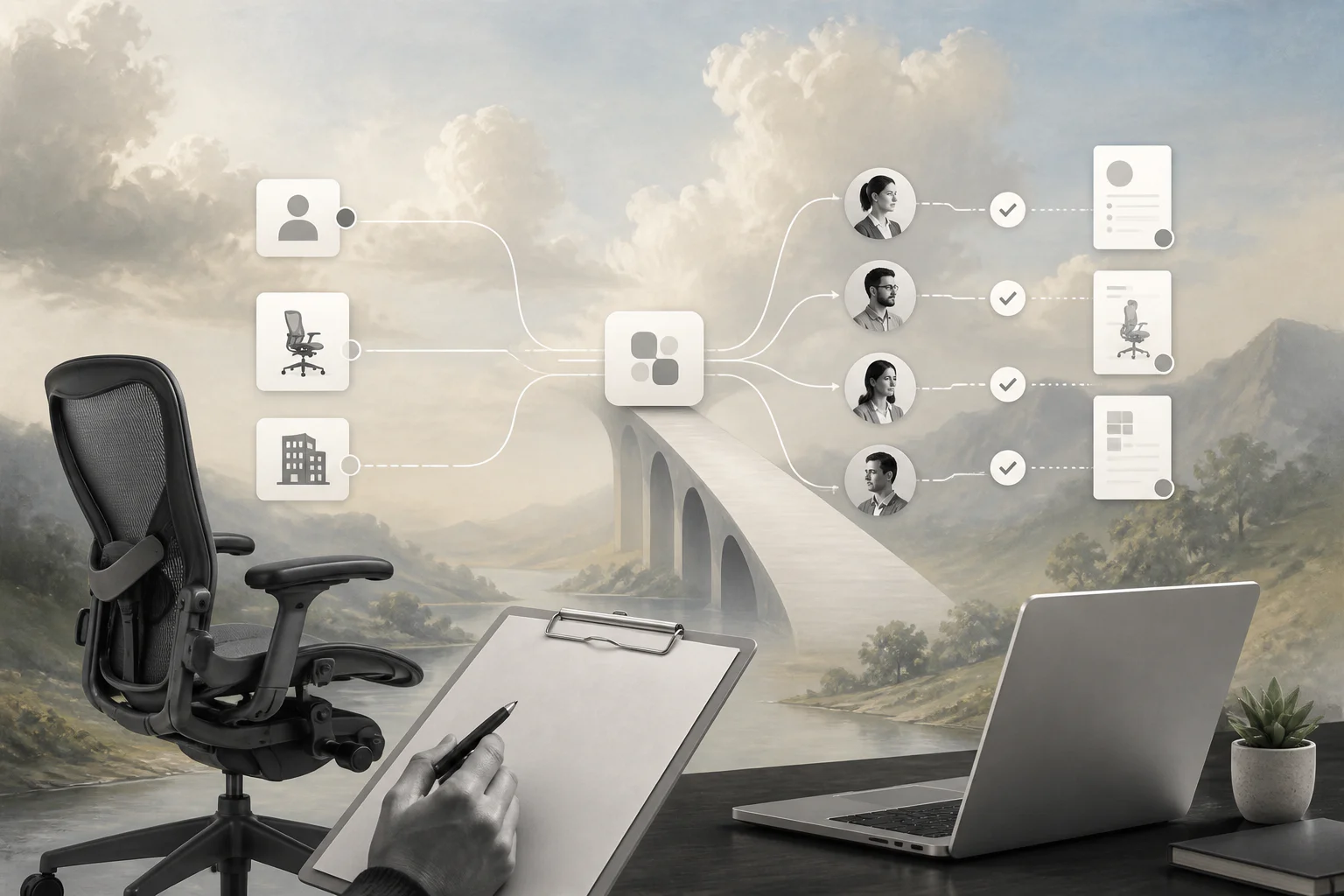
Workhint can become the branded operating platform for the ergonomics consulting business before you invest in a traditional consulting team. A customer lands on your portal, requests an assessment, identifies the work environment, uploads photos if needed, and selects remote or on-site service.
From there, Workhint routes the request to the right independent provider based on location, specialty, availability, and qualifications. The provider accepts the assignment, completes the checklist, uploads findings, recommends changes, and submits a report for review.
The customer receives recommendations through the dashboard, approves follow-up work if needed, pays online, and can request more assessments. The owner sees every request, provider, schedule, report, payment, payout, and client account from one internal dashboard.
That changes the launch economics. Instead of building custom software, hiring coordinators, and stitching together forms, calendars, payment tools, agreements, and report folders, you can launch as a branded service platform and focus on employers and providers.
First 7-Day Launch Plan
- Day 1: Choose the niche, such as remote teams, office workers, or small employers with safety concerns. Define one assessment package.
- Day 2: Set up the branded Workhint platform basics: customer intake, provider roles, assessment request forms, and client dashboard.
- Day 3: Build the quote, scheduling, assessment checklist, report review, invoice, payment, and provider payout process.
- Day 4: Recruit the first independent providers and verify qualifications, insurance needs, service area, and availability.
- Day 5: Contact the first 50 prospects across HR, operations, office management, safety, and local employer networks.
- Day 6: Route early requests through the platform, schedule discovery calls, and test whether the package is clear enough to buy.
- Day 7: Review demand, provider readiness, delivery quality, pricing, and objections before spending more on equipment or marketing.
Final Launch Checklist
- Choose one ergonomics niche and one simple first offer.
- Confirm local rules, credentials, insurance needs, and provider qualifications.
- Register the business and prepare a basic client agreement.
- Create the branded Workhint customer portal and assessment intake flow.
- Recruit three to five independent providers before selling at scale.
- Build the assessment checklist, report template, quote approval, invoice, and payout flow.
- Launch a website page that explains the offer, service area, and booking process.
- Sell a small employer starter package before buying expensive tools or hiring staff.
FAQ
How much does it cost to start an ergonomics consulting business?
A lean launch can start with a few thousand dollars if you avoid offices, employees, and heavy equipment. Budget for registration, insurance, branding, provider onboarding, platform setup, templates, basic tools, and early marketing.
Do I need a certification to offer ergonomics consulting?
It depends on the service and location. General workstation consulting may have fewer formal barriers than clinical, workers’ compensation, industrial, or therapy-related services. Use qualified providers and verify local rules before selling specialized assessments.
Can I start with independent contractors instead of employees?
Yes, if the provider relationship is structured correctly and local labor rules are respected. A provider-network model lets you match demand to qualified specialists without hiring a full staff before revenue is proven.
Who buys ergonomic assessments?
Common buyers include HR teams, safety managers, operations leaders, office managers, remote-first companies, healthcare employers, schools, call centers, warehouses, and companies with frequent employee discomfort reports.
What equipment do I need at the beginning?
Start with basic tools for workstation observation, documentation, measurements, photos, and reporting. Buy specialized tools only after demand shows which assessment types customers request most often.
How profitable is an ergonomics consulting business?
Profit depends on pricing, provider costs, travel, report time, utilization, and repeat employer accounts. Fixed packages and recurring employer programs usually create stronger margins than one-off custom work.
How do I get the first clients?
Start with HR, operations, safety, office management, coworking, and local employer networks. Offer a clear starter package that solves a visible problem: employee discomfort, remote workstation risk, or undocumented safety concerns.
Conclusion
An ergonomics consulting business is strongest when it starts narrow, validates demand early, and avoids unnecessary fixed costs. You need a clear offer, qualified providers, a trusted assessment process, and an operating system that makes the service easy to request, deliver, document, invoice, and repeat.
Workhint gives you that foundation as a branded platform, so the business can launch around customer demand and provider capacity instead of offices, employees, and disconnected tools.
Leave a Reply