

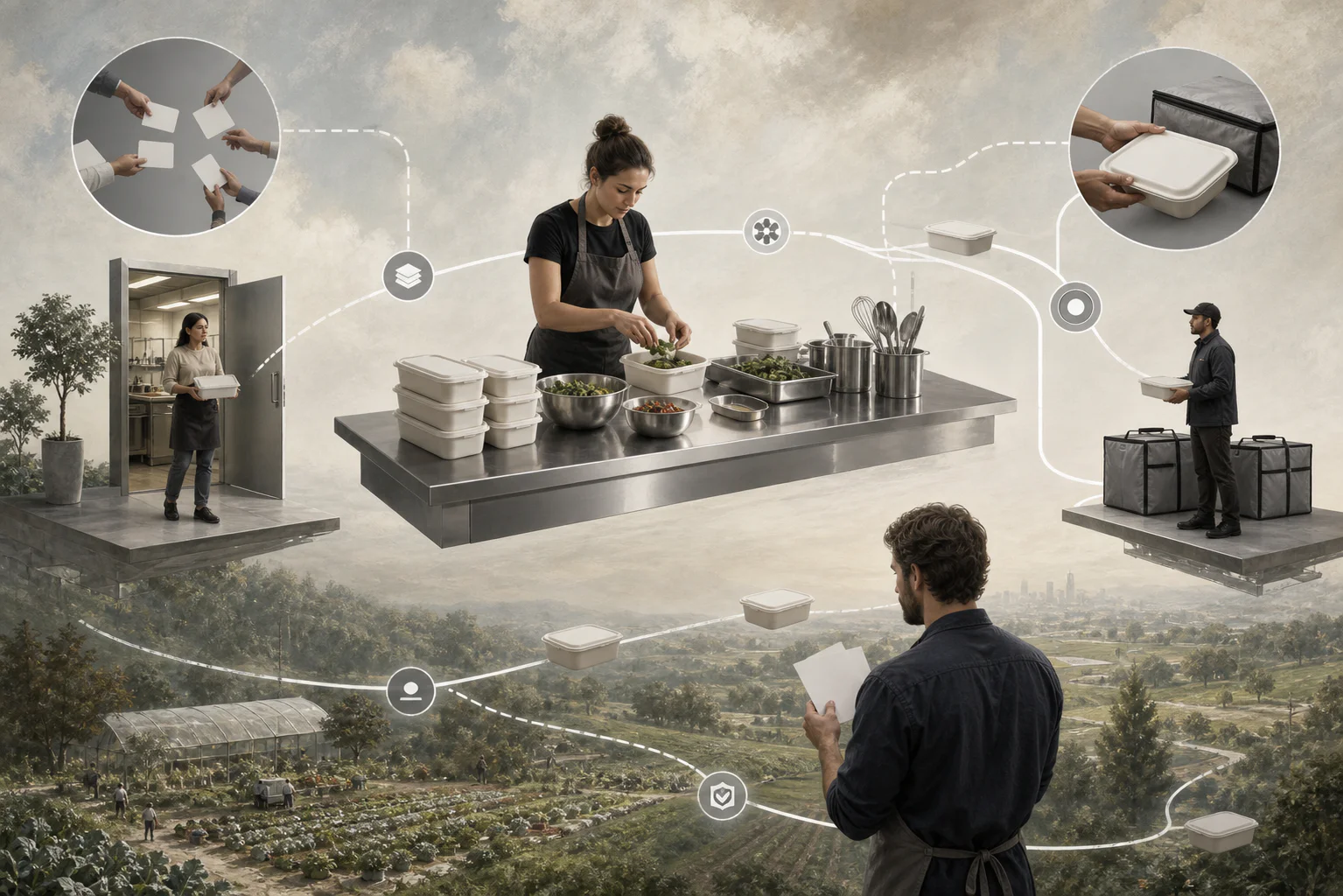
You can test a meal prep brand before leasing a kitchen, hiring cooks, or building delivery software.
Introduction
If you want to start a meal prep business, the mistake is assuming you need to build a mini restaurant before you know whether customers will buy. Meal prep is attractive because busy professionals, families, athletes, and people with specific diets already pay for convenience. The risk is operational: food safety, kitchen access, weekly ordering, delivery windows, substitutions, payments, and repeat customer management.
A leaner path is to launch as a branded service platform first. Define the offer, validate demand, recruit licensed independent chefs or kitchen partners, and run customer orders through a structured operating system before committing to expensive facilities or full-time staff.
What’s in this article?
- Why meal prep works as a platform-first business
- What you need before accepting paid orders
- How to price weekly meal prep packages
- How to get first customers without a large ad budget
- How Workhint helps launch the operating platform
- A practical 7-day launch plan and checklist
Why This Business Works
Meal prep solves a repeated problem: people want better meals with less planning, shopping, cooking, and cleanup. That creates recurring revenue because customers often buy weekly packages, not one-off orders.
The platform-first model works because the founder does not need to own every part of fulfillment on day one. You can sell a narrow menu, route demand to qualified prep partners, and use clear standards. Independent chefs, licensed shared kitchens, diet-focused providers, and delivery partners can join if the work is organized and paid reliably.
Customers buy because the offer saves time and reduces decision fatigue. Providers join because the platform can send demand, collect orders, and reduce admin. Your job is to build trust before you expand the menu or geography.
What You Need To Launch
The first version should be narrow. Choose one target customer, one city or neighborhood, and two or three meal packages. More options create more inventory, substitutions, errors, and quality control work.
You need a legal business entity, local food-safety guidance, insurance, a branded customer platform, provider onboarding, a weekly order cutoff, a delivery or pickup model, and payment before production. If meals are perishable or temperature controlled, check local health department rules before selling. Many meal prep models require approved commercial kitchen access, food handler certification, storage, labeling, and inspection readiness.
The cheapest responsible launch is usually a shared kitchen, commissary kitchen, licensed prep partner, or independent provider who already meets local requirements. Validate demand first, then decide whether owned equipment or a dedicated kitchen makes sense.
| Launch item | Lean starting approach | Estimated first budget |
|---|---|---|
| Business registration | Register the entity and bank account | $100-$600 |
| Food safety and permits | Confirm local rules, food handler training, inspections, labels | $100-$1,000+ |
| Kitchen access | Use a shared kitchen or licensed provider partner | $400-$2,000/month |
| Insurance | General liability and food-related coverage | $500-$2,000/year |
| Brand and platform | Customer intake, menu, scheduling, payment, partner workflows | $300-$1,500 |
| Initial marketing | Local outreach, referral offers, sample drops, simple content | $250-$1,000 |
How To Price It
Meal prep pricing has to cover ingredients, packaging, kitchen time, labor, delivery, spoilage, refunds, payment fees, and margin. If you underprice early, the business becomes exhausting as volume grows.
Start with packages customers can understand: five lunches, five dinners, family dinners, high-protein meals, or diet-specific plans. Keep the menu limited so providers can batch production efficiently.
| Offer | Example price | Best use |
|---|---|---|
| 5-meal starter pack | $65-$95 | First-time customers testing the service |
| 10-meal weekly plan | $120-$180 | Busy professionals and fitness customers |
| Family dinner bundle | $150-$300 | Families that want weekday dinner covered |
| Premium diet plan | $180-$350 | Macro, gluten-free, keto, or chef-led plans |
| Delivery add-on | $8-$25 | Distance-based or scheduled delivery windows |
A good early rule is to price for repeatability, not popularity. A profitable 20-customer weekly plan is more useful than 100 discounted orders that cannot be fulfilled cleanly.
How To Get First Customers
Start with people who already feel the pain: busy parents, fitness communities, boutique gyms, office teams, nurses, founders, and local professionals. Sell the weekly outcome, not the food alone: fewer grocery runs, predictable meals, and less decision fatigue.
Use direct local channels first. Partner with gyms, coworking spaces, apartment buildings, wellness coaches, personal trainers, and corporate office managers. Offer a limited founder batch for the first 20 customers, with clear pickup or delivery windows and a short feedback form after each order.
Your first goal is demand validation. Track which package sells, which delivery windows create problems, which providers meet quality standards, and whether customers reorder.
How Workhint Helps Launch It
Workhint lets you launch the meal prep business as a branded operating platform instead of stitching together forms, spreadsheets, texts, calendars, payment links, and payout tracking.
A customer can request a weekly meal plan through your branded portal, choose preferences, note allergies, select pickup or delivery windows, approve the order, and pay online. The internal dashboard can route the order to an approved prep partner based on kitchen capacity, menu fit, location, and availability.
Providers can join the platform, complete onboarding, upload documents, accept assigned batches, follow prep checklists, update order status, add delivery notes, and receive payouts. The founder can see demand by neighborhood, recurring volume, provider reliability, refund issues, and package profitability from one place.
That matters because the business can validate demand before buying equipment, leasing a kitchen, or hiring a team. Workhint connects customer intake, provider matching, weekly scheduling, approvals, payments, and payouts while you focus on acquiring customers.
First 7-Day Launch Plan
- Day 1: Choose one customer segment, one launch area, and two meal packages. Avoid custom meals at launch.
- Day 2: Set up the branded Workhint platform with intake, preferences, allergy questions, order cutoffs, and customer confirmations.
- Day 3: Build the pricing, quote approval, payment, delivery window, refund, and provider payout process.
- Day 4: Recruit licensed prep partners, shared-kitchen operators, independent chefs, or delivery partners who can fulfill the first batch responsibly.
- Day 5: Contact gyms, office managers, parent groups, apartment communities, and local professionals with a limited founder batch offer.
- Day 6: Route first requests through the platform, confirm capacity, collect payment, and schedule prep and delivery.
- Day 7: Review demand, food safety readiness, provider performance, pricing, margins, and customer feedback before expanding.
Final Launch Checklist
- Pick a narrow customer segment and launch neighborhood
- Confirm local food business, kitchen, permit, labeling, and insurance requirements
- Choose a shared kitchen, licensed prep partner, or compliant provider model
- Create two or three weekly meal packages
- Configure customer intake, order approval, scheduling, payment, and payout flows in Workhint
- Recruit the first independent providers or kitchen partners
- Launch a founder batch before investing in owned equipment
- Track reorders, margin, delivery reliability, and customer feedback
FAQ
How much does it cost to start a meal prep business?
A lean launch can start with a few thousand dollars if you use shared kitchen access, a narrow menu, provider partners, and local marketing. Owning a kitchen, buying equipment, or hiring staff can push costs much higher.
Do I need a commercial kitchen for meal prep?
Often, yes, especially for perishable or temperature-controlled prepared meals. Rules vary by location, so check your local health department before selling. A shared or commissary kitchen can be a lower-risk first step.
Can I start a meal prep business with no staff?
Yes, if you keep the offer narrow and work with independent chefs, licensed prep partners, commercial kitchens, or delivery providers instead of hiring employees immediately.
How should I price meal prep packages?
Price around the full cost of ingredients, packaging, labor, kitchen time, delivery, payment fees, spoilage, and margin. Weekly bundles and subscriptions are usually easier to manage than fully custom orders.
What is the best first customer segment?
Start with a group that has recurring need and clear routines, such as gym members, busy professionals, families, healthcare workers, or office teams.
What should I avoid buying at the beginning?
Avoid leasing a dedicated kitchen, buying commercial equipment, hiring staff, or expanding the menu before you have repeat orders and reliable fulfillment.
Conclusion
The fastest way to start a meal prep business is not to build the biggest kitchen. It is to prove customers want the offer, coordinate qualified providers, and run the operation through a branded platform that makes the business feel reliable from day one.
Start small, validate weekly demand, keep the menu tight, and invest in owned assets only after the order volume justifies them.
Leave a Reply