


You can validate a tax prep business before leasing an office, hiring preparers, or buying a heavy software stack.
If you want to start a tax prep business, the leanest path is to build a simple, trusted service platform first. Tax preparation has recurring demand because individuals, freelancers, and small business owners need help every year. But the mistake many new operators make is trying to look like a full tax office before they have proven demand.
A better model is to launch with a branded customer portal, a narrow first offer, and a small network of qualified independent tax preparers. You validate demand, route client intake, collect documents, manage review steps, take payments, and pay providers without committing to employees or office overhead too early.
What’s in this article?
- Why a tax prep business can work as a low-overhead service business
- What you need before taking paid clients
- How to price tax prep services
- How to get first customers before tax season peaks
- How Workhint helps launch the branded operating platform
- A 7-day launch plan, checklist, and FAQ
Why This Business Works
Tax prep works because the need is recurring, time-sensitive, and often stressful for customers. Many people can technically file alone, but they still pay for help because they want confidence, convenience, and fewer mistakes. Small business owners, gig workers, landlords, and self-employed professionals often need more support than a simple consumer filing tool provides.
The business is also attractive because it does not require a storefront on day one. Current tax industry guides commonly emphasize flexible, remote, or home-based launches. IRS rules are clear on one core requirement: anyone who prepares federal tax returns for compensation needs a valid PTIN. Most preparers who e-file also need to become an authorized e-file provider and obtain an EFIN for the firm.
The first offer should be narrow. You might start with individual returns for freelancers, Schedule C support for local service providers, or small business tax prep for owners who already have clean books. Customers buy because the service saves time, reduces uncertainty, and gives them a clear process for submitting documents and approving their return.
What You Need To Launch
You need compliance basics, a service scope, a client intake process, and a reliable way to deliver the work. If you personally prepare returns, get the required tax preparer credentials before accepting paid work. If you are building the business as an operator, recruit qualified independent preparers and make sure each provider’s credentials, PTIN status, experience, and service permissions are documented.
Do not spend early money on a retail office, permanent staff, or broad advertising before you know which customer segment converts. Start with the minimum system needed to receive requests, collect files securely, quote the work, assign the right preparer, manage review, collect payment, and deliver the finished filing support.
| Launch Item | Lean Budget | Why It Matters |
|---|---|---|
| Business registration | $100-$800 | Creates the legal foundation for contracts, banking, and tax accounts. |
| PTIN and tax training | $20-$1,000+ | Prepares paid preparers to work legally and competently. |
| EFIN application and compliance setup | $0-$500 | Supports electronic filing if the firm will submit returns directly. |
| Professional liability insurance | $500-$2,000+ | Reduces risk when handling financial and tax work. |
| Branded Workhint platform | Platform setup cost | Runs intake, document collection, routing, approvals, payments, and payouts. |
| Local marketing tests | $250-$1,500 | Validates demand before hiring employees or leasing an office. |
How To Price It
Tax prep pricing should match return complexity, not just time spent. Public pricing guides commonly show individual tax preparation ranging from a few hundred dollars to higher fees for complex returns, while business returns often cost more because they involve more documents, entity details, and judgment.
For a new tax prep business, packages make the offer easier to understand. Keep each package clear, define what is included, and charge extra for messy books, multiple states, prior-year filings, tax planning, or bookkeeping cleanup.
| Package | Example Price | Best For | Includes |
|---|---|---|---|
| Simple Individual Return | $175-$350 | W-2 employees and simple filers | Federal return, one state, basic document review |
| Freelancer Tax Prep | $350-$750 | 1099 workers and sole proprietors | Schedule C, expenses, basic deduction review |
| Small Business Return | $750-$2,500+ | LLCs, S corps, and business owners | Entity return, owner questions, document checklist |
| Year-Round Tax Support | $150-$500 monthly | Clients needing ongoing help | Quarterly check-ins, estimate reminders, tax planning notes |
How To Get First Customers
Your first customers should come from trust channels. Start with local business groups, freelancer communities, real estate investor groups, bookkeeping partners, payroll providers, immigrant business communities, gig worker groups, and service business owners who need practical help.
Sell the process, not just the return. A clear message works better than generic tax advertising: “Upload your documents, get a fixed quote, approve your return, and pay online without visiting an office.” That is specific, convenient, and easy to refer.
Start before the busy season. Build a waitlist, offer early document reviews, partner with bookkeepers, and create a small referral incentive. The first goal is to confirm which customer segment submits complete documents, pays quickly, and returns each year.
How Workhint Helps Launch It
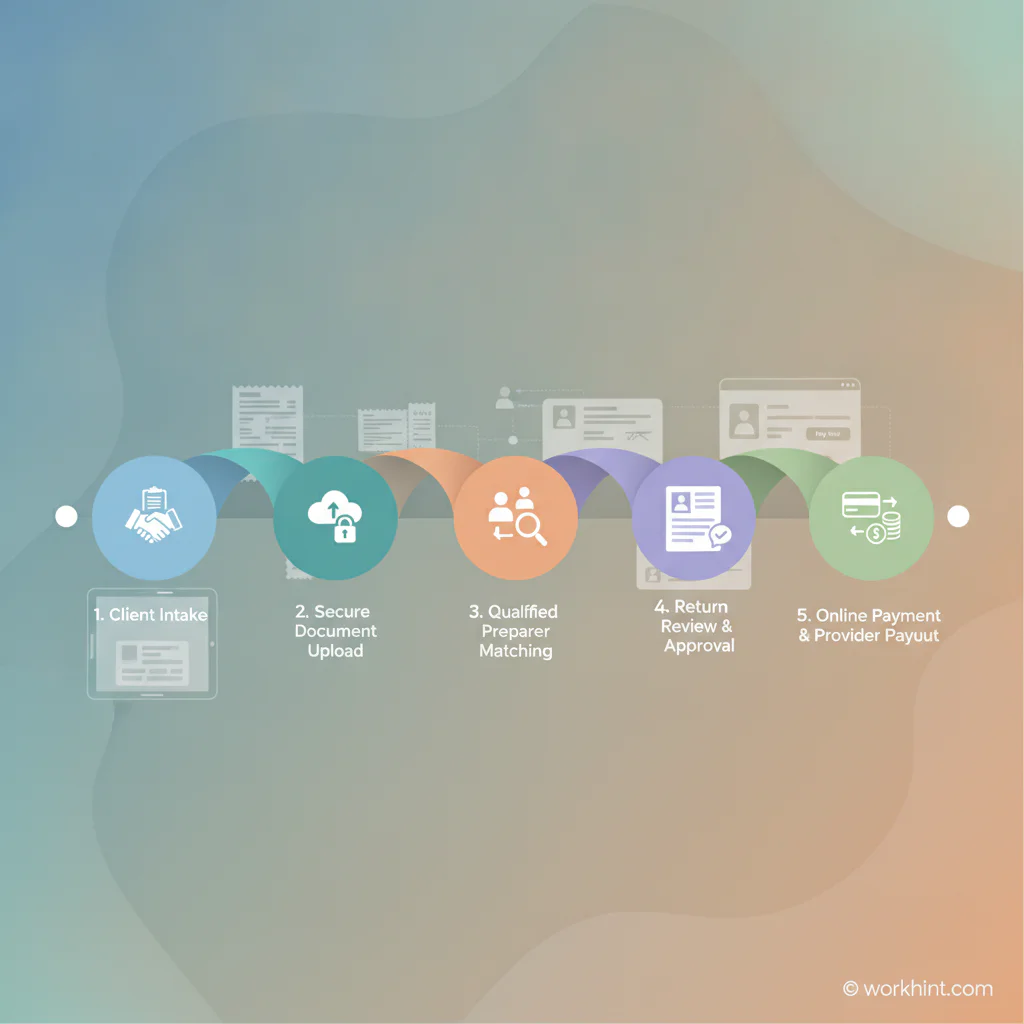
Workhint can become the branded operating platform for the tax prep business itself. A customer enters through your branded portal, selects the return type, answers intake questions, uploads documents, agrees to the engagement terms, and receives a quote or package recommendation.
Inside the business, Workhint routes the request to the right preparer based on credentials, workload, state coverage, and return type. The preparer sees the customer file, checklist, deadlines, notes, missing documents, and review steps. The customer sees a clean dashboard showing what has been received, what is missing, what is awaiting approval, and when payment is due.
Once the return is ready, Workhint can manage approval, invoice generation, online payment, customer communication, delivery tracking, and contractor payout. That gives the business a professional operating system before the founder spends heavily on custom software, admin staff, or a physical office.
How to Start a Tax Prep Business in 7 Days
Day 1: Choose one customer segment, such as freelancers, small landlords, local service businesses, or simple individual filers.
Day 2: Confirm compliance needs, including PTIN, EFIN, business registration, insurance, contracts, privacy, and data security.
Day 3: Set up the branded Workhint platform basics: intake, document checklist, quote approval, task routing, payment, and provider payout.
Day 4: Recruit the first qualified independent preparers or define your own delivery capacity if you will prepare returns yourself.
Day 5: Create three fixed packages and a clear list of exclusions, add-ons, and required documents.
Day 6: Contact local referral sources and invite prospects to submit early tax prep requests through the platform.
Day 7: Review demand, document quality, pricing, provider readiness, and operational gaps before spending more.
Final Launch Checklist
- Choose a narrow customer segment and first tax prep offer.
- Register the business and open a business bank account.
- Confirm PTIN, EFIN, insurance, privacy, and state requirements.
- Configure the branded Workhint platform for intake, document collection, routing, approvals, payment, and payouts.
- Recruit qualified independent preparers if you are not preparing every return yourself.
- Create fixed packages, add-on fees, and a missing-document process.
- Build referral relationships with bookkeepers, payroll providers, and local business groups.
- Validate demand before leasing an office or hiring employees.
FAQ
How much does it cost to start a tax prep business?
A lean launch can often start with business registration, required preparer credentials, insurance, a branded platform, and targeted marketing tests. Costs rise if you lease an office, hire employees, or buy enterprise tax software before validating demand.
Do I need a license to prepare taxes?
For paid federal tax preparation in the United States, preparers need a valid PTIN. If the firm e-files returns, it generally needs EFIN approval as an authorized e-file provider. State rules and professional requirements can vary.
Can I start a tax prep business with no employees?
Yes. You can start as a solo preparer or build a provider-network model with independent tax preparers. The key is clear scope, credential tracking, secure document handling, quality review, and a platform that coordinates the work.
How should a new tax prep business charge clients?
Use fixed packages for common return types and add fees for complexity. Multiple states, self-employment income, business returns, bookkeeping cleanup, prior-year returns, and planning sessions should not be priced like simple filings.
When should I start marketing a tax prep business?
Start before tax season. Build referral partnerships, collect early document requests, and educate your target segment before deadlines create urgency. Early demand gives you time to fix intake and fulfillment issues.
What should I avoid when launching?
Avoid taking work you are not qualified to handle, underpricing complex returns, relying on email attachments for sensitive documents, hiring too early, and spending heavily before you know which customers convert.
Conclusion
A tax prep business can launch lean if you treat the operating system as the first asset. Start with one customer segment, one clear offer, qualified preparers, and a branded platform that handles intake, documents, routing, approvals, payments, and payouts.
Workhint helps make that possible by giving the business a professional customer experience and internal delivery system before the founder invests in offices, employees, or custom software. Validate demand first, then expand with better packages, more providers, and stronger recurring client relationships.
Leave a Reply