


A useful self evaluation turns scattered work memories into evidence, reflection, and a clearer performance conversation.
An employee self evaluation template gives people a structured way to prepare for a performance review before the manager writes the final assessment. The best version is not a blank box that asks someone to “summarize the year.” It prompts the employee to connect outcomes, evidence, behaviors, obstacles, goals, and development needs in a format the manager can actually review.
This resource is designed for HR teams, managers, founders, and operations leaders who need a practical self-assessment form for annual reviews, quarterly check-ins, promotion readiness, role resets, or development planning. It is not legal or HR advice, and sensitive performance decisions should be reviewed against company policy and applicable law.
What’s included
This employee self evaluation template includes the sections most business teams need to run a clearer review cycle.
- A copy-ready self evaluation template.
- Prompts for results, strengths, growth areas, values, goals, and support needed.
- A manager review workflow so submissions do not disappear into a file.
- Example language for stronger, evidence-based responses.
- Common mistakes to avoid when asking employees to assess their work.
MIT Human Resources describes a self-assessment review form as preparation for the annual review conversation and a basis for discussing contributions, development interests, and needs. SHRM’s performance review form resources also point toward measurable goals, performance metrics, and structured review inputs. The lesson for business teams is simple: the form should create a better conversation, not paperwork.
How to use this employee self evaluation template
Send the template before the review meeting, not during it. Employees need time to gather examples, compare work against goals, and write clearly. Managers need time to read the self evaluation before drafting feedback.
- Define the review period. Name the exact dates, role, team, manager, and review type.
- Collect evidence first. Ask for projects, metrics, customer examples, peer feedback, resolved problems, missed goals, and lessons learned.
- Separate facts from interpretation. The employee should state what happened before explaining what it means.
- Review for patterns. Managers should compare the self evaluation with goals, stakeholder input, work quality, behavior, and business outcomes.
- Turn the conversation into next actions. A good review ends with goals, support, owners, timing, and follow-up dates.
The U.S. Office of Personnel Management’s performance management guidance emphasizes clarifying expectations, applying standards to day-to-day work, providing examples, and holding regular check-ins. That same discipline makes self evaluations more useful in private companies too.
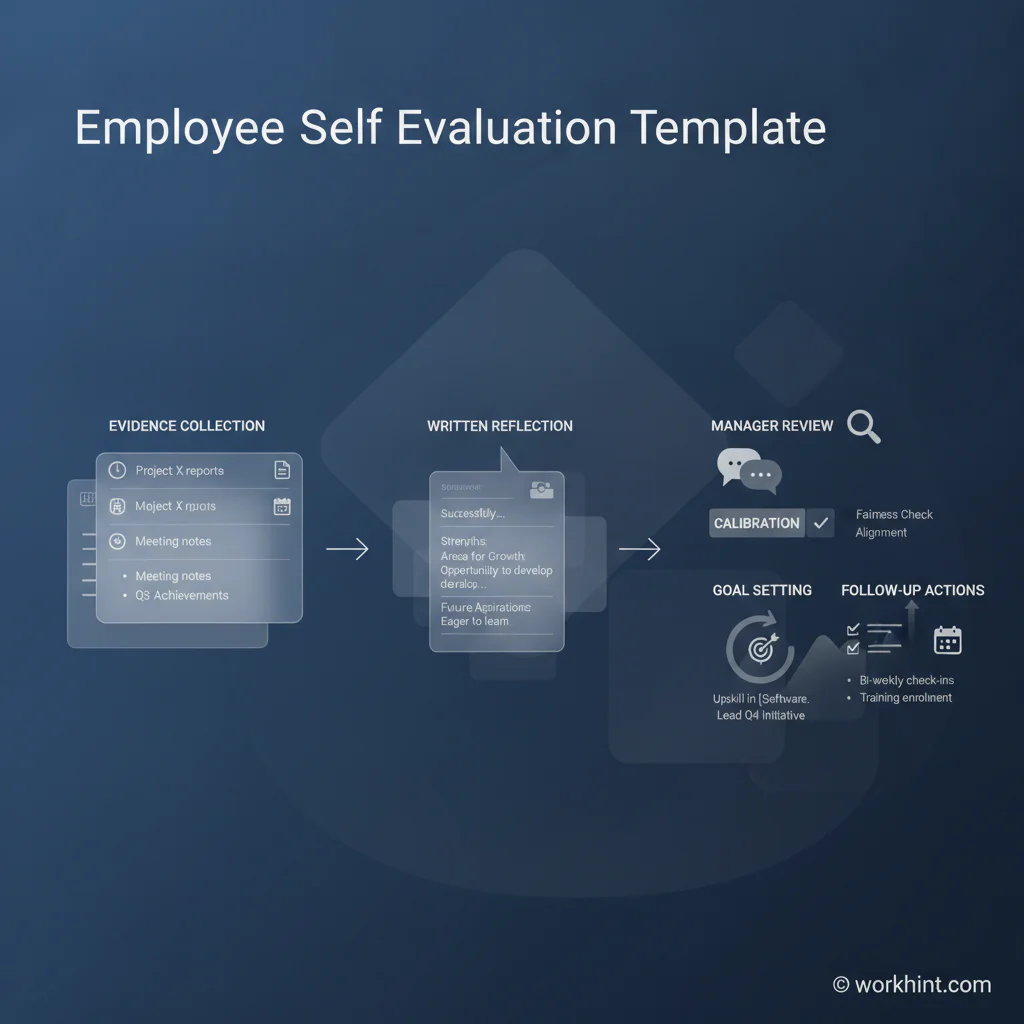
Employee self evaluation template
Copy this structure into your HR system, document, spreadsheet, or performance workflow. Keep the wording consistent across employees in similar roles so managers can compare inputs fairly.
| Section | Prompt | What good looks like |
|---|---|---|
| Role outcomes | What were the most important outcomes you were responsible for this period? | Clear link to role expectations, team goals, customer impact, revenue, quality, speed, or reliability. |
| Key accomplishments | What results are you most proud of, and what evidence supports them? | Specific projects, metrics, deliverables, before-and-after examples, or stakeholder outcomes. |
| Strengths | Which strengths helped you contribute most effectively? | Behavior tied to impact, not generic traits. For example, “I clarified project scope early, which reduced rework.” |
| Growth areas | Where did you struggle, miss expectations, or need to improve? | Specific, owned, and paired with a learning plan or support request. |
| Collaboration | How did you work with teammates, managers, customers, vendors, or cross-functional partners? | Examples of communication, ownership, follow-through, conflict resolution, and handoffs. |
| Goals | What should your next goals be, and how should success be measured? | Measurable goals with owner, deadline, evidence, and dependency notes. |
| Support needed | What would help you perform better in the next period? | Concrete needs such as clearer priorities, training, access, staffing, tools, coaching, or decision rights. |
Example self evaluation responses
Weak self evaluations usually sound either vague or defensive. Strong ones connect evidence to learning and future action.
| Weak response | Stronger response |
|---|---|
| I worked hard and handled many projects. | I led three customer onboarding projects, delivered two on time, and recovered the third after a vendor delay by creating a daily issue tracker. |
| I need to communicate better. | I need to communicate risks earlier. In Q2, I waited too long to flag a staffing gap. Next quarter I will send a weekly risk note for active projects. |
| I am good at teamwork. | I helped sales, finance, and operations agree on a cleaner handoff checklist, which reduced missing billing information on new customer launches. |
| I want to grow as a leader. | I want to own a small cross-functional initiative next quarter and get coaching on planning, stakeholder updates, and decision escalation. |
Manager review workflow
The self evaluation is only useful if managers know what to do with it. Use this workflow before the review conversation.
- Read the submission before writing the manager review. Note agreements, gaps, surprises, and examples worth discussing.
- Compare against agreed goals. Do not judge only personality, effort, or recent events. Look at the full review period.
- Ask for clarification where needed. If an employee says a project had major impact, ask what changed and who benefited.
- Prepare two-way questions. Use the self evaluation to ask about blockers, priorities, career direction, and support.
- Close with a record. Document final goals, development commitments, manager support, and the next check-in date.
Gallup’s feedback research has found that employees who receive meaningful recent feedback are much more likely to be engaged. A self evaluation should therefore feed a continuing feedback loop, not replace manager coaching.
Common mistakes
- Using one generic form for every role. Keep the core template consistent, but adapt examples and metrics to the role.
- Asking only for accomplishments. Include growth areas, obstacles, support needed, and future goals.
- Letting managers ignore the submission. Employees stop taking the process seriously when their input never shows up in the conversation.
- Rewarding polished writing over evidence. Strong communicators may sound better even when the evidence is thin. Managers should look for proof.
- Waiting until the annual review. Quarterly self reflections are easier to write and more useful for course correction.
Where Workhint fits
Workhint helps organizations turn a self evaluation template into a managed performance review workflow. Instead of sending documents over email, a team can create the form, assign it to the right employees, route submissions to managers, connect role-specific goals, track deadlines, request clarifications, and keep review records tied to follow-up actions.
That matters when reviews involve multiple locations, departments, external teams, or fast-changing roles. Workhint can help structure the operating system around the review cycle: who submits, who reviews, what evidence is required, which approvals apply, what goals are created, and when the next check-in should happen.
FAQ
What should an employee self evaluation include?
It should include role outcomes, key accomplishments, evidence, strengths, growth areas, collaboration examples, goals, and support needed for the next review period.
How long should a self evaluation be?
It should be long enough to give evidence, but not a personal essay. For most roles, one to three concise paragraphs per major section is enough.
Should employees rate themselves?
Self-ratings can help compare perception with manager assessment, but they should not replace written evidence. If you use ratings, define each rating level clearly.
When should employees complete self evaluations?
Send the form at least one week before the review meeting. For quarterly cycles, shorter reflections can be completed closer to the check-in.
Are self evaluations only for annual reviews?
No. They are also useful for quarterly reviews, promotion discussions, role changes, probationary checkpoints, development planning, and post-project retrospectives.
Conclusion
An employee self evaluation template works best when it helps people prepare evidence, reflect honestly, and enter the review conversation with clearer context. Use the template to capture outcomes, strengths, growth areas, goals, and support needs. Then make the process operational: assign owners, review submissions, document decisions, and follow up before the next review cycle starts.
Leave a Reply