

Mobile phlebotomy can start as a lean provider network before it becomes a full clinical operation.
A mobile phlebotomy business brings blood draw and specimen collection services to homes, offices, care facilities, clinics, and research sites. Demand is practical: patients want convenience, employers need on-site collections, and healthcare organizations need flexible capacity.
The mistake is assuming you need a clinic, vehicles, employees, and custom software before you have demand. A faster path is to validate first with a branded customer platform, a clear service area, qualified independent providers where allowed, lab or clinical partners, documented compliance steps, and a simple workflow for intake, scheduling, collection, payment, and payout.
This guide explains how to start a mobile phlebotomy business with no staff, while still treating compliance, insurance, specimen handling, and customer trust seriously.
What’s in this article?
- Why mobile phlebotomy works as a lean service business
- What you need before accepting requests
- How to price home blood draw and collection services
- How to get first customers without overinvesting
- How Workhint helps launch the operating platform
- A 7-day launch plan, checklist, and FAQ
Why this mobile phlebotomy business works
Mobile phlebotomy solves an access problem. Some patients cannot easily travel to a lab. Busy professionals prefer at-home appointments. Senior living communities, home health agencies, clinics, corporate wellness programs, and research teams may need recurring collections at multiple locations.
The business also fits a network model. You do not need to employ every phlebotomist on day one. In many markets, the first version can coordinate trained independent phlebotomists, nurses, or approved collection partners under properly documented agreements.
The strongest first offer is narrow: scheduled mobile blood draws or specimen collections in one service area, with clear availability, travel boundaries, documentation requirements, and payment rules.
What you need to launch
Before launch, verify state rules for phlebotomy certification, lab relationships, HIPAA, OSHA bloodborne pathogen training, insurance, physician orders, specimen handling, and any CLIA or laboratory requirements for your exact model.
Keep the first version lean. You need a branded platform, trained providers, and a documented process, not a storefront or custom software build.
| Launch item | Lean starting approach | Estimated range |
|---|---|---|
| Business setup | LLC, basic legal templates, local registration | $300-$1,500 |
| Insurance | General liability, professional liability, auto coverage guidance | $1,500-$5,000 annually |
| Compliance setup | HIPAA, OSHA, consent, documentation, partner requirements | $300-$2,000 |
| Branded platform | Customer intake, scheduling, provider onboarding, payments | $500-$2,500 |
| Supplies | Starter consumables, PPE, specimen transport materials | $400-$1,500 |
| Provider network | Recruitment, credential checks, onboarding, service agreements | $200-$1,000 |
| Local marketing | Website, local SEO, outreach, referral materials | $300-$2,000 |
Do not buy vehicles, lease space, or hire staff before you know which customer segment will pay. Use providers with the required training and transportation where appropriate, then invest into owned assets after volume justifies it.
How to price it
Most mobile phlebotomy pricing separates the collection visit fee from lab testing fees. The customer pays for convenience, travel, time, documentation, and specimen handling. The lab test is often billed separately by the lab, insurer, provider, or ordering organization.
| Service model | Example price | Best first customer |
|---|---|---|
| Individual home visit | $75-$150 per visit | Patients, caregivers, busy professionals |
| Facility route | $35-$75 per draw | Senior living, home health, clinics |
| Corporate wellness day | $500-$2,500 per event | Employers, benefits consultants |
| Research collection support | Contract pricing | Clinical trial sites, research coordinators |
| Urgent or after-hours visit | Base fee plus premium | Time-sensitive patients or organizations |
Start with a simple menu: standard visit, extended travel zone, group collection, and priority scheduling. Keep lab fees and collection fees clearly separated.
How to get first customers
Your first customers usually come from trust-based channels, not broad advertising. Build a short list of home health agencies, concierge physicians, clinics, senior communities, occupational health providers, and local employers.
Use local SEO for searches like mobile phlebotomy near me, home blood draw, and mobile blood draw service. Pair that with direct outreach to organizations that already coordinate patients or employees.
The first goal is not to look national. The first goal is to prove that customers will submit requests, providers can fulfill them, and the workflow works without manual chaos.
How Workhint helps launch it
Workhint can become the branded operating platform for a mobile phlebotomy business before you invest in custom software or a full employee team.
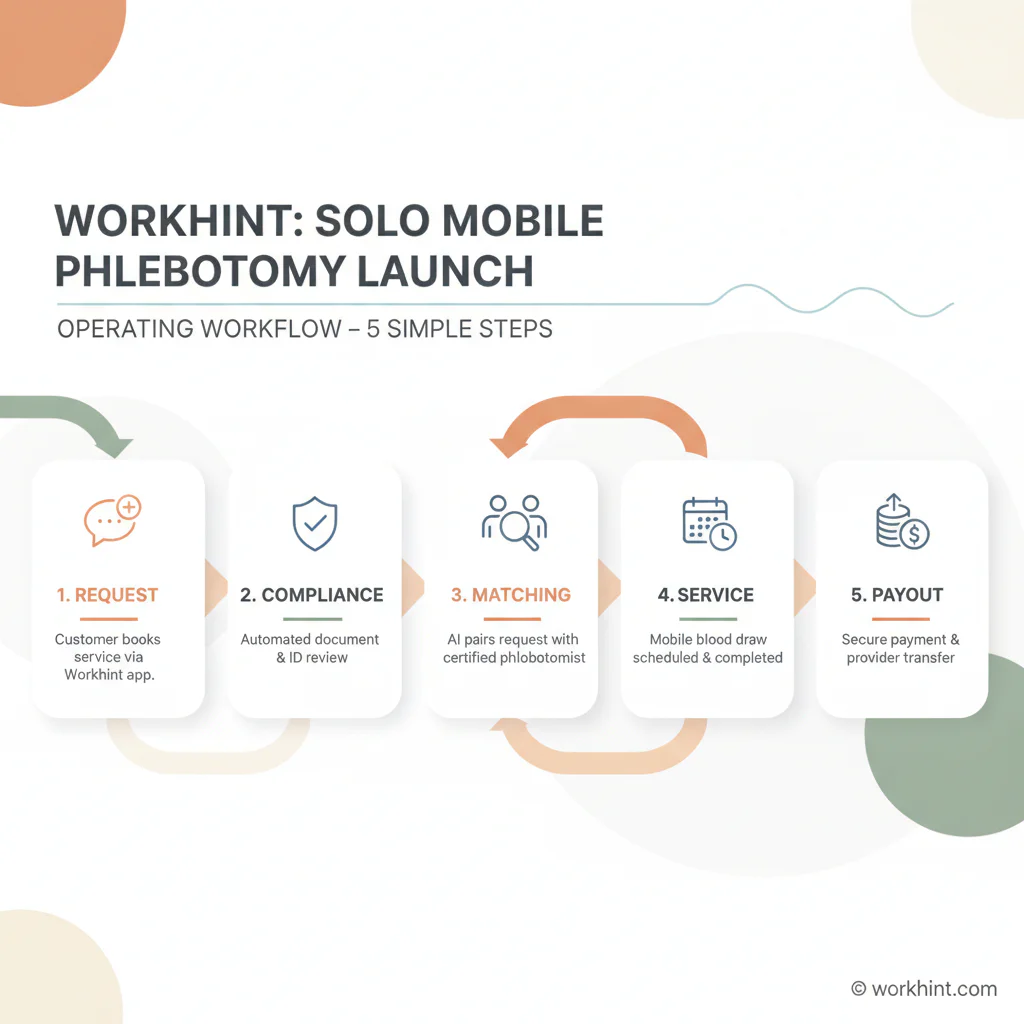
A customer, caregiver, clinic, or employer submits a request through your branded portal. The intake flow collects location, preferred time, documents, ordering-provider details, specimen requirements, consent, and payment information.
From there, Workhint routes the request to an approved provider, tracks acceptance, schedules the appointment, assigns checklists, stores documentation, sends updates, collects payment, and prepares provider payout records.
This matters because the operational burden is the real barrier. Workhint lets you launch the customer-facing platform, onboard independent providers, coordinate requests, and validate demand before buying vehicles, opening an office, or hiring staff.
First 7-day launch plan
Day 1: choose one market, one service area, and one first offer.
Day 2: set up the branded Workhint platform basics: intake, service zones, provider profiles, statuses, documents, and notifications.
Day 3: define pricing, quote rules, appointment windows, payment collection, cancellation policy, and provider payout logic.
Day 4: recruit the first approved independent providers or clinical partners. Verify credentials, availability, service areas, and documentation standards.
Day 5: contact 25 local demand sources: home health agencies, senior communities, clinics, wellness providers, and concierge medical practices.
Day 6: route every conversation through the platform. Test intake, scheduling, documentation, and payment flow.
Day 7: review demand, provider readiness, pricing, and operational gaps before spending more money.
Final launch checklist
- Choose a business name, service area, and first customer segment.
- Verify state licensing, certification, lab, HIPAA, OSHA, and insurance requirements.
- Create the branded customer request platform.
- Define services, travel zones, pricing, payment rules, and cancellation policy.
- Recruit and onboard the first qualified independent providers or partners.
- Create intake, consent, documentation, scheduling, collection, payment, and payout workflows.
- Build a local outreach list of clinics, agencies, facilities, employers, and referral partners.
- Validate demand before buying vehicles, leasing space, or hiring employees.
FAQ
How much does it cost to start a mobile phlebotomy business?
A lean launch can start with a few thousand dollars if you use a platform-first model, qualified providers, and a narrow service area. Costs rise when you buy vehicles, hire staff, lease space, or perform complex testing operations.
Do you need a license to start a mobile phlebotomy business?
Rules vary by state and business model. Some states require phlebotomy certification or licensing, and clinical partners may impose additional standards. Verify requirements before serving customers.
Can you start a mobile phlebotomy business with no employees?
In many cases, you can start with qualified independent providers or partner organizations instead of hiring employees immediately. Handle agreements, compliance expectations, supervision, and contractor classification carefully.
How do mobile phlebotomy businesses make money?
Common revenue comes from mobile visit fees, facility contracts, employer events, research support, and priority scheduling. Lab testing fees are often billed separately.
What equipment is needed for mobile phlebotomy?
Typical needs include approved collection supplies, PPE, specimen transport materials, documentation tools, and any equipment required by partner labs. Avoid heavy assets until the model is validated.
Who are the best first customers?
Strong early targets include home health agencies, senior living communities, concierge medical practices, clinics, local employers, and clinical research teams.
Is mobile phlebotomy profitable?
It can be profitable when route density, pricing, provider payouts, travel time, supplies, insurance, and scheduling are managed carefully.
Conclusion
A mobile phlebotomy business does not need to begin as a traditional clinic. It can start as a focused service platform with a clear customer segment, qualified providers, documented compliance, and a disciplined operating workflow.
The smart move is to validate demand first. Launch the branded platform, recruit the first provider network, route requests through a real operating system, and invest more only after customers and fulfillment prove the model.
Leave a Reply