

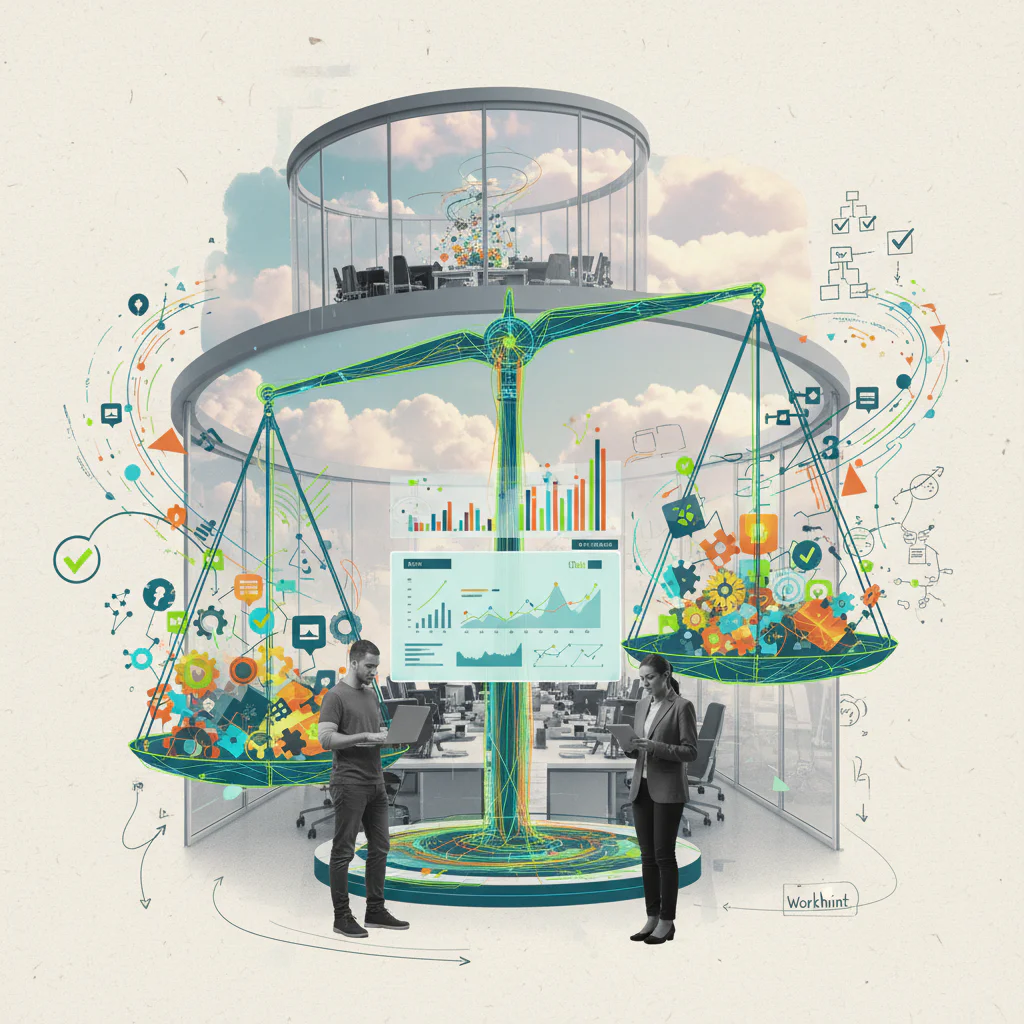
When freedom feels like chaos, find the calm in aligning autonomy with responsibility.
Imagine a team spread across continents, each member proud of their freedom to decide how to get the job done. The promise of autonomy feels like a breath of fresh air until the moment a deliverable lands on a desk that never expected it, or a decision made in isolation creates a ripple that slows the whole line. The tension in the hook is not about choosing liberty over control; it is about the invisible friction that appears when ownership is claimed without a shared map of responsibility. In real operations this friction shows up as missed handoffs, duplicated effort, and a quiet anxiety that something is slipping through the cracks. I have watched founders celebrate independent sprint cycles only to discover that the next sprint stalls because the previous work never reached the right eyes. Naming that feeling, the sense that the system is moving but not in sync, is the first step toward making work actually function. The next section looks at how visible expectations can turn that chaos into a steady rhythm.
What hidden expectations keep teams from drifting
When a team spreads its work across time zones the most common source of friction is not a lack of skill but an invisible set of expectations that no one has written down. A designer may assume the product manager will approve a mockup before it goes to development, while the engineer assumes the design is final and starts building. The result is a handoff that never arrives, a duplicated effort that wastes time, and a lingering anxiety that something has slipped through the cracks. By making those expectations visible – a simple shared checklist, a brief sync at the end of each sprint, or a public board that marks the status of each decision – the team creates a map that guides autonomous action toward a common destination.
The map does not turn freedom into a rule book; it turns freedom into a guided adventure. In the same way a traveler uses a compass to explore new terrain without getting lost, a team uses clear expectations to explore creative solutions without losing alignment. The effort to surface these expectations pays back in reduced rework, smoother handoffs, and a confidence that each autonomous decision contributes to the larger rhythm of the organization.
Why many think autonomy is a free pass and get it wrong
The promise of autonomy often arrives wrapped in the idea of a free pass – the belief that if you give people the space to choose their path they will automatically produce better outcomes. This misconception shows up in stories of founders who celebrate independent sprint cycles only to watch the next cycle stall because the previous work never reached the right eyes. Research from Frontiers highlights that performance improves when autonomy is paired with trust, clear communication and equitable access to resources. Without those pillars, autonomy becomes isolation, and isolation breeds misalignment.
A relatable example is a remote writer who decides to tackle a feature without checking whether the data team has already built the necessary API. The writer’s freedom feels empowering, yet the product launch is delayed because the missing data never arrives. The lesson is that autonomy without a framework for shared knowledge is a myth. The better way forward is to pair freedom with structures that keep everyone informed – a shared backlog, transparent resource allocation, and regular moments for cross‑team dialogue.
How to grow autonomy without losing the safety net of oversight
Scaling a team often feels like adding more musicians to an orchestra; each new player brings talent, but without a conductor the music can become chaotic. The challenge is to expand the space for independent work while keeping a light yet effective oversight that catches missteps before they become costly. Insights from a LinkedIn article on AI agent oversight suggest that the most successful organizations grant autonomy but embed checkpoints that are simple, frequent and focused on outcomes rather than process.
Imagine a product squad that sets a quarterly goal, then meets briefly each week to surface any deviation from that goal. The oversight is not a micromanagement drill; it is a pulse check that lets the team adjust course quickly. As the team grows, the cadence of these pulse checks can be delegated to sub‑leaders who still report to the larger group. The result is a system where autonomy scales like a branching tree – each branch moves independently yet remains rooted in the same trunk of shared purpose.
Why the friction repeats
When work is coordinated through ad-hoc emails or separate spreadsheets, ownership often remains implicit. Individuals assume others will act, but no single record confirms who is responsible for each handoff. That informal layer leaves visibility gaps, so delays appear as isolated incidents rather than a pattern the team can see. Because the process is not captured in a shared system, any change in personnel or geography re-creates the same uncertainty.
A centralized work system provides a single place where assignments, status updates, and approvals are recorded as the work moves forward. By making the flow of responsibility explicit, the system removes the hidden handoff points that cause stalls. It also supplies a stable reference that survives team changes, allowing coordination to remain consistent without constant manual alignment.
Workhint serves as one such centralized work system that embodies this structural approach to the problem.
At the start we asked what calm looks like when freedom meets responsibility. The answer emerged not in a rule book but in the simple act of making the hidden expectations visible, like drawing a line on a shared canvas that everyone can see. When each decision is anchored to a known handoff, autonomy stops feeling like a gamble and becomes a trusted step in a larger rhythm. The real lever is not more meetings or tighter control but a lightweight map that lets every contributor navigate toward the same horizon. Carry that map into your own teams and watch the noise settle into a steady pulse. In the end the paradox resolves itself: the freer you make the path, the clearer the destination becomes.
Leave a Reply