

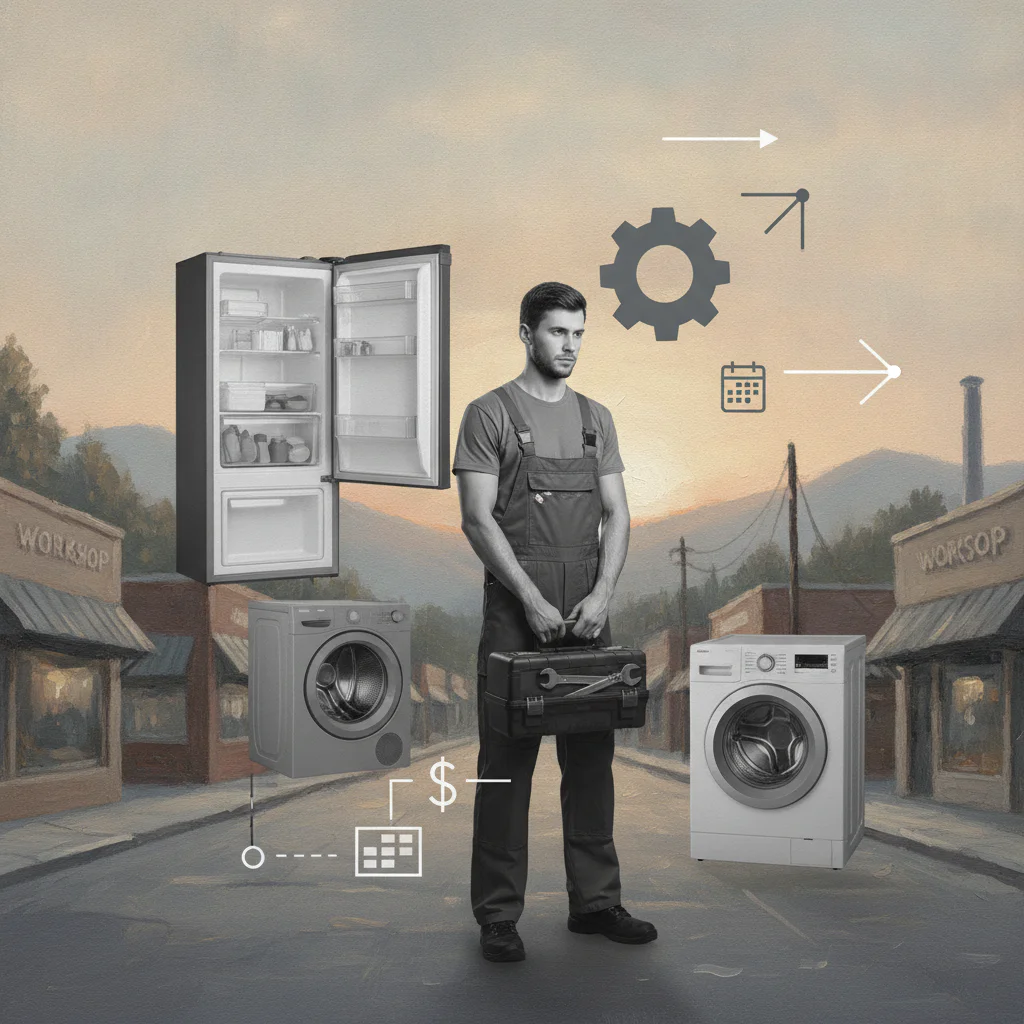
You can launch appliance repair as a local service platform before you buy vans, stock parts, or hire technicians.
If you want to start an appliance repair business, the traditional path can look expensive fast: training, tools, parts, a vehicle, insurance, software, and eventually employees. The first version does not have to be built that way.
A smarter path is to validate demand first. Build a branded platform, recruit vetted independent technicians, route requests, approve quotes, schedule repairs, and manage payment from one operating system. You prove whether local customers will book before committing to payroll, vans, inventory, or an office.
This guide shows how to launch with no staff, using a provider-network model and Workhint as the operating foundation.
What’s in this article?
- Why appliance repair can work as a low-overhead service business
- What you need before the first booking
- How to price diagnostics and repairs
- How to find first customers and independent technicians
- How Workhint helps launch the branded platform
Why this business works
Appliance repair has a simple demand driver: people depend on refrigerators, washers, dryers, ovens, dishwashers, and other appliances every day. When one breaks, customers want a fast answer. Replacing it can be expensive, so repair often feels practical.
The opportunity is strongest when you focus on convenience. Customers are buying fast response, clear appointment windows, transparent pricing, qualified technicians, and a simple way to approve and pay.
That creates room for a platform-first model. You do not need to repair every appliance if your role is to build the local brand, acquire customers, vet technicians, coordinate jobs, and protect the experience.
Independent technicians may join because you help them get booked without handling every sales, admin, scheduling, payment, and follow-up task.
What you need to launch
The lean version needs an offer, a launch market, a branded customer experience, a technician recruitment plan, insurance, basic legal setup, and a clear process. You do not need a fleet, office, warehouse, or full parts inventory to validate demand.
Licensing and certification requirements vary by location and service type. Some work may require specialized certification, especially refrigerants, gas appliances, or electrical systems. Define what your network can legally offer, then recruit qualified providers.
| Launch item | Lean startup approach | Typical early budget |
|---|---|---|
| Business registration | Form a legal entity and check local requirements | $100-$800 |
| Insurance | General liability first, then add coverage as services expand | $500-$1,500 per year |
| Branded platform | Intake, technician onboarding, scheduling, approvals, payment, and payout workflows | Start lean before custom software |
| Provider recruitment | Vetted independent technicians with experience and insurance where required | $0-$500 |
| Marketing | Landing page, Google Business Profile, referrals, neighborhood groups, landlord outreach | $200-$1,000 |
| Tools and parts | Owned by technicians at first; add shared inventory only after recurring job volume | $0-$1,000 initially |
The key is sequencing. Prove customers will request service and technicians will accept jobs. Buy shared tools, stock parts, or branded vehicles only when booking volume justifies it.
How to price it
Appliance repair pricing usually combines a diagnostic fee, labor, parts, travel, and sometimes emergency premiums. In a platform model, pricing must leave room for technician payout, processing, support, warranty risk, and profit.
Start narrow: washer and dryer diagnostics, dishwasher repair, refrigerator troubleshooting, oven repair, and appliance installation coordination. Avoid regulated categories until qualified providers are ready.
| Pricing model | Example | When to use it |
|---|---|---|
| Diagnostic visit | $89-$149 for inspection and quote | Best default for unknown repair scope |
| Flat service package | $149-$249 for common simple repairs before parts | Use for clearly defined repairs |
| Labor plus parts | Hourly or job labor plus approved parts cost | Useful for larger or uncertain repairs |
| Membership plan | Annual home appliance checkup or priority booking | Add after customer demand is proven |
Do not race to the bottom. A customer with a broken refrigerator is often paying for speed, trust, and reduced hassle.
How to get first customers
The first customers usually come from local visibility and trust. Start with one service area and one promise: fast repair coordination with clear quotes and vetted technicians.
Build a landing page for the city or neighborhood. Create a Google Business Profile if eligible. Reach out to property managers, landlords, real estate agents, Airbnb hosts, senior communities, and local hardware stores.
Use the first 20 requests as validation. Track requested appliances, accepted jobs, quote approvals, and delays. That tells you whether to recruit more technicians, narrow the service list, or adjust pricing.
How Workhint helps launch it
Workhint can become the branded operating platform before custom software or full-time staff.
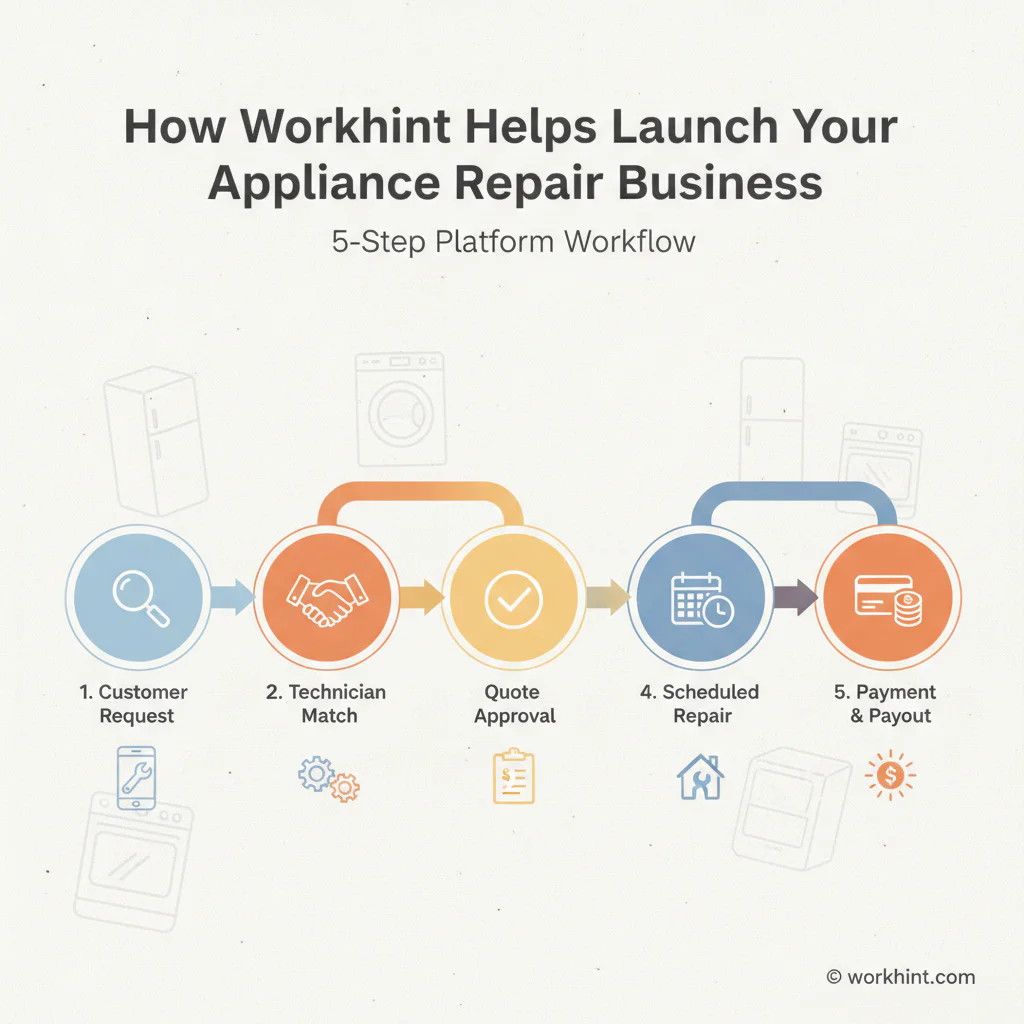
A customer submits a repair request through your branded portal with the appliance type, model, issue, location, photos, appointment windows, and urgency. Workhint routes it into an operations dashboard, checks service rules, and helps match it to qualified independent technicians.
The technician receives the job details, accepts or declines, and adds diagnostic notes, quote details, required parts, and availability. The customer approves the quote inside the platform. Workhint then coordinates scheduling, reminders, checklists, documentation, invoices, payment, payout, and reviews.
That matters because the hard part is turning calls, availability, quotes, approvals, payments, and follow-ups into a repeatable business. Workhint gives you the foundation to operate as a real service brand while staying lean.
First 7-day launch plan
- Day 1: Choose one launch market, three appliance categories, and a clear customer promise.
- Day 2: Set up the Workhint customer portal, intake form, dashboard, and technician onboarding flow.
- Day 3: Build the diagnostic fee, quote approval, scheduling, payment, and payout process.
- Day 4: Recruit five to ten independent technicians or repair partners and verify qualifications.
- Day 5: Contact landlords, property managers, local groups, agents, and neighborhood communities.
- Day 6: Route requests through the platform, test response times, and refine the intake form.
- Day 7: Review demand, quote approval rate, technician availability, feedback, and whether to invest more.
The outcome of week one should be learning. If customers request service and technicians accept jobs reliably, you have a base. If demand is weak, adjust before spending more.
Final launch checklist
- Choose a business name, launch city, and service area
- Register the business and confirm local licensing requirements
- Define which appliance categories you will support
- Secure appropriate insurance before accepting jobs
- Create the branded Workhint platform for intake, scheduling, quote approval, payments, and payouts
- Recruit qualified independent technicians and collect onboarding documents
- Set diagnostic, travel, labor, parts, and emergency pricing rules
- Create a simple landing page and local demand channels
- Book first jobs through the platform and track what breaks operationally
- Validate demand before buying vans, inventory, office space, or hiring employees
FAQ
How much does it cost to start an appliance repair business?
A traditional appliance repair business can require several thousand dollars or more for tools, training, insurance, transportation, parts, and marketing. A platform-first model starts leaner because independent technicians bring their own tools while you invest in brand, operations, insurance, onboarding, and customer acquisition.
Can I start an appliance repair business without employees?
Yes, if you coordinate vetted independent technicians or repair partners instead of hiring staff immediately. You still need agreements, quality standards, insurance, scheduling rules, and compliance checks.
Do appliance repair businesses need a license?
Requirements depend on your location and the work performed. General repair may have different rules from refrigerant, gas, or electrical work. Check requirements and recruit technicians with the right credentials.
How do appliance repair businesses make money?
Common revenue comes from diagnostic fees, labor margins, parts markups, emergency fees, maintenance plans, and repeat customers. In a platform model, margin comes from coordinating demand, delivery, payment, and customer experience.
How do I find the first customers?
Start locally. Contact property managers, landlords, real estate agents, Airbnb hosts, neighborhood groups, senior communities, and appliance-heavy small businesses. Ask for repair requests before spending heavily on ads.
Should I buy parts inventory before launching?
Usually not. Let technicians use their own standard parts and supplier relationships at first. Add shared inventory only after repeat jobs justify the cost.
Conclusion
You can start an appliance repair business without building a traditional repair company on day one. The lean path is to validate local demand, recruit qualified independent technicians, create a branded platform, and make the operating process reliable before investing heavily.
Workhint turns requests, matching, scheduling, approvals, payments, and payouts into one operating system. That lets you focus on proving demand.
Leave a Reply