


A handyman business can start lean when you sell jobs through a branded platform and fulfill them with vetted local providers.
How to start a handyman business is a practical startup question because customers already have the problem: small repairs, installations, punch-list work, and maintenance tasks that are too small for a general contractor but too important to ignore.
The traditional path is to buy tools, wrap a van, hire help, and hope demand arrives. A lower-risk path is to validate demand first: create a branded customer platform, recruit independent handypeople, route requests through one operating system, and invest in equipment only after job volume proves the market.
What’s in this article?
- Why a handyman business works
- What you need to launch without overspending
- How to price common handyman services
- How to get your first customers
- How Workhint helps you launch the operating platform
- A 7-day launch plan, checklist, and FAQ
Why a handyman business works
Handyman demand is steady because homes, rentals, offices, and small commercial spaces constantly need repairs. Customers do not always want a specialist for minor drywall, mounting, caulking, assembly, fixture replacement, door adjustments, or basic maintenance. They want someone reliable, insured, scheduled, and easy to pay.
The platform-first version works because the owner does not need to personally complete every job. You can start with a narrow service menu, recruit independent providers who already own basic tools, and use the brand to coordinate customer intake, quoting, scheduling, quality control, invoices, and payouts.
Providers join because the platform brings them jobs, handles customer communication, standardizes quoting, and reduces unpaid admin work. Customers buy because the experience feels organized and accountable.
What you need to launch
Start with the smallest version of the business that can accept a request, quote it, assign it, complete it, collect payment, and pay the provider. Avoid large remodels, electrical work, plumbing work, HVAC, roofing, or jobs that require a contractor license unless you have properly licensed providers and local compliance in place.
Licensing rules vary by state, city, and job size. Some areas allow small repair work without a contractor license, while others set strict dollar limits or require trade licenses. Build your first offer around compliant small jobs, carry general liability coverage, and verify local rules before taking paid work.
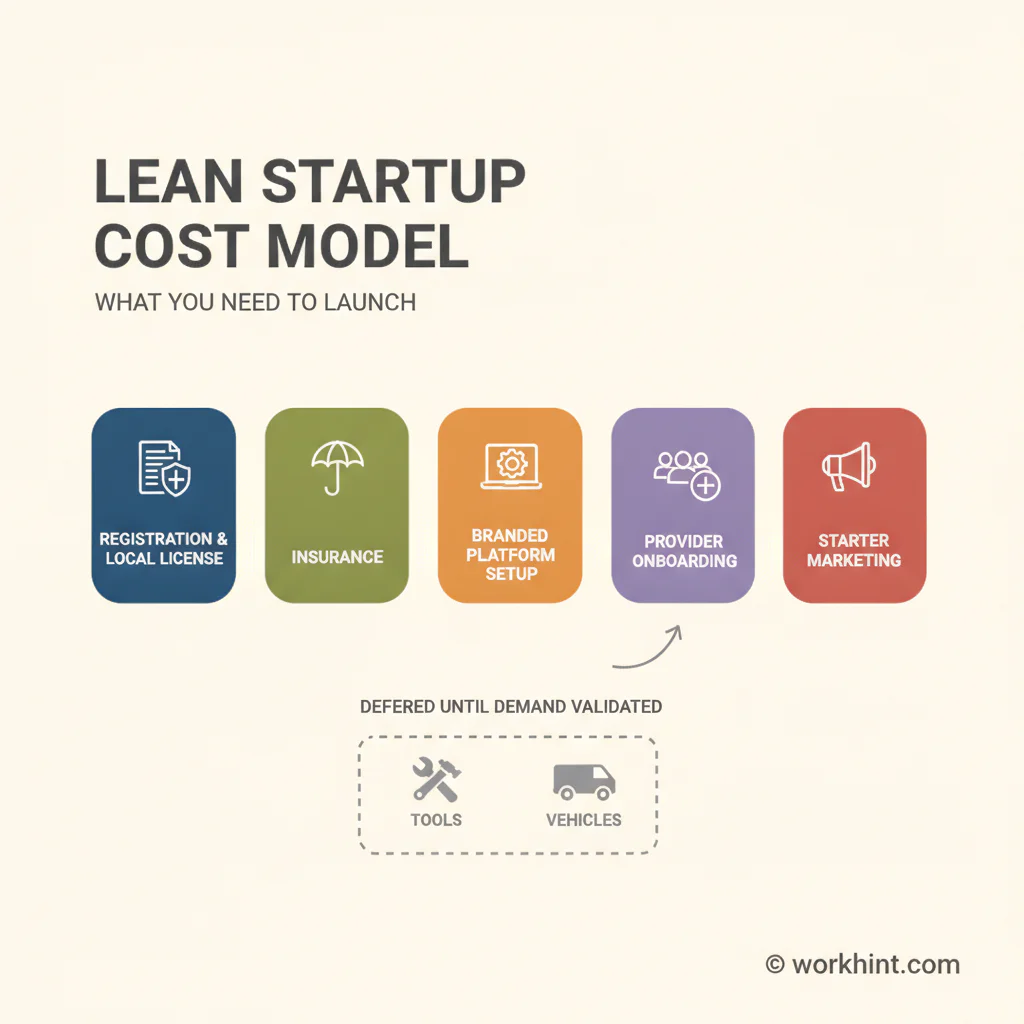
| Launch item | Lean budget | Why it matters |
|---|---|---|
| Business registration and local license | $100-$800 | Creates a legitimate operating entity and local compliance baseline. |
| General liability insurance | $50-$200 per month | Protects against property damage and customer claims. |
| Branded platform, intake, scheduling, payment, and payout setup | $200-$1,500 | Lets customers request work and lets providers fulfill jobs through one system. |
| Provider onboarding and background checks where appropriate | $100-$700 | Helps build a trusted independent provider network. |
| Starter marketing | $200-$1,000 | Funds local SEO, flyers, community outreach, and first ads. |
| Tools and supplies | $0-$1,500 | Keep this low if providers bring their own tools and you buy only job-specific supplies. |
How to price it
Handyman pricing usually works best as fixed project pricing for defined jobs, hourly pricing for open-ended punch lists, and recurring packages for landlords or property managers. The goal is not to be the cheapest option. The goal is to sell reliability, clear scheduling, clean communication, and completed work.
| Offer | Example price | Best use |
|---|---|---|
| Small repair visit | $95-$175 minimum | Simple fixes, adjustments, or single-task jobs. |
| Half-day punch list | $300-$600 | Multiple small tasks in one visit. |
| Assembly or installation | $75-$250 per item | TV mounting, shelves, furniture, fixtures, or hardware. |
| Property maintenance plan | $250-$1,000 per month | Recurring work for landlords, Airbnb hosts, offices, or small property portfolios. |
When you use independent providers, price with room for provider payout, operations, marketing, insurance, payment fees, callbacks, and profit. If a job is complex or regulated, route it only to properly licensed providers or decline it.
How to get first customers
Start with customers who have repeat pain: landlords, property managers, Airbnb hosts, real estate agents, home stagers, senior living communities, small offices, and busy homeowners. They need fast, reliable completion more than a flashy brand.
Create one simple offer such as “48-hour small repair service” or “rental turnover punch-list help.” Then contact local demand sources directly, post in neighborhood groups, build a Google Business Profile, ask early customers for reviews, and create pages for your launch neighborhoods.
Your first goal is to prove that customers will submit requests, accept quotes, and pay for completed work through your branded platform.
How Workhint helps launch it
Workhint lets you launch the handyman business as a branded operating platform instead of stitching together forms, spreadsheets, calendars, text messages, payment links, and contractor payout tools.
A customer can visit your branded portal, choose a service category, upload photos, describe the repair, request timing, approve a quote, and pay online. Inside the same system, you can review the request, match it to a vetted independent handyman, schedule the visit, assign the job, collect completion notes and photos, send the invoice, gather the review, and pay the provider.
For a handyman business, this matters because the operational details are the product. Customers want confidence that someone will show up, understand the scope, protect the property, finish the task, and resolve issues. Providers want clean job details, predictable scheduling, and fast payouts. Workhint gives the business that foundation before major asset purchases.
First 7-day launch plan
- Day 1: Choose your launch market, service categories, and jobs you will not accept.
- Day 2: Set up the branded Workhint platform, customer intake form, and provider roles.
- Day 3: Create pricing rules, quote approval, scheduling, payment, and payout flows.
- Day 4: Recruit three to five independent providers with the right tools, experience, insurance, and availability.
- Day 5: Contact landlords, real estate agents, Airbnb hosts, property managers, and neighborhood groups.
- Day 6: Route every request through the platform, even if volume is low, so the process is tested from day one.
- Day 7: Review demand, quote acceptance, provider response time, customer feedback, and whether any asset purchase is justified.
Final launch checklist
- Choose a specific launch neighborhood or customer segment.
- Register the business and check local handyman or contractor rules.
- Buy appropriate insurance before taking paid jobs.
- Create a short service menu with clear exclusions.
- Configure customer intake, quote approval, scheduling, payment, and provider payout flows.
- Recruit and vet the first independent providers.
- Create simple pricing for small visits, punch lists, and recurring maintenance.
- Launch outreach to landlords, agents, property managers, and local groups.
- Validate demand before buying vehicles, expensive tools, office space, or hiring employees.
FAQ
How much does it cost to start a handyman business?
A lean handyman business can often start with a few hundred to a few thousand dollars if providers bring their own tools and you focus spending on registration, insurance, platform setup, provider onboarding, and customer acquisition.
Do I need a license to start a handyman business?
It depends on your location and the type or value of the work. Many places treat small repairs differently from contracting work, but specialized trades and larger projects often require licenses. Check city, state, and trade rules before accepting jobs.
Can I run a handyman business with independent contractors?
Yes, if the model is structured correctly and follows local labor, tax, insurance, and licensing rules. Use independent providers for clearly scoped jobs, document expectations, and avoid treating contractors like employees without proper classification.
What handyman services should I offer first?
Start with simple, repeatable, low-risk jobs such as mounting, assembly, caulking, minor drywall patches, door adjustments, hardware replacement, and rental turnover punch lists. Avoid regulated or high-liability work until you have licensed providers.
How do handyman businesses get first customers?
The fastest path is local outreach to property managers, landlords, real estate agents, neighborhood groups, Airbnb hosts, and homeowners with urgent small repairs. Reviews and referrals become more important after the first completed jobs.
Is a handyman business profitable?
It can be profitable when pricing covers provider payouts, insurance, marketing, platform costs, travel, callbacks, and profit. Recurring maintenance accounts are especially valuable because they reduce the need to win every job from scratch.
Conclusion
A handyman business does not have to begin with a van, a full-time crew, or a large tool budget. Start with demand, a focused offer, a branded platform, and a reliable network of independent providers. If customers submit requests, approve quotes, and book jobs, you have evidence to grow. If they do not, you can adjust the offer before making expensive commitments.
Leave a Reply