


Mobile bartending can start as a lean event service before you buy a trailer, hire staff, or build custom software.
If you want to start a mobile bartending business, the fastest path is not to build a full bar company on day one. It is to validate demand, create a booking platform, and coordinate trained independent bartenders around private parties, weddings, corporate events, and community gatherings.
The appeal is clear: customers spend money on event experiences, venues need reliable beverage partners, and a dry-hire or service-only model can reduce early licensing, inventory, and equipment risk. Rules vary by state and city, especially when alcohol is sold directly, so start with compliant private-event service, proper insurance, and certified providers.
What’s in this article?
- Why a mobile bartending business works
- What you need to launch with a small budget
- How to price mobile bartending services
- How to get first customers
- How Workhint helps launch the business
- A 7-day launch plan, checklist, and FAQ
Why this business works
Mobile bartending sits inside a strong event economy. Weddings, birthdays, fundraisers, private dinners, corporate events, and venue rentals all need beverage service, but many hosts do not want to manage bartender sourcing, scheduling, setup, guest flow, and payment themselves.
The business also works because it can start small. You do not need a storefront, trailer, or employees before demand is proven. A practical first offer can be simple: certified bartenders, a portable bar setup, event intake, quote approval, scheduling, and post-event payment.
Providers have a reason to join too. Independent bartenders often want extra weekend work without building a brand, handling lead generation, or chasing invoices. Your company can become the booking layer that brings them vetted event work and clear expectations.
What you need to launch
Start by choosing the safest legal model for your market. In many places, a service-only or dry-hire model means the client provides the alcohol while your business provides certified bartenders, planning, setup, supplies, and service. Selling alcohol may require permits, licenses, or event-specific approvals. Verify local alcohol, catering, food handling, business registration, insurance, and venue rules before accepting paid jobs.
The goal is to sell and fulfill the first few events without overbuying assets. Focus on the branded platform, provider network, insurance, certification, customer intake, quotes, scheduling, payments, and portable supplies.
| Launch item | Lean approach | Estimated early budget |
|---|---|---|
| Business registration | Register locally and get tax basics in place | $50-$500 |
| Insurance | General liability and liquor liability where required | $500-$1,500 annually |
| Training | Responsible alcohol service certification for providers | $20-$100 per provider |
| Portable setup | Collapsible bar, bar tools, bins, signage, menus | $300-$1,200 |
| Branded platform | Intake, quotes, scheduling, payments, provider onboarding | Start lean before custom software |
| Marketing | Website, local SEO, event vendor outreach, photos | $100-$750 |
A trailer, van wrap, inventory program, warehouse, or full-time staff can come later. First prove that customers will request quotes and reliable bartenders will accept jobs through your system.
How to price it
Mobile bartending pricing usually works best as simple packages. Customers want to know what is included, how many guests are covered, how many service hours they get, and what happens if the event runs long.
Use pricing that separates labor, setup complexity, travel, and add-ons. Your quote needs to cover bartender pay, prep time, admin time, supplies, insurance, platform costs, and profit.
| Package | Example scope | Example price |
|---|---|---|
| Simple party service | 1 bartender, 3 hours, host-provided alcohol, basic setup | $350-$650 |
| Wedding or corporate bar | 2 bartenders, 4 hours, menu help, portable bar, setup | $900-$1,800 |
| Premium event service | Multiple bartenders, custom menu, garnish prep, longer service | $1,800-$3,500+ |
| Add-ons | Extra hour, mocktail station, glassware coordination, travel | $75-$250+ each |
A lean revenue target could be four events per month at an average $1,200 booking. If provider payouts and event costs take 50 percent, the business keeps about $2,400 before marketing, insurance allocation, admin, and taxes. That is enough to validate demand before investing in owned trailers or larger equipment.
How to get first customers
Your first customers will likely come from trust channels, not ads. Start with wedding planners, photographers, venues, caterers, DJs, corporate office managers, and private hosts in your network.
Create a clear offer: mobile bartending for private events, simple quote requests, certified bartenders, transparent packages, and a reliable event-day process. Ask early customers for photos, reviews, and referrals. Those assets matter because event buyers need proof before booking.
Local SEO also matters. Build pages around searches like mobile bartending service, mobile bar service, wedding bartender, private event bartender, and bartender for hire in your city.
How Workhint helps launch it
Workhint can become the branded operating platform for the mobile bartending business before you invest in custom software or a large team. Instead of stitching together forms, spreadsheets, payment links, contractor onboarding, calendars, and message threads, you can launch a customer-facing platform for quote requests and event booking.
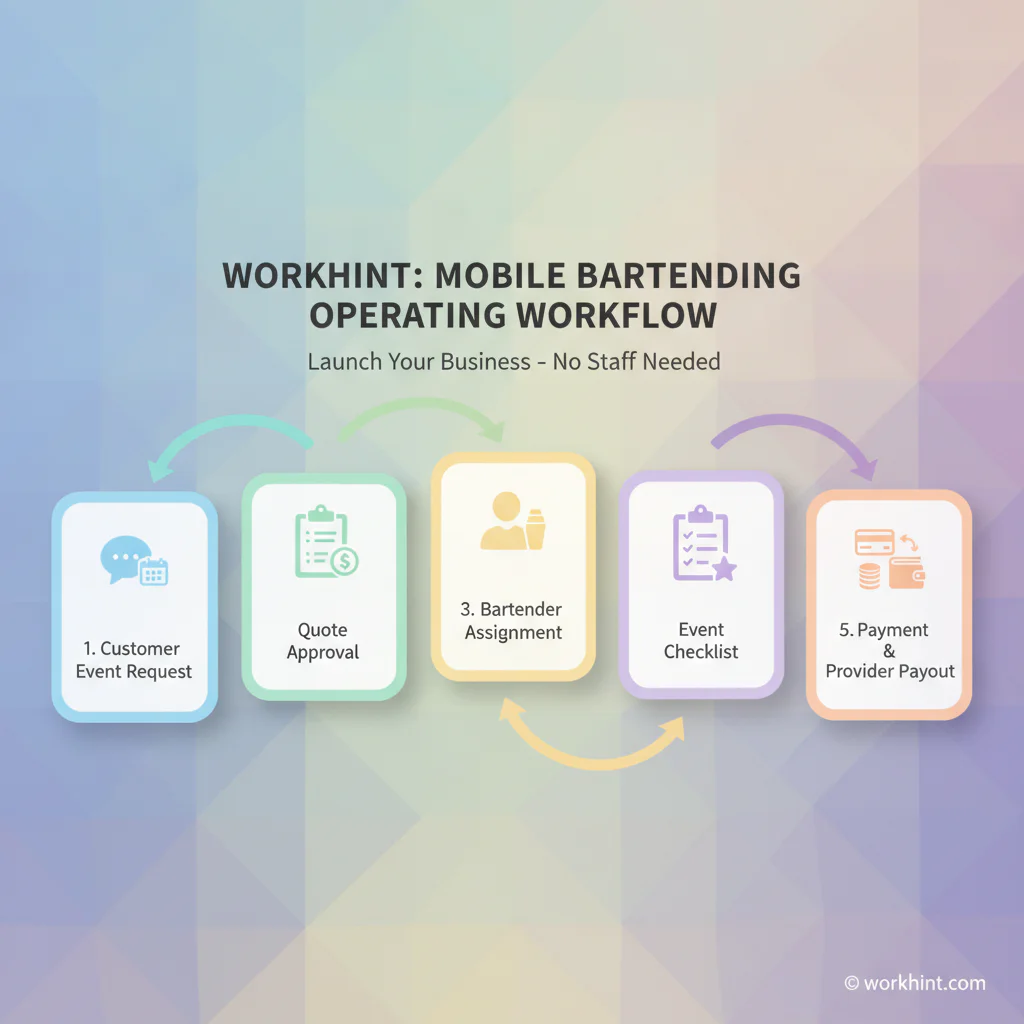
A customer requests service through your branded portal, enters the event date, venue, guest count, alcohol model, package needs, and add-ons. Workhint routes that request into an operations dashboard, helps generate a quote, tracks approval, schedules the event, and assigns available independent bartenders.
Providers can be invited into the platform, submit certifications, accept event assignments, review checklists, upload event notes, and receive payouts after completion. The owner can see upcoming events, provider readiness, customer approvals, invoices, payments, reviews, and city-by-city demand from one operating system.
This is the launch advantage: you can sell a real branded service platform while staying lean behind the scenes. Workhint gives the business structure before you buy expensive equipment, hire employees, or build custom tools.
First 7-day launch plan
- Day 1: Choose the launch market, event type, compliance model, and first offer.
- Day 2: Set up the branded Workhint platform basics, including customer intake and quote requests.
- Day 3: Build pricing packages, approval steps, scheduling rules, payment collection, and provider payout logic.
- Day 4: Recruit three to five certified independent bartenders or hospitality providers.
- Day 5: Contact venues, planners, caterers, photographers, and private event hosts.
- Day 6: Route every inquiry through the platform, quote the first jobs, and test provider availability.
- Day 7: Review demand, pricing, provider readiness, and fulfillment risk before buying bigger assets.
Final launch checklist
- Choose a narrow first event niche and service area.
- Verify local alcohol, business, insurance, and certification requirements.
- Create two or three easy-to-understand service packages.
- Configure customer intake, quote approval, scheduling, payment, and provider payout flows.
- Recruit a small network of certified independent bartenders.
- Create event checklists for setup, service, closing, and post-event notes.
- Build outreach lists for venues, planners, caterers, and corporate event buyers.
- Book first conversations before buying a trailer or hiring staff.
FAQ
How much does it cost to start a mobile bartending business?
A lean service-only launch can often start with registration, insurance, certifications, a portable setup, basic marketing, and a branded operating platform. The budget can be far lower than opening a bar, especially if you delay trailers, vehicles, and inventory until demand is proven.
Do I need a liquor license for mobile bartending?
It depends on your location and business model. Selling alcohol directly is very different from providing bartending service for host-provided alcohol. Check state, city, venue, catering, and event permit rules before offering paid service.
Can I start a mobile bartending business with no staff?
Yes, if you use a provider-network model. The owner can manage the brand, platform, sales, quotes, and customer relationships while independent certified bartenders accept event assignments.
What should I charge for mobile bartending?
Many operators use flat packages based on guest count, service hours, number of bartenders, setup complexity, travel, and add-ons. Start with simple packages, then adjust after you understand local demand and fulfillment costs.
What equipment do I need first?
Start with a portable bar setup, bar tools, storage bins, menus, signage, basic supplies, and checklists. Avoid buying a trailer, vehicle, or large inventory until bookings justify the investment.
How do I get my first mobile bartending clients?
Start with event vendors and relationship-driven channels: venues, planners, caterers, photographers, DJs, corporate office managers, and local community groups. Early proof, reviews, and photos help convert later search traffic.
Conclusion
A mobile bartending business is attractive because it can be launched as a lean branded service platform, not a traditional bar company. Validate demand first, build a reliable provider network, keep the first offer simple, and use Workhint to run the customer request, quote, scheduling, payment, and payout system from the beginning.
Leave a Reply