

Mobile fingerprinting can start as a focused local service before becoming a full live scan operation.
If you are researching how to start a mobile fingerprinting business, the opportunity is simple: people need fingerprints for employment, licensing, background checks, immigration, professional credentials, and regulated work.
The mistake is assuming you must buy every live scan device, lease an office, and build a full walk-in operation before getting customers. A better first version is platform-first: create a branded booking experience, validate demand with local organizations, recruit trained technicians or fulfillment partners, and invest in expensive equipment only after appointment volume justifies it.
What’s In This Article?
- Why mobile fingerprinting works as a local service business
- What you need to launch without overinvesting
- How to price ink card, live scan, mobile, and group appointments
- How to get first customers
- How Workhint can become the operating foundation
- A 7-day launch plan, checklist, and FAQ
Why This Business Works
Mobile fingerprinting is useful because the customer often has urgency. Employers need applicants cleared. Nurses, teachers, security workers, contractors, and financial professionals may need prints for licensing. Organizations prefer a provider who can come onsite, handle appointments cleanly, and reduce administrative friction.
The business also has a natural provider-network model. You can begin with trained mobile technicians, ink card services, and partner locations. If your state requires approval to transmit live scan fingerprints, validate demand first, then pursue device purchases, vendor approvals, or partnerships once the market is clear.
Customers buy convenience, accuracy, speed, and professionalism. Providers join because appointments can be scheduled around existing work, especially if they are already notaries, compliance service providers, document preparers, or mobile administrative professionals.
What You Need To Launch
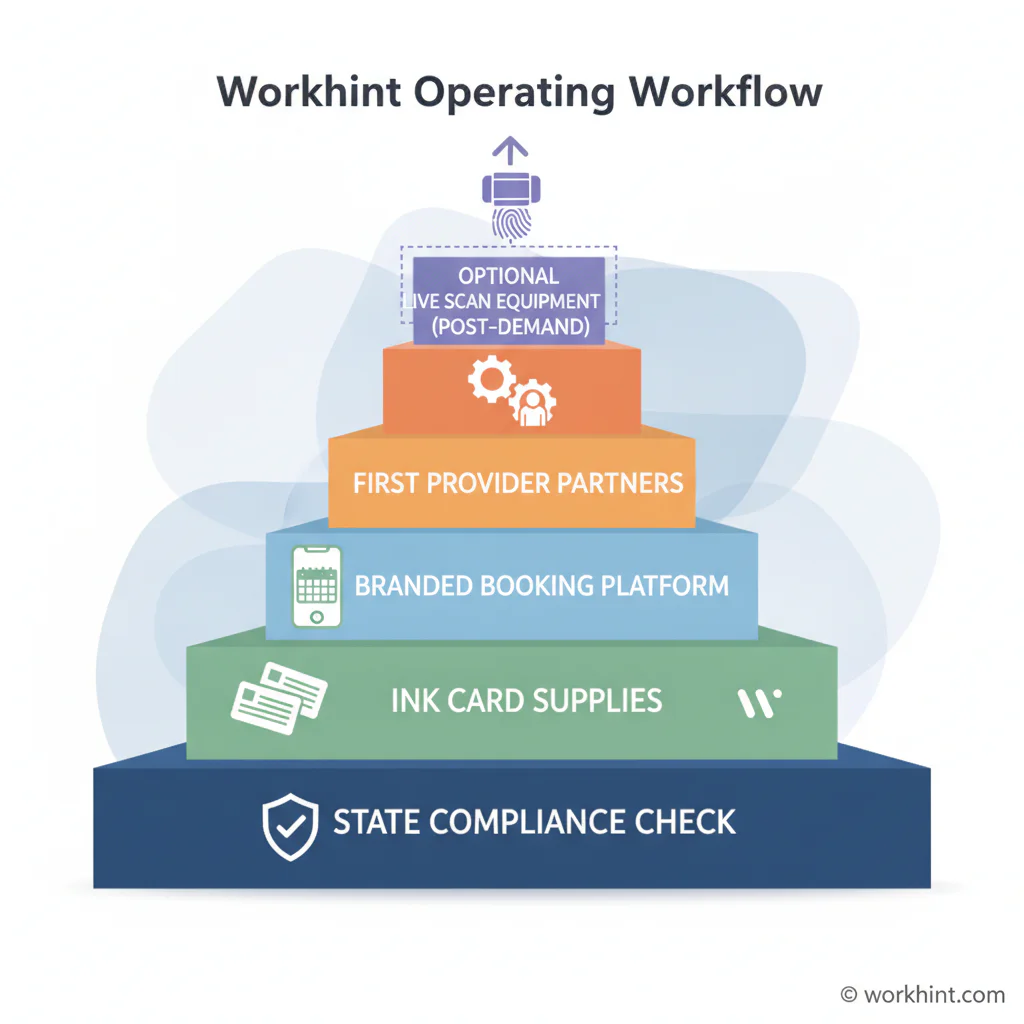
The first launch should prove whether employers, care agencies, schools, staffing firms, security firms, real estate offices, and licensed professionals in your market need mobile fingerprinting enough to book. Start with the essential operating pieces before buying expensive assets.
| Launch item | Practical first version | Estimated range |
|---|---|---|
| Business setup | Entity, local business registration, basic bookkeeping | $100-$800 |
| Compliance review | State rules, approved forms, privacy process, vendor requirements | $0-$1,000 |
| Insurance | General liability and professional coverage where appropriate | $500-$2,500 per year |
| Branded platform | Booking, intake, document instructions, payment, technician scheduling | $300-$1,500 to launch |
| Ink card supplies | FD-258 cards, ink pads, wipes, envelopes, mobile kit | $100-$500 |
| Live scan equipment | Delay until demand is proven unless required for your offer | $4,000-$10,000+ |
| Local marketing | Website page, Google Business Profile, flyers, outreach list | $200-$1,500 |
State rules matter. Some markets allow simple ink card services with modest setup. Live scan transmission can require approved devices, agency registration, training, or vendor authorization. Check state requirements before promising live scan services.
How To Price It
Pricing should separate the fingerprinting service from the convenience fee. A walk-in ink card appointment may be inexpensive, but mobile service saves travel time for applicants and administrative time for employers.
| Offer | Example price | Best use case |
|---|---|---|
| Ink fingerprint card | $40-$75 per card | Individuals who need FBI or agency cards |
| Live scan appointment | $50-$120 plus required government fees | Licensing, employment, and state background checks |
| Mobile individual visit | $125-$250 total | Executives, families, urgent appointments |
| Employer onsite session | $200-$500 setup plus per-person fee | Care agencies, schools, staffing firms, security companies |
| Monthly employer account | $300-$1,500 per month | Recurring applicant volume and priority scheduling |
Start with mobile ink card appointments and employer group visits. If live scan is allowed and approved, add it. If not, partner with an approved provider while you build demand.
How To Get First Customers
Your first customers are not random consumers. They are organizations that repeatedly send people for fingerprinting: home care agencies, staffing companies, schools, childcare providers, security firms, medical offices, real estate brokerages, licensing coaches, immigration service providers, and notary offices.
Create a local list and contact operations managers, office managers, HR coordinators, and compliance administrators. Offer one onsite fingerprinting block for their next applicant group, booked through your branded platform with reminders and payment collection handled up front.
Use local SEO, Google Business Profile, referral partners, and community groups, but do not wait for search traffic. This is a direct outreach business at the beginning. The goal is to validate whether organizations will book recurring mobile appointments before you buy more equipment.
How Workhint Helps Launch It
Workhint can serve as the branded operating system for the mobile fingerprinting business before you invest in custom software or heavy infrastructure.
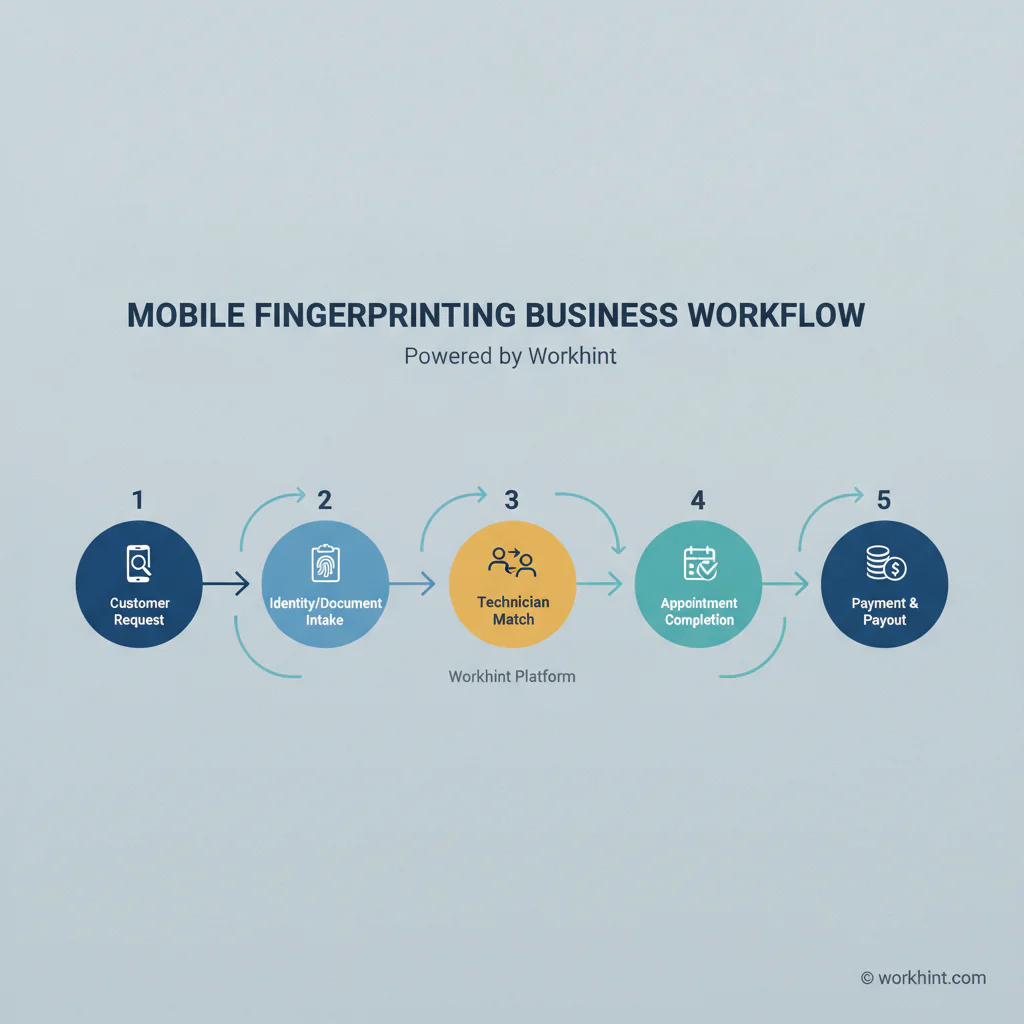
A customer or employer lands on your branded portal, chooses ink card, live scan, mobile visit, or group session, uploads required instructions, confirms identity requirements, and pays the appointment fee. The system routes the request to your operations dashboard, checks the service area and compliance path, then assigns the appointment to an approved technician or provider partner.
The technician receives the appointment details, required forms, checklist, location, and completion steps on mobile. After the visit, the customer receives confirmation, the invoice is closed, and contractor payout can be tracked from the same platform. For employer accounts, Workhint can support recurring booking links, applicant status tracking, role-based access, document collection, appointment reminders, payment records, and reporting.
That means the first version can feel professional without an office, large staff, or custom software build. You focus on demand, provider quality, and local partnerships while Workhint handles the operating foundation.
First 7-Day Launch Plan
- Day 1: Choose the launch market, customer type, and first offer. Start with one city and one simple service package.
- Day 2: Configure the branded booking platform, intake questions, service area, payment rules, and customer instructions.
- Day 3: Map compliance requirements, approved forms, privacy handling, refund rules, and technician checklists.
- Day 4: Recruit the first technicians, notary partners, or approved provider partners who can fulfill appointments professionally.
- Day 5: Build a list of 50 local organizations that regularly need fingerprinting for applicants or members.
- Day 6: Send direct outreach and offer a small onsite pilot or mobile appointment block.
- Day 7: Review demand, pricing, provider readiness, and compliance issues before buying live scan equipment or expanding.
Final Launch Checklist
- Pick one city, one customer segment, and one first offer.
- Check state and agency rules for ink cards, live scan, vendor approval, and data handling.
- Create service packages for individual, mobile, and employer group appointments.
- Set up a branded Workhint portal for booking, intake, payment, scheduling, and technician assignment.
- Prepare fingerprint cards, supplies, appointment instructions, privacy language, and completion checklists.
- Recruit trained technicians or approved service partners.
- Contact first employer and licensing-adjacent buyers directly.
- Validate demand before investing heavily in live scan equipment, office space, or employees.
FAQ
How much does it cost to start a mobile fingerprinting business?
A lean ink-card and mobile appointment model may start for a few thousand dollars. A full live scan setup can require several thousand dollars more for approved equipment, software, compliance, and training.
Do I need live scan equipment immediately?
Not always. If your first offer can use ink cards or partner fulfillment, validate demand first. Buy live scan equipment when you understand local volume, state rules, and recurring customer demand.
Do I need a license to offer fingerprinting?
Requirements vary by state and by fingerprinting type. Live scan transmission often has stricter approval requirements than ink cards. Check your state agency, approved vendor, and background check program rules before launching.
Who are the best first customers?
Start with organizations that repeatedly need applicant or member fingerprinting: care agencies, schools, childcare providers, staffing firms, security companies, licensing programs, and local professional offices.
Can I use independent contractors?
Often, yes, if they are trained, approved where required, insured where appropriate, and operating under a clear process. Use written agreements and consistent checklists to protect quality and compliance.
How do mobile fingerprinting businesses make money?
Revenue usually comes from per-card fees, live scan service fees, mobile convenience fees, group appointment setup fees, and recurring employer accounts.
What should I avoid at the beginning?
Avoid buying expensive equipment, leasing an office, or hiring employees before validating demand. Prove that customers will book and providers can fulfill the work first.
Conclusion
A mobile fingerprinting business is strongest when it starts as a focused operating system, not a pile of equipment. Build the branded platform, understand compliance, recruit capable providers, sell to recurring local demand sources, and then invest into live scan equipment or larger operations when the numbers support it.
That approach keeps startup risk lower and makes the business easier to scale city by city.
Leave a Reply