

A personal chef business can start lean when you sell the demand first and build the operating system around booked meals.
How to start a personal chef business is a practical question for cooks who want better margins than restaurant work without opening a restaurant. The opportunity is simple: busy families, executives, seniors, vacation-rental guests, and health-focused clients want better meals without planning, shopping, cooking, and cleanup.
The fastest path is not leasing a kitchen, buying equipment, or hiring a staff. It is launching a focused offer, building a small network of independent chefs or culinary partners, and using a branded platform to handle requests, menus, scheduling, payments, and provider payouts before you invest heavily.
What’s in this article?
- Why a personal chef business can work as a low-overhead service business.
- What you need to launch without building a traditional food operation first.
- How to price weekly meal prep, dinner parties, and private chef packages.
- How to find the first customers and validate demand.
- How Workhint can become the branded operating platform for the business.
Why this business works
Personal chef services sit between restaurants, meal delivery, catering, and household help. Customers pay for personalization: dietary preferences, fresh meals, special occasions, convenience, and trust. That creates room for premium pricing compared with ordinary food delivery.
The model also has low fixed overhead. Many personal chefs start with food-safety certification, insurance, basic business registration, a simple brand, and the tools they already use. Instead of building capacity before demand exists, the founder can recruit a few vetted independent chefs and match them to customer requests as bookings come in.
Providers have a reason to join because the platform can send them qualified jobs, clear menus, customer notes, schedules, payment terms, and repeat-client opportunities. Customers have a reason to buy because the service feels more reliable than hiring an individual chef through scattered messages.
What you need to launch
Start with the smallest version that can safely serve real customers. Requirements vary by city and state, especially around food handling, home kitchens, commercial kitchens, cottage food rules, and sales tax. Check local health department rules before taking paid work.
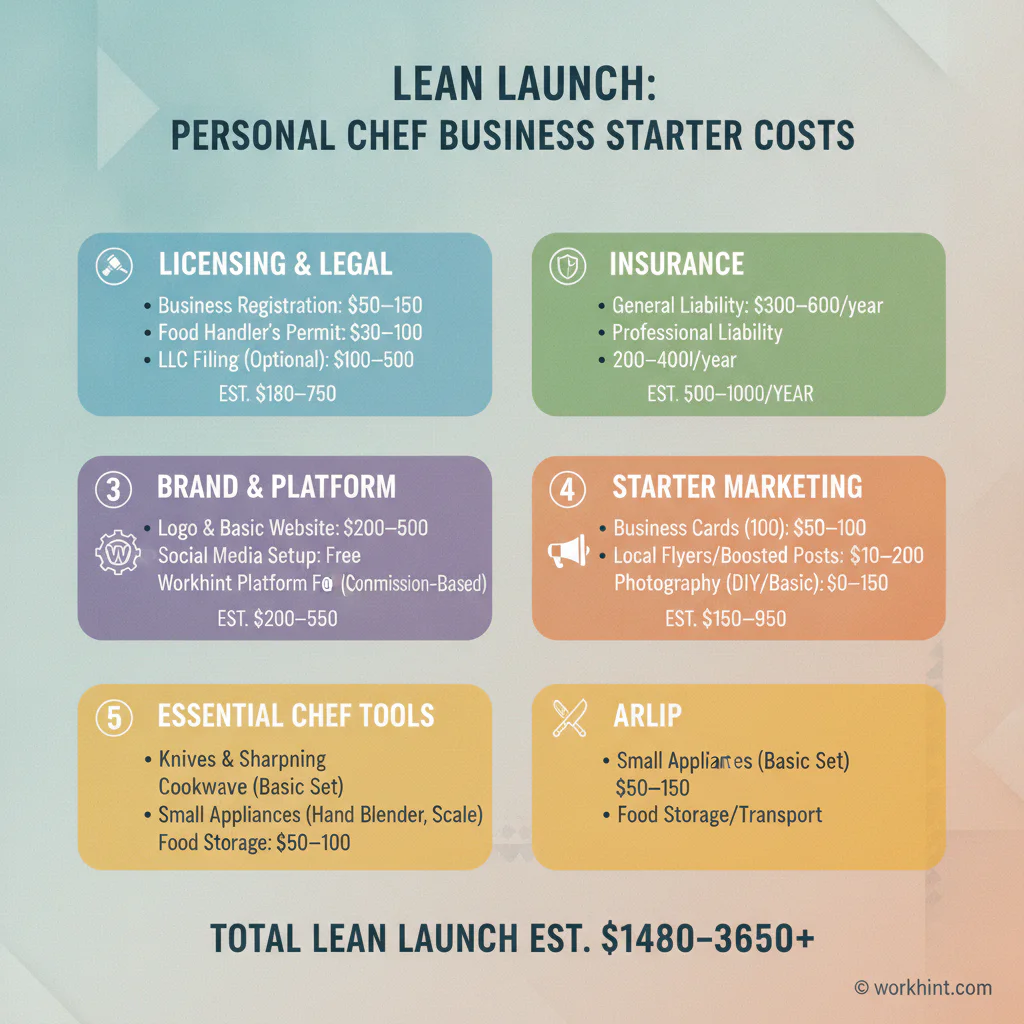
| Launch item | Lean starting range | Why it matters |
|---|---|---|
| Business registration and local license | $50 to $500 | Creates the legal entity or local permission to operate. |
| Food safety certification | $20 to $200 | Builds trust and may be required for food service work. |
| Liability insurance | $300 to $800 per year | Protects against accidents, property damage, and food-related claims. |
| Brand, domain, and landing page | $100 to $600 | Gives customers a credible place to request service. |
| Branded Workhint platform setup | Start lean | Handles intake, scheduling, quotes, payments, chef onboarding, and payouts. |
| Starter marketing | $100 to $500 | Funds local outreach, samples, photos, and referral offers. |
Avoid buying expensive equipment early unless a booked service requires it. For many launches, chefs can use client kitchens, their own knives and small tools, approved prep spaces when required, and grocery reimbursement or client-funded ingredients.
How to price it
Price around the job outcome, not only cooking hours. Include planning, shopping, prep, travel, cooking, cleanup, admin time, platform fees, insurance, taxes, and provider payout. Keep the first offer simple enough to sell quickly.
| Offer | Example price | Best first customer |
|---|---|---|
| Weekly meal prep visit | $250 to $600 plus groceries | Busy households, seniors, fitness clients, new parents. |
| Small dinner party | $75 to $200 per guest plus ingredients | Hosts who want restaurant-quality food at home. |
| Vacation rental chef night | $500 to $1,500 per event | Travel groups, property managers, concierge partners. |
| Special diet package | $400 to $900 per week | Clients needing gluten-free, diabetic-friendly, high-protein, or family menus. |
Validate willingness to pay before expanding the menu. If prospects hesitate, test a narrower package rather than discounting everything: three dinners for a family, one event menu, or a weekly senior meal plan.
How to get first customers
The first goal is proof of demand. Start with channels where trust already exists: referrals, neighborhood groups, real estate agents, vacation rental hosts, senior care coordinators, gyms, dietitians, event planners, and executive assistants.
Give each prospect a clear offer: a fixed package, sample menu, service area, booking process, and starting price. Send them to the branded request form instead of managing every lead through text messages. That makes the business feel real even before it is large.
Photos, reviews, and repeat bookings matter more than broad advertising at the beginning. After the first few jobs, turn customer feedback into proof: menu examples, before-and-after prep photos, testimonials, and referral offers.
How Workhint helps launch it
Workhint can generate the branded operating platform for the personal chef business before the founder builds custom software or stitches together forms, calendars, payments, spreadsheets, and messaging tools.
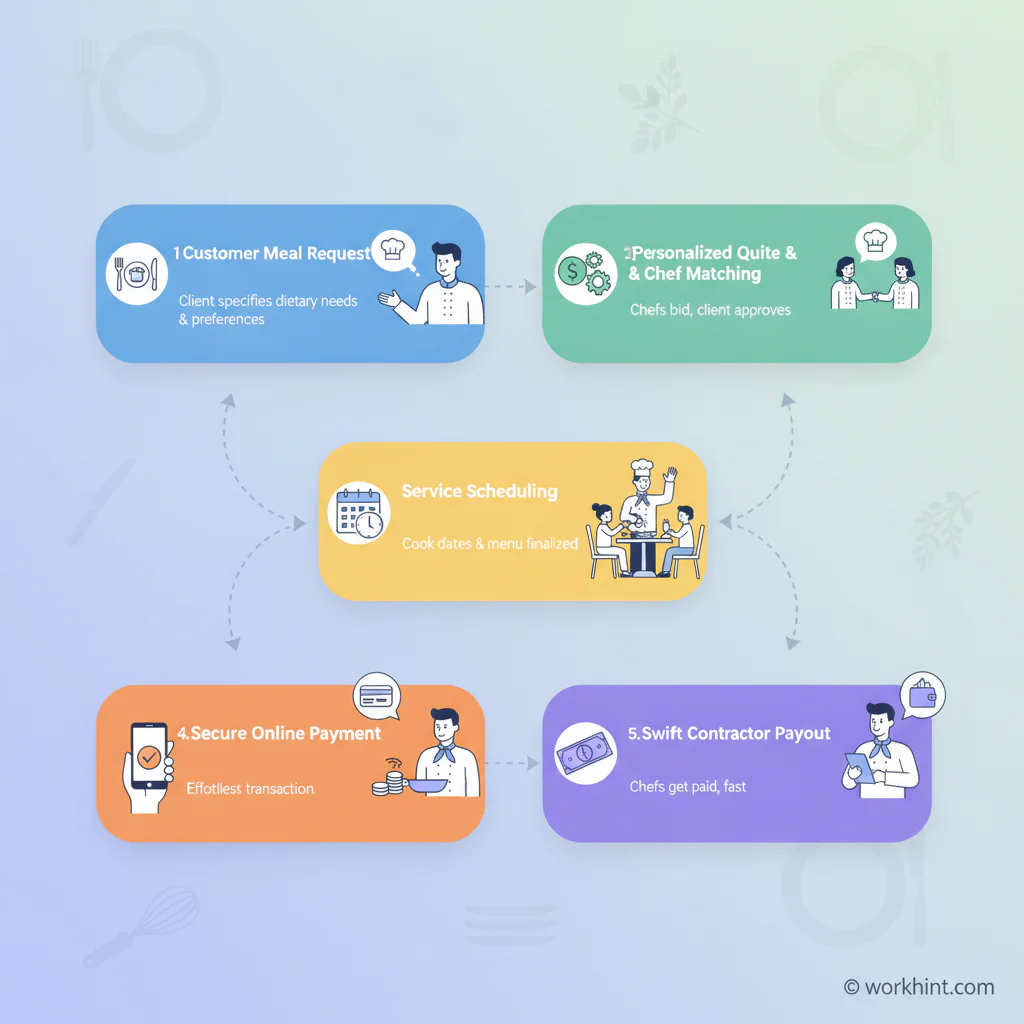
A customer requests weekly meal prep, a dinner party, or a special diet package through the branded portal. The intake flow collects address, dates, guest count, allergies, kitchen access, dietary goals, budget, and menu preferences. The owner reviews the request, sends a quote, and routes the approved job to an independent chef in the provider network.
The chef receives the assignment, menu notes, prep checklist, timing, customer instructions, forms, and payout terms. The customer can approve the quote, pay online, see scheduled service details, and leave a review. The owner can manage chef onboarding, documents, availability, job status, invoices, customer communication, and contractor payouts from one system.
That changes the launch path. Instead of acting like a solo chef forever or investing in a full traditional operation, the founder can validate demand with a branded service platform, a small chef network, and a repeatable workflow.
First 7-day launch plan
- Day 1: Choose the first niche, such as weekly family meal prep, senior meals, or vacation-rental dinners.
- Day 2: Set up the branded Workhint platform basics: intake form, customer dashboard, provider onboarding, and admin view.
- Day 3: Create pricing, quote approval, scheduling, online payment, chef assignment, and payout flows.
- Day 4: Recruit three to five independent chefs or culinary partners and collect availability, skills, documents, and service areas.
- Day 5: Contact referral sources and first prospects with one simple package and a booking link.
- Day 6: Route every inquiry through the platform, follow up quickly, and book calls or paid trial visits.
- Day 7: Review demand, pricing, chef readiness, fulfillment quality, and customer objections before spending more.
Final launch checklist
- Pick one starting niche and service area.
- Confirm local licensing, food safety, insurance, and tax requirements.
- Create three simple service packages and sample menus.
- Configure the branded Workhint intake, quote, scheduling, payment, and payout workflow.
- Recruit a small network of independent chefs or culinary partners.
- Build a landing page and customer request form.
- Contact referral partners and first prospects.
- Complete the first paid jobs and collect reviews.
- Invest in equipment, ads, or owned facilities only after demand is proven.
FAQ
How much does it cost to start a personal chef business?
A lean personal chef business can often start for under a few thousand dollars, depending on local licensing, insurance, food-safety requirements, branding, and marketing. Avoid major equipment or kitchen costs until booked demand justifies them.
Do personal chefs need a license?
Usually some form of business registration or local license is required, and food-related rules vary by location. Check your city, county, state, and health department requirements before selling services.
Do I need a commercial kitchen?
Not always. Some personal chef services cook in the client’s home, while other models require approved prep space. The answer depends on your menu, location, preparation method, and local health rules.
Can I use independent contractors?
Many personal chef platforms work with independent providers, but classification rules matter. Use clear contracts, role definitions, insurance checks, and local legal guidance before building a contractor network.
How do personal chefs get clients?
Early clients usually come from referrals, neighborhood groups, Google Business Profile, partnerships with property managers or senior services, local networking, and strong photos or reviews from first jobs.
Is a personal chef business profitable?
It can be profitable when pricing covers food planning, shopping, travel, cooking, cleanup, admin, insurance, taxes, and provider payouts. Repeat weekly clients and premium event packages usually improve margins.
Conclusion
A personal chef business does not need to start like a restaurant. Start with a focused offer, prove demand, build a small independent chef network, and let a branded Workhint platform handle the operational foundation. Once customers are booking and providers can fulfill the work reliably, invest where the demand is already visible.
Leave a Reply