

A travel agency can start as a niche booking platform before it ever becomes a staffed office.
If you want to start a travel agency with a small budget, the fastest path is not renting a storefront or hiring agents. It is choosing a narrow travel niche, building a simple branded client platform, partnering with suppliers or a host agency, and validating demand with real travelers before adding overhead.
This model works especially well for founders who understand a specific customer: families planning Disney trips, remote teams booking retreats, couples planning destination weddings, luxury travelers, cruise buyers, sports tournament families, or small companies that need recurring travel support.
The opportunity is not just booking flights and hotels. The opportunity is becoming the trusted operating layer between travelers, suppliers, advisors, payments, documents, itinerary changes, and post-trip follow-up.
What’s in this article?
- Why a travel agency can still work as a small-budget startup
- What you need before selling your first trip
- How to price planning fees and commissions
- How to get first customers without paid ads
- How Workhint can help launch the branded travel platform
- A 7-day launch plan, checklist, and FAQ
Why this business works
Travelers can book online, but many still want help when the trip is expensive, complex, emotional, or time-sensitive. A honeymoon, family reunion, executive retreat, destination wedding, safari, cruise group, or multi-country itinerary carries more risk than a simple hotel stay.
That is why the best starting point is a niche. A general travel agency has to compete with every booking site. A niche agency can become known for one buyer, one type of trip, or one destination category.
A small-budget travel agency also benefits from a platform-first model. Instead of hiring staff, the founder can start with a branded request flow, a client dashboard, a supplier checklist, and a small network of independent travel advisors or destination specialists who help fulfill demand as bookings grow.
Most competitors explain host agencies, training, and business registration. Fewer explain how to run the daily operating system: intake, qualification, quotes, supplier coordination, itinerary approval, payments, client updates, and follow-up. That operating gap is where a modern agency can feel sharper from day one.
What you need to start a travel agency
You do not need an office, a large payroll, or custom software to test this business. You need a clear offer, a basic legal setup, access to booking infrastructure, insurance where appropriate, and a professional way to manage client requests.
Many new travel advisors use a host agency because it can provide supplier relationships, training, booking tools, accreditation support, and commission infrastructure. Rules vary by state and business model, so check seller-of-travel registration requirements before selling to residents of states that regulate travel sellers.
| Launch item | Lean starting range | Why it matters |
|---|---|---|
| Business registration and banking | $100 to $800 | Creates a basic operating structure and separates business money from personal money. |
| Host agency, training, or accreditation path | $500 to $3,000 | Gives a new agency supplier access, booking support, and practical industry training. |
| Errors and omissions insurance | $300 to $1,200 | Protects against claims tied to mistakes, omissions, or professional advice. |
| Brand, domain, and launch website | $200 to $1,000 | Makes the agency credible enough to collect real travel requests. |
| Branded Workhint platform setup | Start lean | Handles intake, trip requests, advisor assignments, approvals, payments, and client updates. |
| First customer acquisition | $200 to $1,500 | Funds local partnerships, referral materials, niche content, and direct outreach. |
The lean goal is to validate one profitable niche before expanding. Avoid paying for trade shows, a large brand campaign, office space, or multiple full-time agents until you know which trips people will actually request and pay you to plan.
How to price it
Travel agencies usually make money through commissions, planning fees, service fees, or a combination. Beginners often hesitate to charge fees, but a fee can qualify serious clients and protect the time required to research custom travel.
The right pricing depends on complexity. A simple hotel booking may not justify a large fee. A destination wedding, corporate retreat, or multi-country itinerary should.
| Offer | Example price | Best use |
|---|---|---|
| Trip consultation | $50 to $150 | Early advice, destination fit, budget review, and trip feasibility. |
| Custom itinerary planning | $150 to $500 | Family vacations, honeymoons, cruises, and multi-stop trips. |
| Complex or group travel planning | $500 to $2,000+ | Retreats, weddings, tours, incentive trips, and large family groups. |
| Supplier commissions | Varies by supplier | Hotels, cruises, tours, packages, insurance, and some activities. |
| Monthly business travel support | $500 to $2,500+ | Small companies that need recurring booking coordination and traveler support. |
Start with one clear package. For example: a $250 custom family vacation planning fee that includes a discovery call, two itinerary options, supplier coordination, booking support, and a final travel document checklist.
How to get first customers
Your first customers should come from a niche audience, not broad advertising. Pick one buyer and build around their trip type.
If you specialize in family cruises, partner with parent groups, youth sports communities, schools, and local family creators. If you focus on corporate retreats, contact founders, chiefs of staff, people teams, and coworking communities. If you focus on destination weddings, build referral relationships with photographers, planners, venues, and bridal boutiques.
Use the branded platform as the conversion point. Every outreach message should point people to a clean trip request form, not a vague promise to schedule a call. The goal is to capture enough structured demand to see which requests repeat.
How Workhint helps launch it
Workhint can become the branded operating platform for the travel agency before the founder invests in a large team or custom booking infrastructure.
A traveler lands on the agency’s branded portal and submits a trip request with dates, destination ideas, budget, travelers, special needs, and planning preferences. Workhint routes that request into an internal operations dashboard where the founder can qualify the lead, assign an independent advisor or destination specialist, collect missing documents, prepare package options, and request approval.
Once the traveler approves a proposal, Workhint can coordinate the next steps: payment collection, advisor tasks, supplier follow-ups, itinerary documents, traveler checklists, reminders, and post-trip reviews. For group trips, the platform can manage multiple travelers, forms, approvals, deposits, balances, and status updates in one branded experience.
This matters because the founder is not just buying software for an existing agency. They are using Workhint to launch the agency’s operating system: client intake, advisor network, trip workflow, communication, payment, and reporting from the first request.
First 7-day launch plan
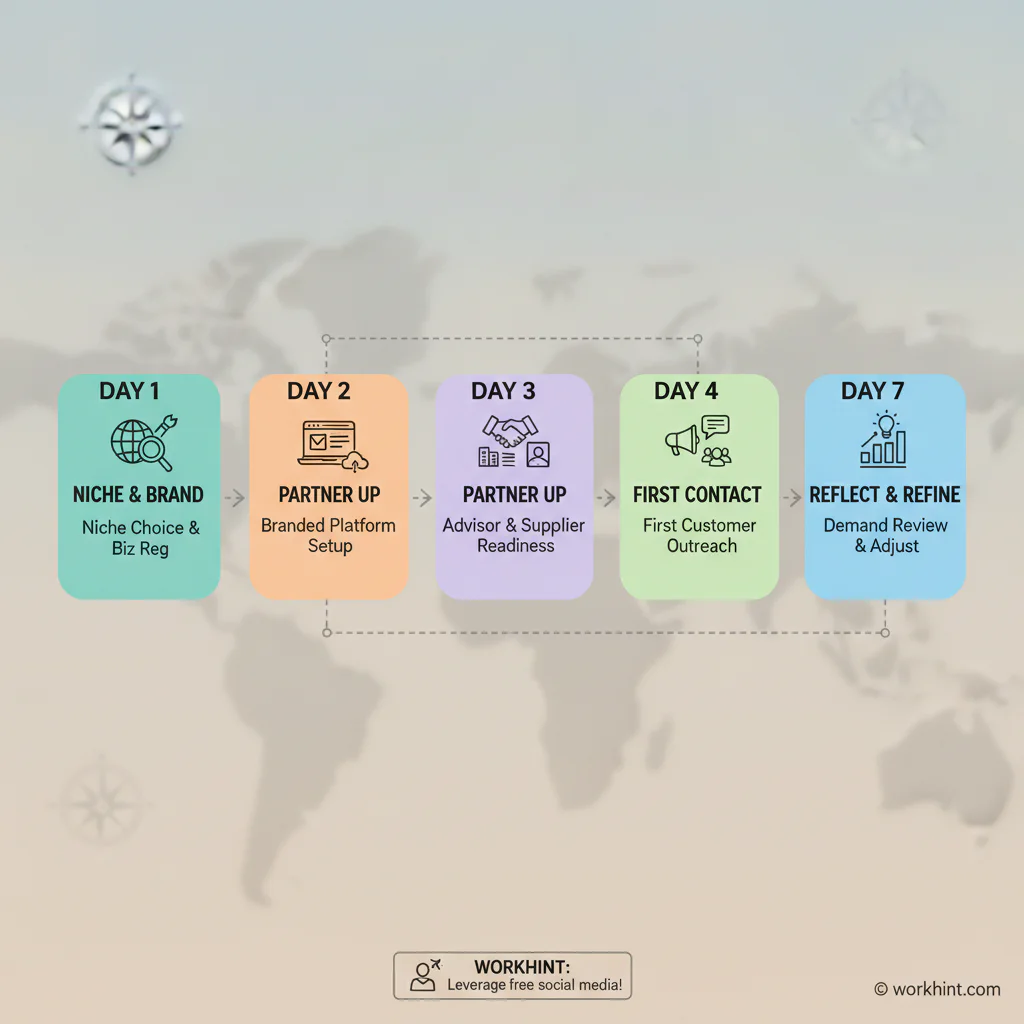
- Day 1: Choose one niche, one launch market, and one offer. Avoid trying to sell every type of travel.
- Day 2: Set up the branded Workhint platform basics: request form, client dashboard, internal pipeline, and advisor roles.
- Day 3: Create the pricing, qualification questions, quote process, payment steps, and trip approval workflow.
- Day 4: Research host agency options, supplier paths, insurance, seller-of-travel rules, and independent advisor partners.
- Day 5: Contact first demand sources: referral partners, niche communities, past travelers, local businesses, and event planners.
- Day 6: Route every request through the platform, test response times, and refine the intake questions.
- Day 7: Review demand, pricing, advisor capacity, and fulfillment risks before spending more money.
By the end of the week, the goal is not to look like a national agency. The goal is to prove that a specific customer will submit a trip request, pay a planning fee, and trust your process.
Final launch checklist
- Choose a focused travel niche and first customer segment.
- Register the business and open a business bank account.
- Check state seller-of-travel rules and insurance needs.
- Select a host agency, supplier access path, or advisor partnership model.
- Create one clear planning package and fee structure.
- Configure the branded Workhint customer portal and trip request flow.
- Build the internal workflow for qualification, advisor assignment, quotes, approvals, payment, and documents.
- Recruit a small network of independent advisors or destination specialists only where needed.
- Contact referral partners and collect the first real trip requests.
- Validate demand before hiring staff, buying expensive tools, or expanding into more niches.
FAQ
How much does it cost to start a travel agency?
A lean home-based agency can often start with a few thousand dollars for business setup, host agency costs, training, insurance, brand basics, and customer acquisition. Independent or franchise models can cost much more.
Do I need a license to start a travel agency?
There is no single federal travel agent license in the United States, but some states have seller-of-travel registration rules. Check the rules for where you operate and where your customers live.
Can I start a travel agency with no staff?
Yes. Start as the founder-operator, use a host agency or supplier partners for infrastructure, and add independent advisors or specialists only when demand requires more capacity.
How do travel agencies make money?
They can earn supplier commissions, planning fees, service fees, consultation fees, group travel fees, or recurring support fees for business travel clients.
What is the best niche for a new travel agency?
The best niche is one where the trip is valuable, complex, and emotionally important enough for customers to want expert help. Examples include cruises, honeymoons, destination weddings, retreats, luxury travel, and group travel.
Should I join a host agency?
Many beginners do because a host agency can provide training, supplier relationships, booking tools, and commission infrastructure. Compare fees, support, technology, training, and niche fit before choosing.
Can Workhint replace a custom travel agency platform?
Workhint can help launch the branded operating layer for intake, client communication, advisor assignments, approvals, payments, documents, and reporting without requiring custom software before demand is proven.
Conclusion
A travel agency is easier to start when you treat it as a focused service platform instead of a traditional office-based business. Choose a niche, validate demand, charge for planning value, and build a small provider network around real customer requests.
Workhint gives the agency its branded operating foundation early, so the founder can spend less time stitching tools together and more time finding travelers, building supplier relationships, and proving the business works.
Leave a Reply