


A senior errand service can start as a simple local offer, then grow into a trusted provider network for aging families.
If you are researching how to start a senior errand service business, the best first version is not a traditional home-care agency with office overhead. It is a focused, non-medical service platform that helps older adults and families handle groceries, pharmacy pickups, appointments, mail, returns, and everyday tasks.
The opportunity is practical. Seniors want independence, adult children need trusted local help, and communities need support between family favors and full home care. Start by validating demand, building a branded customer platform, recruiting carefully screened independent helpers, and investing more only after requests repeat.
What’s in this article?
- Why this business works
- What you need before the first request
- How to price errands and recurring support
- How to get first customers
- How Workhint can run the operating foundation
- A 7-day launch plan, checklist, and FAQ
Why this business works
A senior errand service solves a recurring problem. Older adults may not need medical care, but they often need dependable help with ordinary tasks that become harder with age, mobility limits, transportation issues, or family distance.
That creates repeat demand. Grocery trips, medication pickups, post office visits, appointment transportation, and check-in visits can happen weekly or monthly. Families also value trust, communication, and predictability more than bargain pricing.
The provider-network model keeps startup risk low. Instead of hiring staff before demand exists, recruit a small group of independent helpers with background checks, references, reliable transportation, and clear service rules. Your job is to create the brand, intake, scheduling process, quality standards, and demand engine.
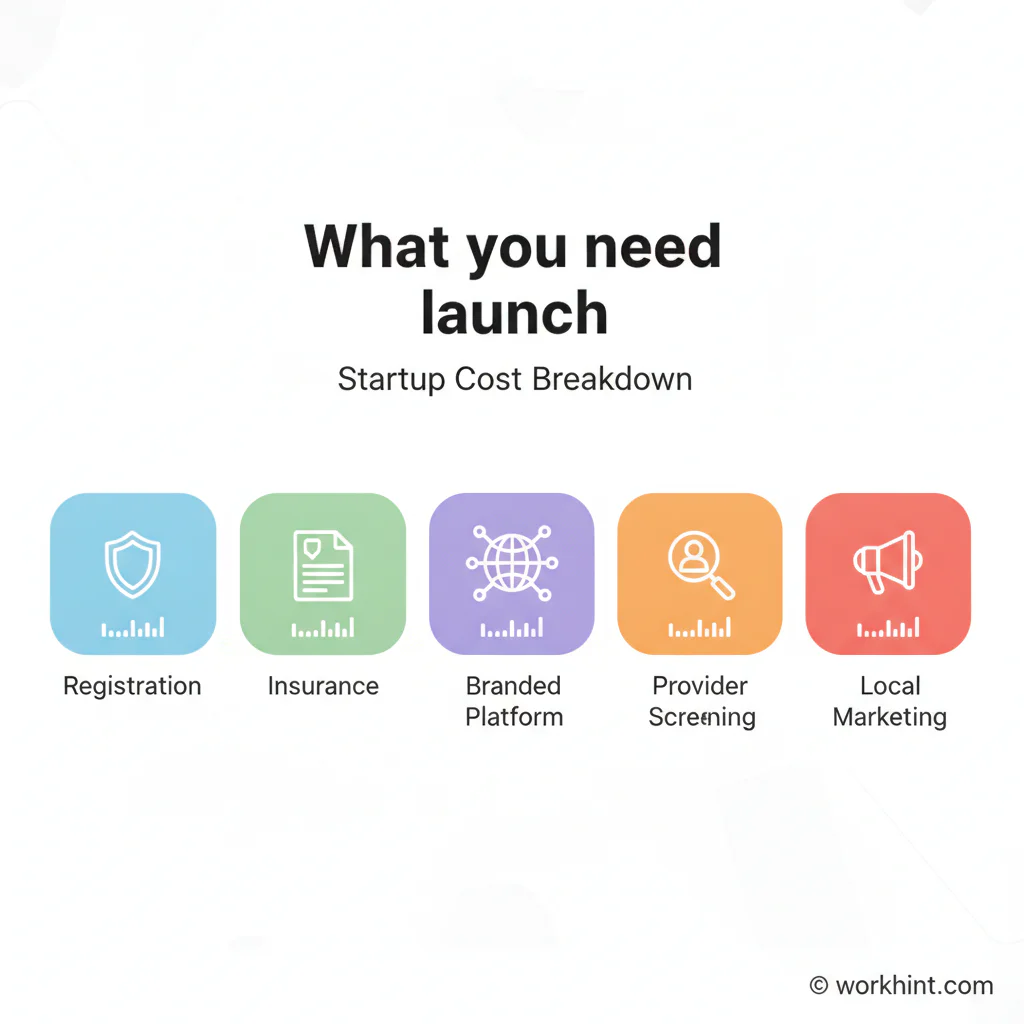
What you need to launch
Start with the smallest safe version: a clear service menu, customer intake, provider screening, insurance guidance, and a reliable way to schedule, communicate, collect payment, and pay providers.
Check local requirements first. Non-medical errands usually differ from home health care, but driving clients, entering homes, handling medication pickups, or managing money can create extra requirements.
| Launch item | Lean range | Purpose |
|---|---|---|
| Business registration | $50-$500 | Entity and local setup |
| Insurance review | $500-$2,000+ | Liability, bonding, auto coverage where needed |
| Branded platform | $0-$1,500 | Portal, intake, scheduling, payments, provider onboarding |
| Background checks | $25-$100 per provider | Helper screening |
| Local marketing | $200-$1,000 | Referral materials, local SEO, community outreach |
Avoid leasing an office, buying vehicles, or hiring employees before recurring demand exists. The first milestone is proving that families request help and providers can fulfill it reliably.
How to price it
Senior errand services are easiest to price with hourly minimums, trip fees, or monthly support packages. Hourly pricing keeps the offer simple. Packages create predictable revenue once you understand weekly needs.
| Model | Example price | Best use |
|---|---|---|
| Hourly errand help | $30-$45/hour, 2-hour minimum | Shopping, returns, pharmacy, mail |
| Single trip fee | $35-$75 plus mileage | Simple pickups or deliveries |
| Weekly support | $250-$600/month | Recurring errands and check-ins |
| Family coordination | $500-$1,200/month | Multiple errands, updates, scheduling, reports |
Build margin into the platform. If a customer pays $40 per hour and the provider earns $25 to $28, the remaining margin must cover insurance, payment fees, support time, marketing, no-shows, and profit.
How to get first customers
The first customers usually come from trust channels, not broad ads. Start with senior apartments, independent living communities, churches, local Facebook groups, neighborhood associations, estate planners, physical therapy clinics, geriatric care managers, and adult children who live outside the area.
Your first message should be specific: reliable non-medical errand help for seniors, with screened local helpers, clear scheduling, family updates, and simple online payment. Offer a small first package instead of every possible service.
How Workhint helps launch it
Workhint can become the branded operating foundation for the senior errand service before you invest in custom software or a large admin team. Instead of stitching together forms, calendars, spreadsheets, payment links, and texts, you can create the customer and provider system first.
A family can request weekly grocery help through your branded portal, share preferences, approve a quote, and choose recurring times. Workhint can handle provider matching by routing the request to available independent helpers, collecting required documents, showing the provider checklist, confirming completion, sending family updates, collecting payment, and tracking contractor payout.
For the owner, the business starts with structure: customer intake, provider onboarding, scheduling, permissions, service checklists, approvals, invoices, online payments, provider payouts, reviews, and reporting in one place.
First 7-day launch plan
- Day 1: Choose the launch market, customer profile, and first three services.
- Day 2: Set up the branded Workhint platform basics: request form, family contacts, provider profiles, and service categories.
- Day 3: Configure pricing, quote approval, scheduling, payment, payout, cancellation rules, and family updates.
- Day 4: Recruit five to ten independent helpers with references, transportation, availability, and background-check readiness.
- Day 5: Contact senior communities, churches, neighborhoods, and caregiver groups.
- Day 6: Route every inquiry through the platform, even if fulfillment is still manual.
- Day 7: Review demand, pricing, provider readiness, and service quality before investing more.
Final launch checklist
- Choose one launch area and customer profile
- Register the business and check local requirements
- Confirm insurance needs before entering homes, driving clients, or handling sensitive errands
- Create three simple service packages
- Configure branded intake, scheduling, payment, and provider payout flows in Workhint
- Recruit and screen the first independent helpers
- Create service checklists and family update templates
- Book paid requests before buying vehicles, leasing space, or hiring staff
FAQ
How much does it cost to start a senior errand service business?
A lean launch can often start with a few thousand dollars or less if you avoid office space, vehicles, and employees. Budget for registration, insurance advice, background checks, marketing, and a branded operating platform.
Do I need a license?
It depends on your location and services. Non-medical errands are usually different from licensed home health care, but driving clients, entering homes, or handling medication pickups may add requirements.
What insurance should I consider?
Ask a broker about general liability, professional liability, bonding, hired and non-owned auto coverage, and coverage for independent contractors.
Can I use independent contractors?
Many startups begin with independent helpers, but classification rules matter. Use written agreements, clear scope, provider onboarding, and local legal guidance.
How much should I charge?
Many errand and companion-style services use hourly pricing around $30 to $45 or monthly packages. Price based on local rates, provider pay, travel time, insurance cost, and trust level.
How do I find the first customers?
Start with senior communities, churches, neighborhood groups, care managers, physical therapy clinics, and adult children helping aging parents.
Conclusion
A senior errand service is attractive because it solves a real local problem without heavy upfront investment. The best first version is focused, trusted, and operationally simple.
Launch the platform, recruit a small provider network, validate demand through paid requests, and expand only after the work repeats. Workhint gives the business a branded operating foundation from the first customer request through scheduling, service completion, payment, and provider payout.
Leave a Reply