


You do not need a full-time team to launch a serious consulting business. You need a sharp offer, early demand, and a system for delivery.
A consulting business is one of the fastest professional services companies to start because the first asset is expertise, not inventory. The mistake is treating it like a traditional firm from day one: hiring employees, building a complex website, buying software, and waiting until everything looks mature before talking to customers.
A better path is to start with a narrow problem, validate demand through real conversations, sell a simple package, and build a small network of independent specialists who can help deliver work as client volume grows. This guide shows how to start a consulting business with no employees by using a branded platform and provider network model instead of a heavy firm model.
What’s in this article?
- Why a no-employee consulting model works
- What you need before selling the first engagement
- How to price consulting services
- How to find first clients without a large marketing budget
- How Workhint can operate the business from intake to payment
- A practical 7-day launch plan and checklist
Why this business works
Consulting works when a buyer has a costly problem and trusts you to shorten the path to a result. Current search results and competing guides consistently focus on niche selection, packaged offers, pricing, first clients, and legal setup. That tells you what the market wants: a practical path from expertise to paid work.
The no-employee model works because most early consulting firms do not need permanent staff. As demand grows, consultant marketplace software can help turn that private network into a more structured system for intake, matching, delivery, approvals, and payments. They need a clear offer, reliable delivery standards, and access to specialized help when a project requires it. Independent consultants, analysts, designers, trainers, implementation partners, and subject-matter experts can join a private network and be matched to client work only when needed.
This gives a new founder flexibility. You can validate demand first, keep fixed costs low, and expand capacity only after clients are paying for defined services.
What you need to launch
Start with a niche that is specific enough for buyers to understand quickly. “Business consulting” is too broad. “Operations cleanup for multi-location service companies” or “AI adoption planning for small professional services firms” is easier to sell because the buyer can recognize the problem.
You need a simple offer, a branded customer intake flow, basic legal setup, insurance where appropriate, contracts, a quoting process, and a way to invite independent experts into your delivery network. Avoid building a full agency structure before you know which offer customers will buy.
| Launch item | Lean startup approach | Typical early cost |
|---|---|---|
| Business registration | Register a basic business entity if needed | $50-$500 |
| Brand and domain | Simple name, domain, and landing page | $20-$300 |
| Contracts and insurance | Use attorney-reviewed templates and professional liability coverage where needed | $200-$1,500 |
| Branded platform | Set up intake, quotes, scheduling, provider onboarding, payments, and reporting in Workhint | Start lean before custom software |
| Provider network | Recruit independent specialists for project-based support | No payroll required |
| Marketing tests | Direct outreach, referrals, LinkedIn, local partnerships, and niche content | $0-$500 |
How to price it
Hourly pricing is simple, but it can trap a new consulting business in freelancer economics. Package the work around outcomes, timelines, and decision points. A paid diagnostic, implementation sprint, monthly advisory package, or specialist marketplace fee is easier for clients to evaluate.
| Offer type | Best use | Example price |
|---|---|---|
| Paid diagnostic | Assess a problem and recommend a plan | $750-$3,000 |
| Implementation sprint | Deliver a defined project in 2-6 weeks | $3,000-$15,000 |
| Monthly advisory | Ongoing guidance and operating reviews | $1,500-$8,000 per month |
| Expert network project | Match clients with specialized independent consultants through your platform | Project fee plus provider margin |
Your first pricing goal is not perfection. It is a paid test that proves a specific client segment values the result enough to buy.
How to get first customers
Start with conversations, not ads. Past employers, former colleagues, operators in your niche, founders, local business groups, and LinkedIn connections are usually more useful than a broad campaign. Ask about the problem before pitching the offer. If several people describe the same pain, shape your package around that pattern.
Create a short landing page with one clear promise, one intake form, and one call to action. Then run focused outreach: ten warm contacts, ten niche prospects, and five referral partners per day for the first week. The goal is to book discovery calls, test the offer, and learn which pain buyers will pay to solve.
How Workhint helps launch it
Workhint can become the branded operating platform for the consulting business before the founder hires employees or builds custom software. A customer visits the branded portal, submits a consulting request, answers intake questions, uploads context, and receives a structured next step instead of emailing back and forth.
Inside the business, the founder reviews the request, creates a quote, assigns the work to themselves or an independent specialist in the provider network, schedules meetings, tracks milestones, collects approvals, sends invoices, accepts online payment, and pays contractors after delivery. Each consultant or expert can have the right role, permissions, forms, checklists, and project visibility.
That matters because the hard part of scaling a consulting business is not only finding advice to sell. It is coordinating intake, proposals, delivery, experts, documents, approvals, payments, and client communication without turning every project into a custom spreadsheet. Workhint lets the founder launch the operating system first, validate demand, and add providers only when the pipeline justifies it.
First 7-day launch plan
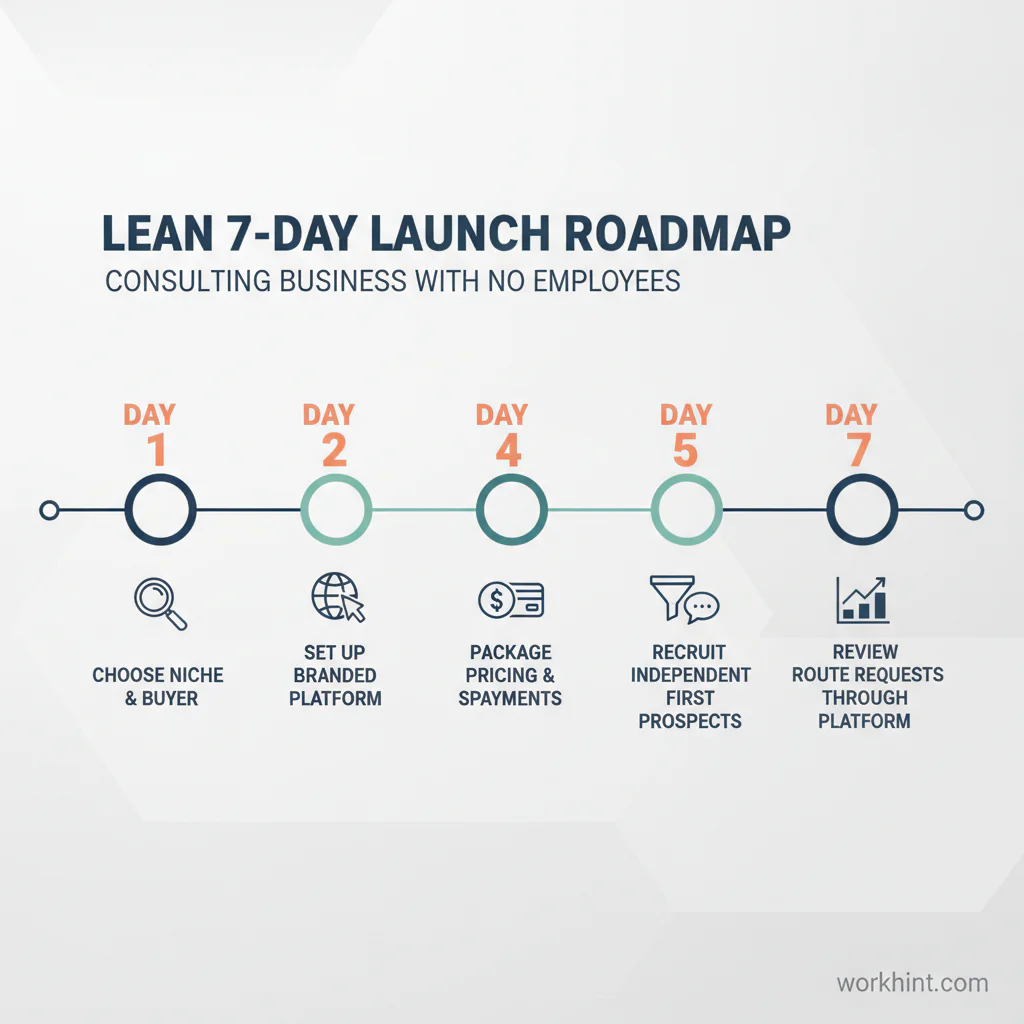
- Day 1: Choose one niche, one buyer, and one painful problem worth solving.
- Day 2: Set up the branded Workhint platform basics: portal, intake form, customer dashboard, and internal pipeline.
- Day 3: Create the first package, quote process, approval flow, payment setup, and provider payout rules.
- Day 4: Recruit three to five independent specialists who could support delivery if demand appears.
- Day 5: Contact warm prospects, referral partners, and niche buyers with a specific problem-led message.
- Day 6: Route every interested lead through the platform so intake, notes, quotes, and follow-ups stay organized.
- Day 7: Review demand, objections, pricing, provider readiness, and delivery risk before investing more.
Final launch checklist
- Pick a narrow consulting niche and buyer.
- Define one paid offer with a clear result.
- Register the business and prepare basic contracts.
- Set up insurance if your niche requires it.
- Create a branded Workhint customer portal and intake flow.
- Build quote, approval, scheduling, payment, and payout workflows.
- Recruit a small network of independent specialists.
- Contact first prospects before spending heavily on marketing.
- Validate demand before hiring employees or building custom tools.
FAQ
How much does it cost to start a consulting business?
A lean consulting business can start with registration, a domain, simple contracts, insurance where needed, a branded operating platform, and direct outreach. Many founders can test demand before spending heavily on ads, offices, or employees.
Can I start a consulting business with no employees?
Yes. Start as the lead consultant and build a private network of independent specialists for project-based support. Hire employees only after recurring demand makes fixed payroll sensible.
Do I need a license to become a consultant?
Most general consulting niches do not require a specific consulting license, but regulated areas such as finance, legal, healthcare, engineering, or certain government work may have requirements. Check local and industry rules before selling regulated advice.
How do I price consulting services as a beginner?
Use a small paid diagnostic or defined project package first. It is easier to sell than an open-ended hourly arrangement and gives you a clearer way to test value, scope, and buyer willingness.
How do consulting businesses get first clients?
The fastest path is usually warm outreach, referrals, niche communities, LinkedIn conversations, and partnerships with companies that already serve your buyer. Start with conversations before buying ads.
When should I hire employees?
Hire only when work is consistent, margins are proven, and the role is needed repeatedly. Until then, independent providers and specialist partners can help you deliver without creating unnecessary fixed costs.
Conclusion
The practical way to start a consulting business with no employees is to sell a narrow result, validate demand quickly, and build the operating system around the business before adding fixed overhead. Workhint helps make that possible by giving the founder a branded platform for intake, proposals, delivery, expert coordination, payments, and reporting from the first customer request.
Leave a Reply