


You can sell practical HR support before building a full agency, payroll department, or internal staff bench.
If you want to start an HR consulting business, do not copy a traditional consultancy. Choose a narrow people-operations problem, validate demand with a simple offer, and coordinate delivery through a branded platform before you hire employees.
Small companies still need help with hiring workflows, onboarding, handbooks, compliance basics, contractor policies, and manager support. Many cannot justify a full-time HR leader. That creates room for a lean HR consulting business built around independent specialists and repeatable delivery.
What’s in this article?
- Why an HR consulting business works
- What you need to launch
- How to price your services
- How to find your first clients
- How Workhint helps launch the business
- A 7-day launch plan, checklist, and FAQ
Why This Business Works
HR consulting works because the buyer has a real risk problem. A growing company cannot ignore HR when hiring accelerates, onboarding is inconsistent, or employee issues become expensive.
The platform-first model reduces your risk. You do not need a big office, a payroll team, or custom client software. You can start with one focused offer, such as onboarding setup, employee handbook projects, fractional HR support, or contractor operations support.
Independent HR consultants, recruiters, compliance specialists, payroll advisors, and benefits experts may join your provider network because you bring organized demand, clear scopes, and repeatable delivery. Your role is to package the service, sell the outcome, assign the right provider, and keep quality high.
What You Need To Launch
The first version should be small. Pick one target customer and one painful HR outcome. A good starting offer might be “new-hire onboarding system” or “monthly HR operations support for founder-led teams.”
You also need legal setup, insurance, client agreements, a branded intake flow, provider onboarding, scheduling, document collection, quote approvals, invoicing, and payout tracking. Validate demand before investing in expensive software, staff, or broad service lines.
| Launch item | Lean budget range | Why it matters |
|---|---|---|
| Business registration and basic legal templates | $200 to $1,500 | Creates a legal foundation for client work and contractor agreements. |
| Professional liability insurance | $500 to $2,000+ | Important because HR advice can affect employment decisions. |
| Brand, domain, and landing page | $100 to $800 | Lets prospects understand the offer and request help. |
| Workhint platform setup | Start lean | Gives the business customer intake, provider onboarding, scheduling, approvals, payments, and reporting. |
| First provider network outreach | $0 to $300 | Builds delivery capacity before you promise every service yourself. |
| Initial local and niche marketing | $300 to $1,500 | Funds founder-led outreach, partnerships, content, and targeted tests. |
How To Price It
Start with packages instead of open-ended hourly work. Packages make the buying decision easier and protect margins. Use hourly consulting only when the scope is advisory or uncertain.
Public pricing guides commonly show HR consulting and fractional HR services ranging from low monthly retainers to several thousand dollars per month. Price by scope, risk, urgency, and provider cost.
| Offer | Example price | Best fit |
|---|---|---|
| HR setup audit | $750 to $2,500 | Founders who need a fast review of hiring, onboarding, documents, and gaps. |
| Onboarding system package | $2,000 to $6,000 | Companies hiring regularly but lacking a repeatable process. |
| Monthly HR advisory retainer | $1,500 to $5,000 | Small teams that need recurring access without a full-time HR hire. |
| Fractional HR partner | $4,000 to $10,000+ | Growing companies that need deeper operational support each month. |
How To Get First Customers
Start with buyers who already feel the pain: founders after their first ten hires, agencies adding contractors, clinics with recurring onboarding, local service companies with field teams, and startups preparing for growth.
Use direct outreach with a specific problem, not a broad pitch. Offer a short HR operations audit for companies that recently posted multiple jobs, raised funding, opened a new location, or hired their first managers.
Partnerships can work quickly. Accountants, payroll providers, attorneys, recruiters, insurance brokers, and coworking communities often know companies that need HR structure before they need full-time HR.
How Workhint Helps Launch It
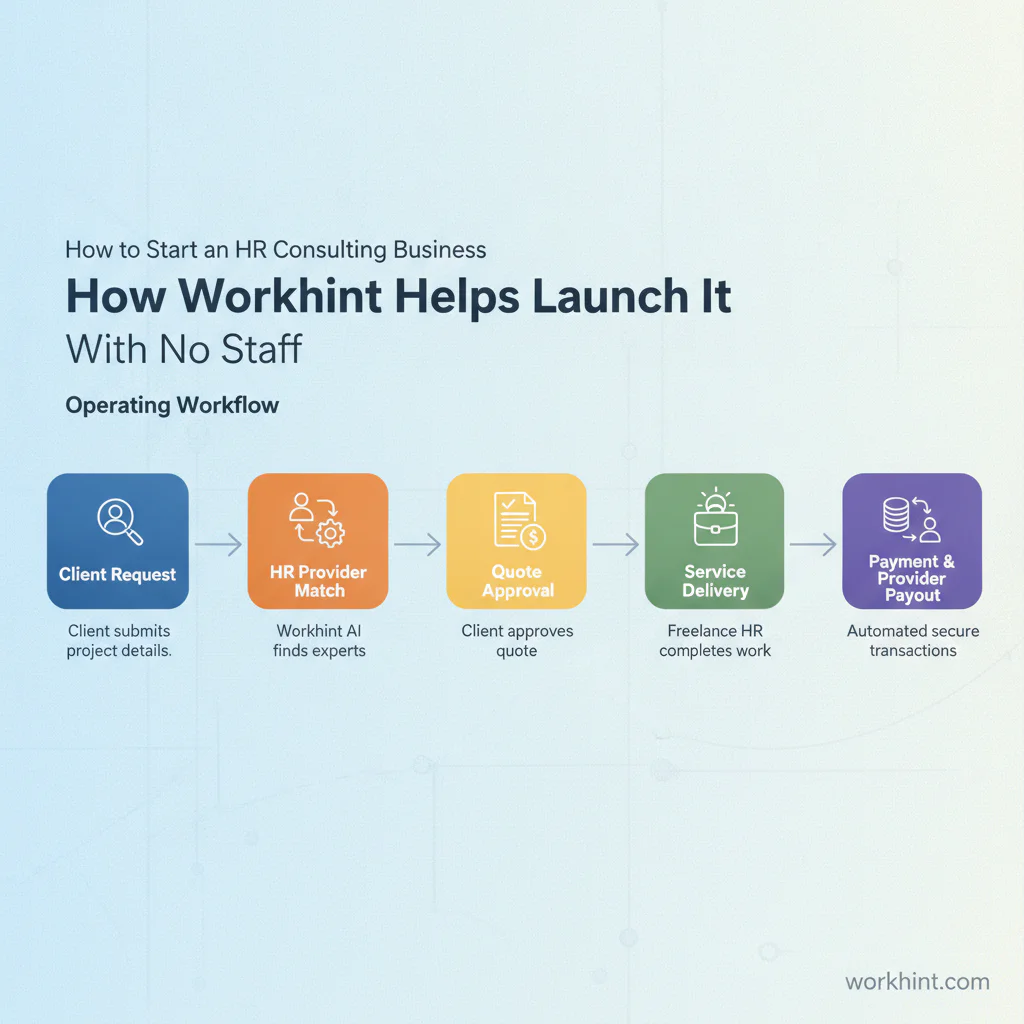
Workhint can become the branded operating platform from day one. Instead of stitching together forms, spreadsheets, calendars, payment tools, and contractor messages, you can create one client-facing platform around the service.
A prospect requests an HR setup audit through your branded portal. The system collects company size, worker types, locations, current tools, risks, and documents. You assign an HR specialist, generate a quote, and route it for approval.
Once approved, Workhint coordinates provider onboarding, document collection, kickoff scheduling, task assignments, checklist completion, approvals, invoices, online payment, and provider payout. The client sees status, required documents, meetings, and deliverables without chasing emails.
That matters because the hardest part is making the business feel organized, credible, and repeatable before you have a large team. Workhint gives you the operational foundation while you sell the first offer and build the provider network.
First 7-Day Launch Plan
- Day 1: Choose one customer segment, one HR problem, and one launch market. Avoid becoming a general HR agency too early.
- Day 2: Set up the branded Workhint platform basics: customer portal, service request form, internal dashboard, and provider invitations.
- Day 3: Create pricing, intake questions, quote approval, scheduling, payment, and provider payout flows.
- Day 4: Recruit three to five independent HR specialists, recruiters, compliance advisors, or payroll partners who can deliver the first services.
- Day 5: Contact first prospects through founder-led outreach, referral partners, LinkedIn, local business groups, and niche communities.
- Day 6: Route every request through the platform to test intake, quote, assignment, and communication.
- Day 7: Review demand, provider readiness, pricing, scope clarity, and delivery risk before spending more.
Final Launch Checklist
- Choose a narrow HR consulting niche and first service package.
- Register the business and create basic client and contractor agreements.
- Get appropriate professional liability insurance.
- Configure your branded Workhint customer portal and internal dashboard.
- Create client intake, quote approval, scheduling, invoice, payment, and payout flows.
- Recruit your first independent HR providers or specialist partners.
- Build one simple landing page that explains the offer clearly.
- Contact first prospects and referral partners.
- Validate demand before hiring employees or expanding the service menu.
FAQ
How much does it cost to start an HR consulting business?
A lean launch can often start with a few thousand dollars for setup, insurance, legal documents, brand, marketing, and platform setup. Costs rise if you hire employees, build custom software, or buy a large tool stack before validating demand.
Can I start an HR consulting business with no employees?
Yes. You can start with independent HR specialists, recruiters, compliance advisors, payroll partners, or benefits experts. The key is to define scopes clearly and manage client delivery through a reliable operating platform.
Do I need HR certifications to start?
Certifications can help credibility, especially for complex HR work, but requirements vary by service and location. For legal, compliance, payroll, or benefits topics, work with qualified professionals and avoid advice outside your expertise.
What should my first HR consulting offer be?
Start with a specific, urgent offer such as onboarding setup, employee handbook review, hiring workflow setup, contractor onboarding, or monthly HR advisory for small companies. A narrow offer is easier to sell and deliver.
How do HR consultants price services?
Common models include hourly advisory, project fees, monthly retainers, and fractional HR support. Packages are often easier for new firms because the client understands the outcome and you can manage delivery margin.
How do I find my first HR consulting clients?
Use founder-led outreach, referral partners, accountants, payroll providers, attorneys, recruiters, local groups, and companies showing hiring or expansion signals. Lead with a specific HR problem you can solve quickly.
Conclusion
An HR consulting business is worth starting when the first version stays focused. Choose a painful HR problem, create a simple package, build a provider network, and validate demand before adding overhead.
Workhint helps make that launch real faster. You can create the branded platform, coordinate requests, assign providers, manage approvals, collect payments, and pay contractors before building a traditional agency structure. An HR consulting firm can scale through a consultant marketplace that manages consultant vetting, client requests, matching, engagement workflows, deliverables, and payments.
Leave a Reply