

You can validate a home energy audit business before buying every diagnostic tool or building a full retrofit crew.
A home energy audit business helps homeowners understand why their house wastes energy, feels uncomfortable, or costs too much to heat and cool. The opportunity is practical: utility bills are visible, rebate programs need qualified local providers, and homeowners want a clear plan before they spend thousands on upgrades.
The lean way to start is not to build a traditional contracting company on day one. Start with a branded customer platform, a narrow audit offer, and a network of certified auditors, insulation partners, HVAC companies, or weatherization contractors. Use the first jobs to validate demand before investing more.
What’s in this article?
- Why an energy audit business works
- What you need to launch
- How to price audits and related services
- How to get first customers
- How Workhint helps launch the operating platform
- A first 7-day launch plan
- Final checklist and FAQ
Why an energy audit business works
An energy audit business works because the customer problem is easy to understand. A homeowner has high bills, uneven rooms, drafts, or uncertainty about which improvement to make first. A useful audit turns that confusion into a prioritized action plan.
There is also a strong referral model. An audit can lead to insulation work, air sealing, HVAC upgrades, window improvements, or solar conversations. You do not need to perform every service yourself at launch. You can operate as the branded front door, coordinate qualified providers, and earn audit revenue, referral fees, or project management fees once demand is proven.
The IRS says qualifying home energy audits may be eligible for a tax credit of up to $150, and many utility programs encourage efficiency work. Those incentives do not replace local demand validation, but they help explain why people search for this service.
What you need to launch
The first version should be narrow. Define one service area, one customer type, and one audit package for homeowners who want an energy audit, rebate guidance, and vetted provider recommendations.
You need business registration, local compliance checks, insurance, a credible audit method, and consistent reports. Certification requirements vary by state, utility program, and service scope. Many serious operators look at Building Performance Institute credentials, RESNET pathways, or Department of Energy Home Energy Score Assessor requirements.
If you are not certified yet, do not pretend to be. Recruit certified independent auditors or partner with building-performance professionals while you validate demand.
| Launch item | Lean approach | Estimated range |
|---|---|---|
| Business setup | LLC or local registration, EIN, basic bookkeeping | $100 to $600 |
| Insurance | General liability, and professional coverage if giving recommendations | $500 to $2,000 per year |
| Platform setup | Branded intake, scheduling, quotes, payments, provider workflow | Start lean before custom software |
| Credential path | BPI, RESNET, Home Energy Score, or qualified provider partners | $500 to $3,000+ |
| Diagnostic access | Rent, borrow, subcontract, or buy essential tools after validation | $500 to $9,000+ |
| Local marketing | Google Business Profile, landing page, flyers, partner outreach | $200 to $1,000 |
The key decision is whether you launch as coordinator, solo auditor, or audit-plus-retrofit company. The coordinator model can launch fastest with vetting. The solo model requires more training and tools. The retrofit model has higher revenue potential but more risk.
How to price it
Pricing should cover the full job, not just the home visit. Include intake, travel, testing, analysis, reporting, rebate guidance, follow-up, payment processing, and partner coordination.
| Offer | Typical pricing logic | Best use |
|---|---|---|
| Basic home energy review | $150 to $300 | Lead-in offer for simple recommendations |
| Standard energy audit | $300 to $600 | Core paid offer with report and prioritized fixes |
| Comprehensive diagnostic audit | $600 to $1,200 | Higher-value homes, blower door, thermal imaging, detailed report |
| Partner project coordination | Referral fee or project management margin | Insulation, air sealing, HVAC, or weatherization partners |
| Property portfolio audits | Per property or monthly account pricing | Landlords, property managers, small multifamily owners |
Do not underprice reporting time. The report is part of the product. If the homeowner cannot understand what to do next, the audit did not finish the job.
How to get first customers
Start with demand sources that already care about home performance. Build a list of real estate agents, property managers, HVAC companies, insulation contractors, solar installers, home inspectors, and neighborhood associations. Offer a clear referral process for homeowners with comfort or utility-bill problems.
Local SEO also matters. Create pages around searches such as home energy audit in your city, energy audit for old homes, attic insulation inspection, and how to lower electric bills.
Your first goal is proof. Can you get 10 serious conversations, 3 paid audits, and 2 reliable provider partners before buying expensive equipment or hiring staff?
How Workhint helps launch it
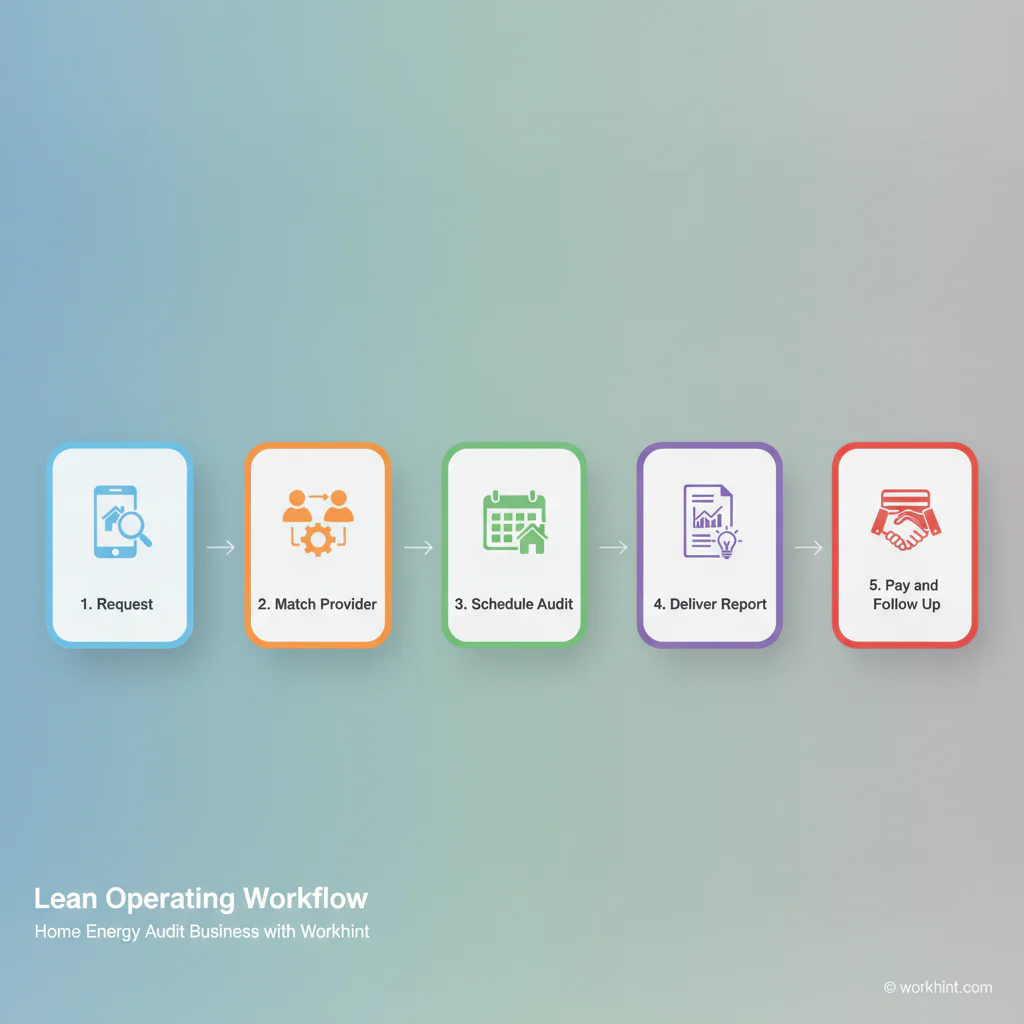
Workhint can act as the branded operating platform for the energy audit business before you build custom software or stitch together forms, scheduling tools, payment links, and contractor messages.
A homeowner requests an audit through your branded portal. Workhint collects property details, utility-bill context, photos, goals, and preferred times. The system routes the request to the right certified auditor or provider partner, creates the quote, collects approval, schedules the visit, and keeps the homeowner updated.
After the audit, the provider uploads findings, photos, readings, recommendations, and rebate notes. Workhint turns those inputs into review, customer summary, invoice, payment collection, and contractor payout. If the homeowner wants insulation, HVAC, or air-sealing estimates, the platform routes follow-up requests to approved partners.
This lets you launch as a professional branded service platform while staying lean. You can build the provider network, validate demand, coordinate jobs, and improve the model before committing to employees, owned equipment, or a retrofit crew.
First 7-day launch plan
- Day 1: Choose one city, one customer type, and one starter audit offer.
- Day 2: Set up the branded Workhint platform basics: intake, customer portal, provider roles, and internal dashboard.
- Day 3: Create the quote, scheduling, report, payment, and provider payout flow.
- Day 4: Recruit three qualified auditors, weatherization partners, or HVAC and insulation providers.
- Day 5: Contact referral sources and publish a local landing page for the first service area.
- Day 6: Route every serious inquiry through the platform and test the customer experience.
- Day 7: Review demand, provider readiness, pricing, and report quality before investing in equipment.
Final launch checklist
- Choose a service area and customer segment.
- Verify local business, insurance, certification, and utility-program requirements.
- Define one starter audit package and one comprehensive package.
- Configure a branded Workhint customer portal and intake flow.
- Recruit qualified independent auditors or provider partners.
- Create quote approval, scheduling, report, payment, and payout workflows.
- Build a simple referral list of real estate, HVAC, insulation, and property contacts.
- Complete the first paid audits before buying expensive tools or hiring employees.
FAQ
How much does it cost to start an energy audit business?
A lean launch may start with a few thousand dollars if you use provider partners, rent tools, or begin narrow. A fully equipped certified auditor can spend more because diagnostic tools, training, insurance, and software add up quickly.
Do I need certification to perform home energy audits?
Requirements vary by location, program, and service scope. Many professional paths involve BPI, RESNET, or Home Energy Score credentials. Check local rules and utility-program requirements before selling audits.
Can I start without employees?
Yes, if you use qualified independent auditors or provider partners and keep your offer narrow. Workhint can help coordinate intake, scheduling, documentation, payments, and payouts without building a traditional employee team first.
What equipment do I need first?
It depends on your audit scope. Blower doors, thermal cameras, pressure gauges, and combustion testing tools are common in serious diagnostic work, but you may rent, subcontract, or partner before buying everything.
How do energy audit businesses make money?
They make money through audit fees, comprehensive reports, portfolio accounts, partner referral fees, project coordination, and sometimes retrofit services such as insulation or air sealing.
How do I get the first customers?
Start with local referral partners, Google Business Profile, property managers, real estate agents, HVAC companies, insulation contractors, and neighborhood groups where homeowners already discuss high bills or comfort issues.
Conclusion
An energy audit business is a strong startup candidate when you treat it as a platform-first service business, not an equipment-heavy contracting company from day one. Validate demand, build a qualified provider network, create a branded customer experience, and use Workhint to run the operating foundation while you learn where to invest.
Leave a Reply