


Corporate wellness is easiest to launch when you sell the program first, then fulfill it through a trusted provider network.
Starting a corporate wellness business does not have to mean hiring coaches, leasing a studio, or building custom software before you have clients. A leaner model is to create a branded wellness platform, define a narrow offer, recruit independent providers, and sell paid pilots to employers that already care about retention, burnout, absenteeism, and healthcare costs.
Recent market research shows corporate wellness remains a large category, with 2026 global estimates around the low-$70 billion range. The opportunity is to serve a focused employer segment with a program that is easy to buy, schedule, and measure.
What’s in this article?
- Why this business works: the demand signals and buyer logic behind corporate wellness.
- What you need to launch: the minimum setup before selling your first pilot.
- How to price it: simple packages, retainers, and per-employee pricing.
- How to get first customers: practical ways to reach HR, founders, and operations leaders.
- How Workhint helps: how to run the business through a branded platform.
- First 7-day launch plan: what to do this week before investing more money.
Why a corporate wellness business works
Employers are under pressure to support employee health while controlling costs. Wellness programs can include mental health workshops, nutrition coaching, fitness challenges, ergonomic assessments, financial wellness sessions, stress management, or preventive health education. That gives founders room to specialize.
The best starting point is a niche: law firms, remote tech teams, healthcare clinics, hospitality groups, or companies with high frontline turnover. A narrower offer is easier to sell.
This business also fits a provider-network model. Recruit independent nutritionists, fitness instructors, mental health facilitators, financial wellness educators, ergonomics consultants, or local wellness partners, then package their services through your brand.
What you need to launch
Start with the smallest version a real employer would pay to test: one outcome, one buyer, one delivery format, and a few vetted providers.
| Launch item | Lean approach | Estimated early budget |
|---|---|---|
| Business registration | Create an LLC or similar entity and open a business bank account. | $100 to $800 |
| Insurance | Get general liability and professional liability coverage before paid delivery. | $500 to $3,000 annually |
| Branded platform | Set up intake, scheduling, provider onboarding, client dashboards, forms, and payments. | Low upfront cost with Workhint |
| Provider network | Recruit independent specialists and agree on rates, scope, availability, and quality standards. | $0 upfront if paid per session |
| Sales materials | Create a one-page offer, simple proposal, pilot package, and outreach list. | $0 to $500 |
| Marketing | Use direct outreach, LinkedIn, local partnerships, and referral relationships first. | $0 to $1,000 |
Avoid buying equipment, renting office space, or building a large content library at the beginning. Validate demand first, then invest in better materials, paid acquisition, and owned assets.
How to price it
Corporate wellness pricing often uses retainers, project fees, per-employee-per-month pricing, or one-time event pricing. Light-touch programs may price around a few dollars per employee per month, while comprehensive programs with coaching, onsite delivery, or reporting can price much higher.
| Package | Best for | Example pricing |
|---|---|---|
| Pilot workshop | Employers testing one topic such as stress, nutrition, or financial wellness. | $1,500 to $5,000 per session or short series |
| Monthly wellness program | Small companies that want recurring education and employee engagement. | $2,000 to $7,500 per month |
| Per-employee plan | Companies that want predictable pricing by headcount. | $5 to $25 per employee per month |
| Premium custom program | Employers needing multiple providers, reporting, and custom initiatives. | $10,000+ per month |
For a new founder, the cleanest first offer is a paid pilot. It lowers buyer risk, creates a case study, and tests provider delivery before a full annual program.
How to get first customers
Your first buyers are usually HR leaders, founders, office managers, benefits consultants, and operations leaders. They want a concrete program that helps with burnout, retention, engagement, stress, claims pressure, or manager overload.
Start with one message: a short paid pilot for a specific employee group, such as a stress reset for accounting teams or financial wellness for hourly employees.
Build a list of 50 employers in one niche. Contact HR leaders, founders, and people operations teams. Ask benefits brokers, accountants, coworking spaces, chambers of commerce, and local business groups for introductions. The first goal is proof that one buyer type will pay for one outcome.
How Workhint helps launch it
Workhint can become the branded operating system for the corporate wellness business before you invest in custom software or a full team. Instead of duct-taping forms, calendars, invoices, provider emails, and client updates together, you can create a branded wellness platform around your first offer.
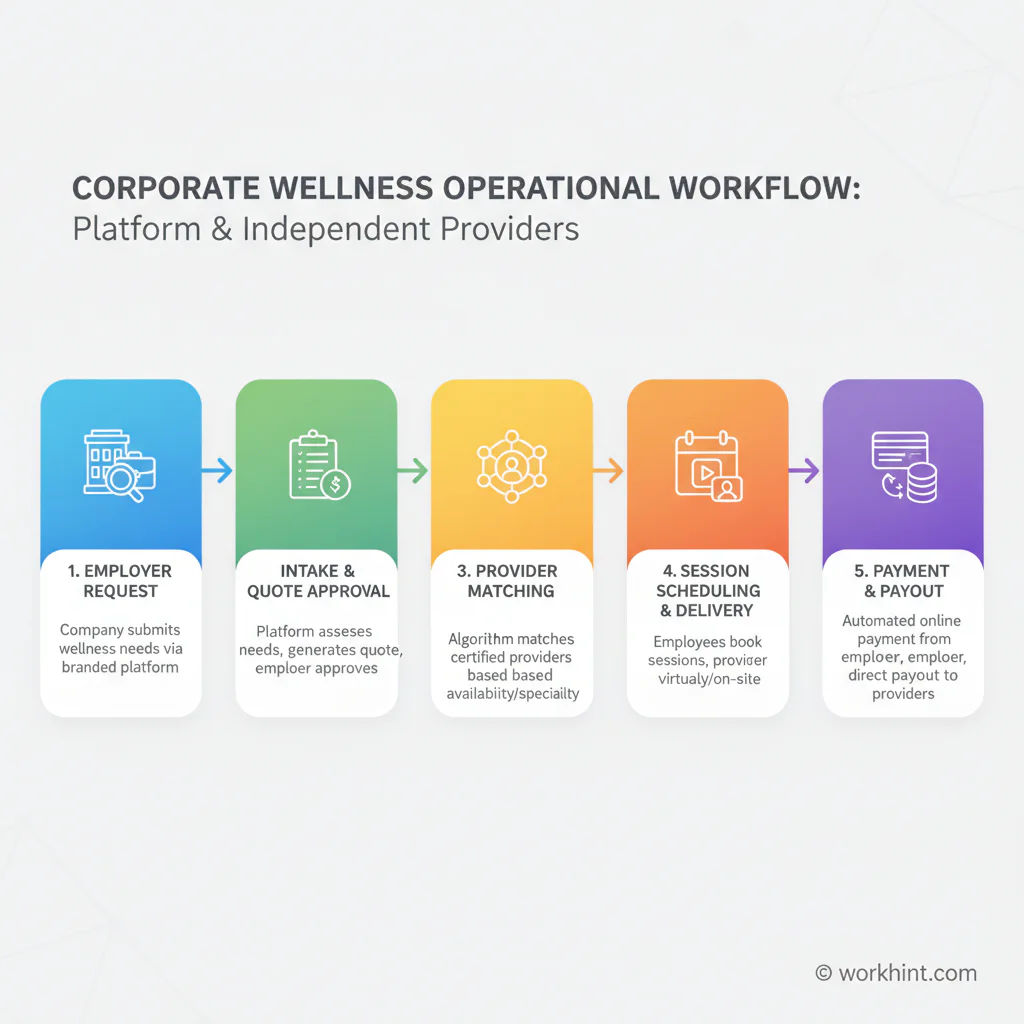
A client requests a pilot through your customer portal. The intake form captures company size, employee goals, dates, delivery format, and privacy requirements. Your internal dashboard routes the request and shows which independent providers match the program. Providers receive invitations, complete onboarding, upload credentials, and share availability.
Once the client approves the quote, Workhint can coordinate scheduling, session assignments, client communication, forms, checklists, invoices, online payments, and provider payouts. The founder sees pipeline, clients, provider capacity, completed sessions, feedback, and revenue in one place.
This is the shift: Workhint is not just software for managing a wellness company later. It helps you launch the company itself as a branded platform with the customer experience, provider workflow, and operating rules connected.
First 7-day launch plan
- Day 1: Choose one buyer, one wellness problem, and one pilot offer.
- Day 2: Set up the branded Workhint platform basics: client intake, provider onboarding, and internal dashboard.
- Day 3: Create pricing, quote approval, scheduling, payment, and provider payout flows.
- Day 4: Recruit five independent providers who can deliver the first pilot.
- Day 5: Build a list of 50 target employers and send direct outreach.
- Day 6: Follow up, book discovery calls, and route any requests through the platform.
- Day 7: Review demand, provider readiness, pricing objections, and fulfillment risk before spending more.
Final launch checklist
- Choose a specific corporate wellness niche.
- Define one paid pilot offer with a clear outcome.
- Register the business and set up basic insurance.
- Create a branded Workhint customer portal and internal dashboard.
- Recruit independent providers and document delivery standards.
- Create intake, quote approval, scheduling, payment, and payout workflows.
- Build a first outreach list of employers and referral partners.
- Sell a pilot before investing in offices, employees, or custom software.
FAQ
How much does it cost to start a corporate wellness business?
A lean launch can start with a few hundred to a few thousand dollars for registration, insurance, branding, outreach, and platform setup. Costs rise if you build custom technology, hire staff, or create a large content library before selling.
Do I need employees to start a corporate wellness business?
No. Many founders can start with independent providers, facilitators, coaches, and wellness partners. The key is to set clear standards, contracts, scheduling rules, and payout terms.
What licenses do I need for a corporate wellness business?
Requirements depend on location and services. General wellness education is different from clinical care, therapy, medical screening, or nutrition services that require licensed professionals. Check local rules and use qualified providers where needed.
What insurance should I consider?
Most founders should review general liability, professional liability, cyber coverage, and any coverage required by clients or providers. If the program handles health information, privacy and data protection matter.
How do corporate wellness businesses make money?
Common models include paid workshops, monthly retainers, per-employee pricing, annual programs, custom initiatives, and add-on services such as coaching or assessments.
How do I find my first corporate wellness clients?
Start with a narrow employer segment, direct outreach, LinkedIn, referral partners, benefits brokers, and existing professional relationships. Sell a pilot before pitching a large annual program.
Can this business be run remotely?
Yes. Many wellness programs can be delivered virtually through workshops, coaching, digital challenges, and remote check-ins. Local or onsite services can be added later through independent providers.
Conclusion
A corporate wellness business is most practical when you launch around a focused offer, a trusted provider network, and a branded operating platform. Start small, validate demand with paid pilots, and only invest heavily after employers prove they will buy.
With Workhint, you can create the customer portal, provider onboarding, scheduling, approvals, payments, and contractor payouts needed to operate from day one. That lets you spend less time building infrastructure and more time finding employers with a real wellness problem to solve.
Leave a Reply