


You can sell grant writing before you build an agency if your offer, intake, deadlines, and writer network are organized from day one.
If you are researching how to start a grant writing business, the attractive part is not just writing proposals. It is helping nonprofits, schools, local governments, and mission-driven companies find funding opportunities they do not have time to pursue alone.
The mistake is trying to look like a full agency too early. You do not need employees, an office, or a large payroll to start. You need a clear niche, a branded way for clients to request help, a repeatable proposal workflow, and a small network of independent grant writers or reviewers you can bring in as demand grows.
This article shows how to launch a grant writing business with a small budget, validate demand first, and use Workhint as the operating foundation before you invest in a traditional team.
What’s in this article?
- Why a grant writing business works
- What you need to launch
- How to price grant writing services
- How to get your first clients
- How Workhint helps launch the business
- A 7-day launch plan, checklist, and FAQ
Why This Grant Writing Business Works
Grant writing is a strong professional services business because the customer pain is clear. Organizations need funding, but grant research, deadlines, narratives, budgets, attachments, reviews, and reporting can overwhelm internal teams.
The business also fits a no-employee launch model. You can start with a narrow offer, such as foundation grant prospecting for small nonprofits, grant readiness audits, or proposal drafting for organizations that already have programs and budgets. As demand increases, you can build a private network of independent grant writers, researchers, editors, and budget reviewers.
Customers buy because they want a better shot at funding without hiring a full-time development role. Providers join because grant writing work is project-based, remote-friendly, and easier to accept when the scope, deadlines, documents, and payments are organized.
What You Need To Launch
Start lean. Your first version should prove that organizations will pay for your help before you build a large agency. Focus on a professional brand, a simple intake process, contracts, insurance, basic research tools, and a delivery workflow.
| Launch item | Lean budget range | Why it matters |
|---|---|---|
| Business registration and basic legal setup | $100-$800 | Creates the entity, tax setup, and foundation for contracts. |
| Professional liability insurance | $500-$1,500/year | Protects the business when clients rely on your advice and documents. |
| Website, domain, and branded intake | $100-$700 | Lets prospects understand your niche and request help. |
| Grant research tools and memberships | $0-$1,000+ | Useful once you know which clients and funders you serve. |
| Workhint platform setup | Start lean | Runs intake, client approvals, provider assignments, deadlines, invoices, and payouts. |
| Initial marketing | $200-$1,000 | Supports outreach, local partnerships, and content. |
You may need specialized training if you are new to grants. You do not need to buy every course or database before selling. A better path is to choose one grant niche, create a starter offer, and validate whether clients want paid help.
How To Price It
Grant writing pricing depends on grant complexity, your experience, the funder requirements, and whether you are only writing or also researching, managing deadlines, building budgets, and coordinating attachments. Avoid charging only for effort if the scope is unclear. Package the work around outcomes, deliverables, and decision points.
| Offer | Example price | Best for |
|---|---|---|
| Grant readiness audit | $500-$1,500 | New clients that need to know if they are ready to apply. |
| Funder research shortlist | $750-$2,500 | Organizations that need qualified opportunities before writing. |
| Foundation grant proposal | $1,500-$5,000 | Smaller proposals with clear program information. |
| Federal or complex proposal support | $5,000-$15,000+ | Larger applications with budgets, partners, attachments, and reviews. |
| Monthly grant support retainer | $1,500-$4,000/month | Clients that need ongoing research, calendar management, and proposal support. |
Do not promise funding. Sell professional preparation, research, writing, coordination, and submission support. That keeps the offer credible and protects the business.
How To Get First Customers
Your first customers should come from a focused niche, not broad advertising. Pick one audience: small nonprofits, youth programs, arts organizations, faith-based organizations, workforce programs, local clinics, or small municipalities.
Start with direct outreach to executive directors, program managers, nonprofit consultants, accountants, and local foundations that know organizations needing help. Offer a low-friction entry point such as a grant readiness review or a shortlist of realistic funding opportunities.
The first goal is demand validation. Can you get five conversations, two paid audits, or one proposal project from a clearly defined audience? If yes, build more delivery capacity. If no, adjust the niche, offer, or price before you invest more.
How Workhint Helps Launch It
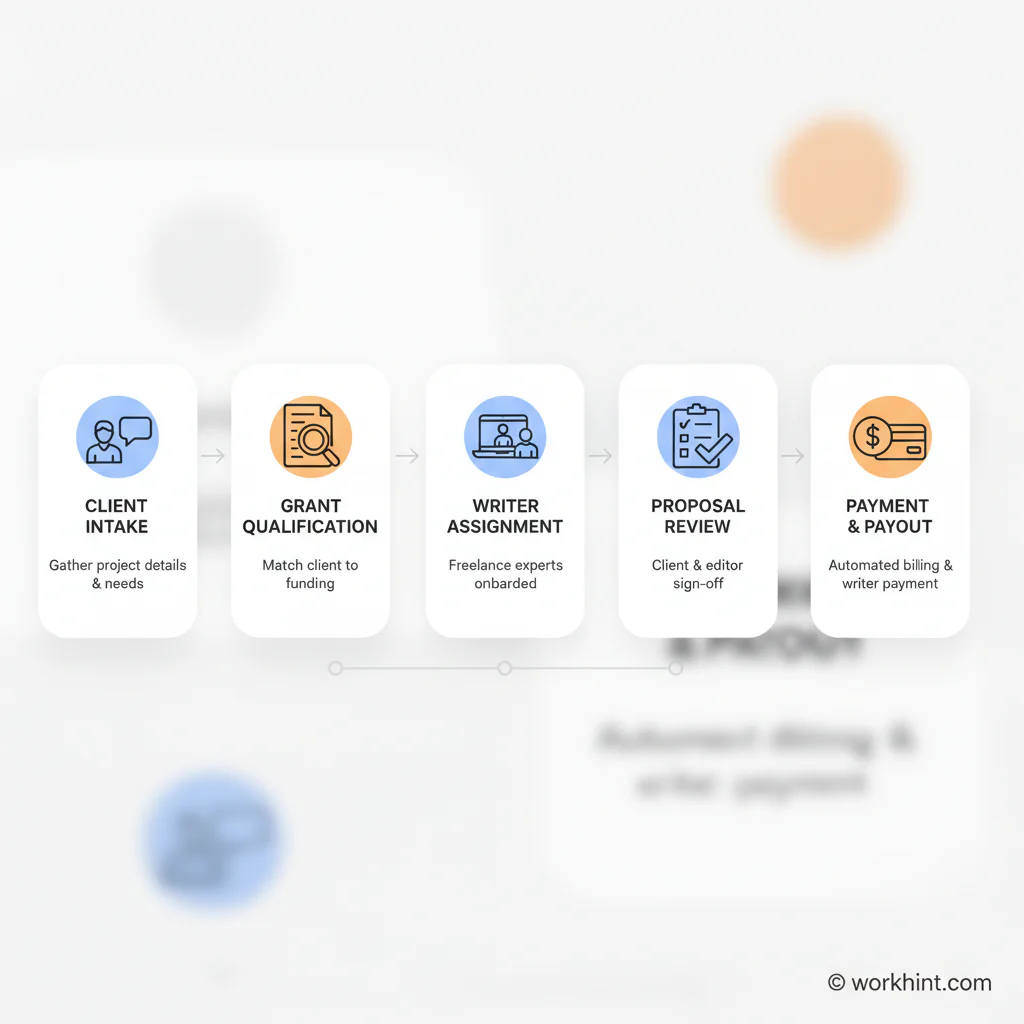
Workhint lets you launch the grant writing business as a branded service platform instead of a loose collection of forms, spreadsheets, email threads, and freelancer messages.
A client can submit a grant support request through your branded portal, upload program documents, answer readiness questions, and approve the proposed scope. You can route the request to the right independent writer or researcher, assign deadlines, collect missing attachments, manage internal review, generate invoices, collect payment, and pay contractors from one operating system.
For a grant writing business, that means Workhint becomes the operational foundation before you hire employees. Your platform can manage client intake, opportunity qualification, proposal milestones, review checklists, approval gates, document collection, calendar reminders, role-based access, contractor onboarding, and payout tracking. You focus on winning clients and maintaining quality while Workhint structures the work behind the scenes.
First 7-Day Launch Plan
- Day 1: Choose one niche, one offer, and one launch market. Avoid serving every organization type at once.
- Day 2: Set up the branded Workhint platform basics: client portal, intake form, service packages, and internal dashboard.
- Day 3: Create the scope, quote, approval, deadline, invoice, and contractor payout workflow.
- Day 4: Recruit two or three independent grant writers, researchers, or editors you can use when demand exceeds your own capacity.
- Day 5: Contact 30 targeted organizations and 10 referral partners with a simple readiness-audit offer.
- Day 6: Route interested prospects through your intake flow and qualify whether they have programs, budgets, documents, and deadlines ready.
- Day 7: Review demand, pricing, delivery risk, and provider readiness before spending more on tools or marketing.
Final Launch Checklist
- Choose a focused grant writing niche.
- Create one paid starter offer.
- Register the business and prepare a basic contract.
- Set up professional liability insurance.
- Build a branded intake and client portal in Workhint.
- Create grant readiness, document collection, review, approval, invoicing, and payout workflows.
- Recruit a small independent provider network.
- Run outreach to targeted organizations and referral partners.
- Validate demand before buying expensive tools or hiring employees.
FAQ
How much does it cost to start a grant writing business?
A lean launch can often start for a few hundred to a few thousand dollars, depending on registration, insurance, training, tools, website, and marketing. Avoid expensive databases or staff until you validate demand.
Can I start a grant writing business with no employees?
Yes. Start as the lead consultant and use independent grant writers, researchers, editors, or budget reviewers when projects require more capacity or specialized knowledge.
Do I need a certification to start?
Certification is not always required, but skill matters. If you are new, build experience through training, supervised projects, volunteer work, or a narrow starter offer before taking on complex grants.
How should I charge for grant writing?
Use project fees, audits, retainers, or hourly work depending on scope. Avoid contingency-only pricing and avoid promising that a client will win funding.
How do I find first clients?
Pick a niche and contact organizations that already need funding support. Referral partners, nonprofit consultants, accountants, community foundations, and local business groups can also introduce prospects.
What should I avoid buying too early?
Avoid hiring employees, buying expensive software stacks, joining every paid database, or running broad ads before you know which niche, offer, and price customers will accept.
Conclusion
A grant writing business is easier to start when you treat it as a focused service platform, not a traditional agency. Validate demand, sell a clear first offer, build a small provider network, and use Workhint to run the intake, assignment, approval, payment, and delivery system from day one.
Leave a Reply