


A translation agency can launch fast when you sell one language service first and build the translator network around real client demand.
How to start a translation agency is a practical startup question because the business can begin from home with a focused niche, a branded client platform, and a small network of freelance translators. You do not need an office, full-time staff, or a large localization team before you prove demand.
The lean path is to sell one clear service, such as legal document translation, healthcare forms, ecommerce product localization, immigration paperwork support, technical manuals, video subtitles, or website localization. Once clients are requesting work, you can expand languages, industries, and review capacity.
What’s in this article?
- Why a small translation agency works
- What you need to launch without staff
- How to price translation services
- How to get first clients
- How Workhint helps launch the branded agency platform
- A 7-day launch plan, checklist, and FAQ
How to start a translation agency with no staff
The strongest first version is not a general language company. It is a focused translation service for one buyer with one urgent problem. A small agency might start with Spanish-English legal documents for immigration attorneys, multilingual product listings for ecommerce brands, or medical forms for clinics serving specific communities.
Current search results show steady interest around startup costs, licenses, pricing, first clients, translation tools, and whether to use freelancers or in-house translators. Several guides emphasize that translation can be home-based and low-overhead, while more complete agencies need better workflows, quality checks, and client communication.
That is the real opportunity. Clients are not only buying words in another language. They are buying accuracy, confidentiality, deadline reliability, and a clean process.
What you need to launch
Start with a business registration, niche positioning, translator onboarding standards, client intake form, quoting process, file handling rules, review workflow, delivery process, and payment setup. Keep the operation small enough to control quality.
Many translation businesses do not need a special license, but requirements vary by location and service type. Legal, medical, certified, sworn, or government-related translation can involve stricter rules. Check local business registration, tax, professional liability, confidentiality, data protection, and certification expectations before accepting sensitive work.
| Launch item | Lean first version | Typical early budget |
|---|---|---|
| Business setup | Registration, business bank account, bookkeeping, basic contracts | $100 to $800 |
| Insurance and legal | Professional liability, confidentiality terms, translator agreements | $300 to $1,500 |
| Branded platform | Client intake, quote approvals, translator onboarding, file routing, delivery, payments, payouts | $0 to $750 to configure |
| Translation tools | CAT or TMS tools, glossary templates, secure storage, quality checklist | $50 to $500 per month |
| Customer acquisition | Niche landing page, LinkedIn outreach, local partnerships, industry directories | $100 to $1,000 |
Avoid hiring full-time translators before you know which language pairs and industries will sell. Recruit vetted freelancers first, then add staff only when recurring volume makes the role predictable.
How to price it
Translation pricing usually depends on language pair, subject complexity, turnaround time, certification needs, formatting, review level, and volume. Per-word pricing is common, but project minimums and rush fees protect small agencies from low-value work.
| Offer | Example price | Translator payout | Best use |
|---|---|---|---|
| Standard document translation | $0.12 to $0.25 per word | $0.06 to $0.14 per word | General business, web, and internal documents |
| Certified document package | $35 to $100 per page or document | Fixed payout by page or word count | Immigration, academic, legal, or official documents |
| Rush project | 25% to 75% premium | Higher payout for speed | Urgent deadlines with available translators |
| Localization retainer | $1,000 to $5,000 per month | Project-based payouts | Recurring ecommerce, SaaS, or marketing content |
Publish a simple starting range, then quote every project after reviewing language pair, word count, file condition, deadline, and review requirements. Your margin depends on accurate scoping.
How to get first clients
Start where language pain is already visible. Immigration attorneys, clinics, schools, ecommerce sellers, local government contractors, real estate firms, nonprofits, manufacturers, and international service providers often need translation but lack a reliable workflow.
Lead with one use case. For example: certified Spanish-English document translation for immigration firms, bilingual product page localization for Shopify brands, or translated intake forms for clinics. A narrow offer makes outreach easier and helps freelance translators understand what quality standard you need.
Ask every prospect to submit a sample file through your branded intake flow. That lets you quote accurately, confirm deadlines, assign the right translator, and show a professional process before the first project starts.
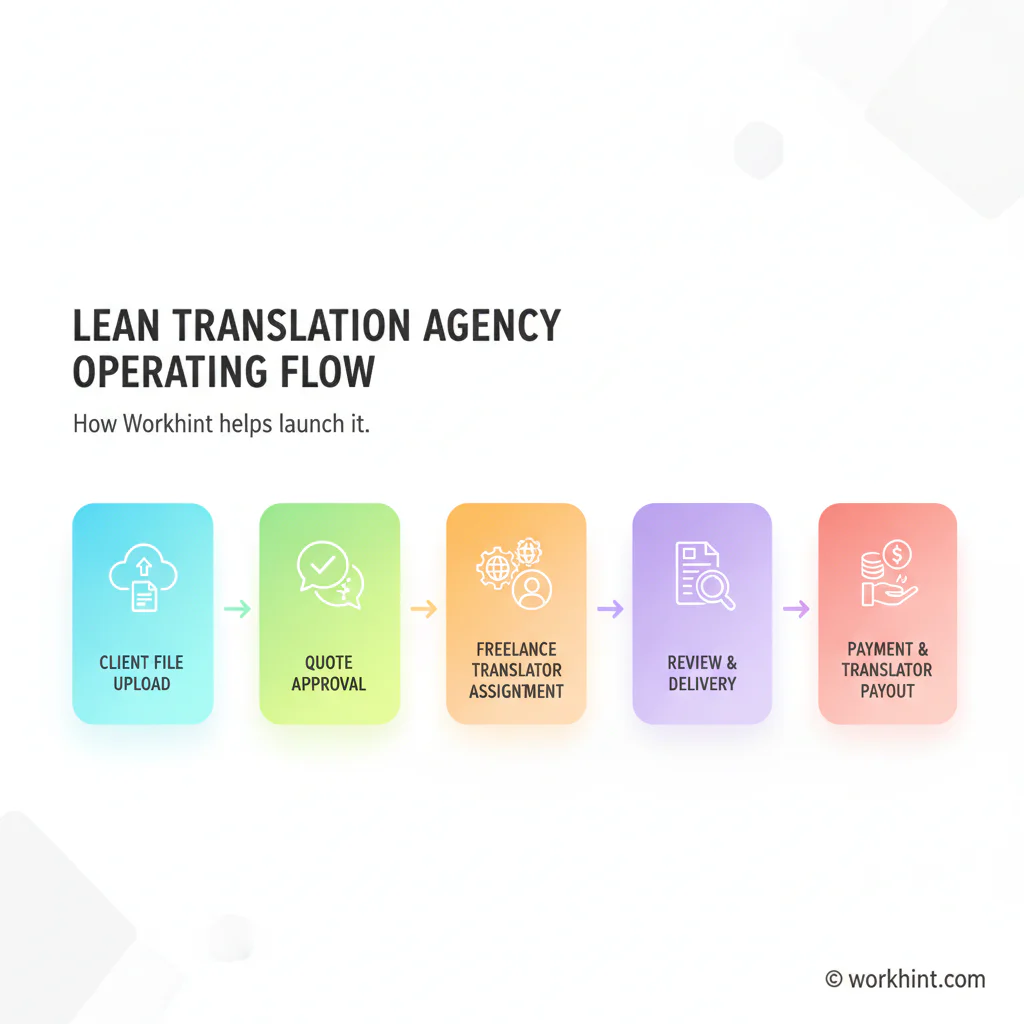
How Workhint helps launch it
Workhint lets you launch the translation agency as a branded client platform instead of stitching together email threads, file folders, spreadsheets, payment links, and freelancer chats. A translation agency can use freelancer management software to manage translator onboarding, language pairs, assignment routing, quality review, invoicing, and payouts.
A client can request translation through your portal, upload files, choose the language pair, select certification or rush options, approve a quote, pay online, and track delivery. Inside the agency dashboard, you can assign the project to a vetted freelance translator, attach a glossary, add review steps, collect completed files, request revisions, deliver the final version, invoice the client, and calculate translator payouts.
That operating system matters because translation quality depends on repeatable handoffs. Workhint gives the business a professional front end and an internal workflow before you hire staff, buy enterprise localization software, or build custom infrastructure.
First 7-day launch plan
- Day 1: Choose one niche, one language pair, and one buyer with urgent translation demand.
- Day 2: Set up the branded Workhint platform basics: client intake, file upload, quote approval, translator onboarding, and admin dashboard.
- Day 3: Create pricing rules, project stages, quality checklist, payment flow, and translator payout process.
- Day 4: Recruit three to five vetted freelance translators or reviewers for your first language pair.
- Day 5: Contact first prospects in one niche with a specific translation offer and sample process.
- Day 6: Route every inquiry through the platform, quote real files, and assign only projects you can deliver well.
- Day 7: Review demand, turnaround time, translator quality, pricing, and margin before expanding languages.
Final launch checklist
- Choose one language pair, niche, and first service package
- Register the business and check local licensing or certification expectations
- Create client terms, confidentiality language, and freelance translator agreements
- Configure branded intake, file upload, quote approval, project assignment, delivery, payments, and payouts in Workhint
- Recruit a small vetted translator network before accepting too much work
- Create one landing page and one direct outreach message
- Quote the first projects carefully and track margin
- Validate demand before hiring staff or buying heavy localization infrastructure
FAQ
How much does it cost to start a translation agency?
A lean translation agency can often start with a few hundred to a few thousand dollars, depending on registration, insurance, contracts, tools, website, marketing, and platform setup. Costs rise when you add staff, advanced localization tools, or paid acquisition.
Do I need a license to start a translation agency?
Many translation agencies do not need a special license, but rules vary by location and service type. Certified, legal, medical, sworn, or government-related translation may require specific credentials or procedures.
Can I start with freelance translators instead of employees?
Yes. A freelance translator network is often the best lean launch model. Use clear agreements, confidentiality rules, quality standards, deadlines, and payout terms so the business operates professionally.
How should a translation agency price services?
Common models include per-word pricing, per-page certified document pricing, project minimums, rush fees, and monthly retainers. Always review the file, language pair, deadline, and quality requirements before quoting.
How do translation agencies get first clients?
The best early channels are niche outreach, referrals, LinkedIn, local professional partnerships, legal and immigration firms, clinics, ecommerce companies, and organizations already serving multilingual customers.
What tools does a small translation agency need?
At minimum, you need secure file handling, client intake, quote approvals, translator onboarding, project tracking, payment collection, and quality checklists. CAT or translation management tools can help once volume grows.
Conclusion
A translation agency is easier to start when you resist the urge to become a full-service language company immediately. Pick one niche, recruit a small freelance translator network, route every project through a branded platform, and validate demand before you invest heavily.
Leave a Reply