


A cybersecurity business can start lean when you sell focused assessments before building a full security firm.
Learning how to start a cybersecurity business is attractive because small companies need practical security help, but many cannot hire a full-time security leader. The opportunity is to launch a focused service, validate demand, and use a branded platform to coordinate clients, independent security specialists, assessments, approvals, and recurring work.
This model works best when the founder starts with a narrow offer: a small business security assessment, Microsoft 365 hardening package, vendor risk review, or fractional security office hour. You can sell the outcome first, then bring in vetted independent providers as demand grows.
What’s in this article?
- Why a cybersecurity business can work without employees
- What you need before the first client
- How to price assessments, retainers, and projects
- How to get first customers without heavy ad spend
- How Workhint helps launch the operating platform
- A practical 7-day launch plan and checklist
Why this business works
Cybersecurity demand keeps expanding because every business now depends on email, cloud software, payments, customer data, and remote access. Small businesses often know they are exposed, but they do not know which risks matter first. That creates space for simple, practical security offers.
The best first offer is not a vague promise to improve security. It is a concrete service with a clear deliverable: assess the environment, identify top risks, fix easy gaps, and give the owner a prioritized plan.
A provider-network model helps reduce risk. Instead of hiring analysts, auditors, and engineers before revenue exists, you build a private bench of independent specialists. One provider may handle cloud configuration, another may perform vulnerability testing, and another may support compliance documentation. The founder owns the brand, customer relationship, process, pricing, and quality control.
What you need to launch
You need credibility, a narrow offer, a clean client intake process, and a way to manage confidential work responsibly. You do not need an office, a large team, or a custom portal before you have customers.
Choose one customer type, such as medical offices, accounting firms, law firms, local retailers, startups, or professional services firms. Then define a small starter package that can be delivered remotely.
| Launch item | Lean budget | Why it matters |
|---|---|---|
| Business registration and basic legal setup | $200 to $1,500 | Creates the entity, contracts, and client-facing foundation. |
| Professional liability and cyber liability insurance | $500 to $3,000 yearly | Protects the business before handling sensitive client work. |
| Branded Workhint platform setup | Start lean | Runs intake, client approvals, provider assignments, payments, and delivery tracking. |
| Website, domain, and local outreach assets | $100 to $800 | Gives prospects a place to request an assessment. |
| Security tools for initial assessments | $0 to $1,000 | Use only what is needed for the first offer, then expand after demand is proven. |
| Provider recruitment and onboarding | $0 to $500 | Builds the independent specialist network before jobs arrive. |
Certifications can help, especially with regulated or technical buyers, but they do not replace experience. If the founder is not personally qualified, the business should operate as a managed provider network with clear quality standards and credentialed specialists.
How to price it
Cybersecurity pricing should match the risk, complexity, and urgency of the work. Fixed packages are easier to sell and easier to route through a provider network.
| Offer | Example price | Best use |
|---|---|---|
| Small business security assessment | $1,500 to $5,000 | A one-time entry offer with a written risk roadmap. |
| Cloud security hardening package | $2,000 to $8,000 | Focused setup work for Microsoft 365, Google Workspace, or cloud access controls. |
| Security training and policy setup | $750 to $3,000 | Good for small firms that need practical employee guidance. |
| Fractional security retainer | $1,500 to $10,000 monthly | Recurring advice, vendor reviews, compliance support, and risk reviews. |
A simple path is to sell a fixed assessment first, then offer a monthly retainer for implementation support. The assessment creates trust. The retainer creates recurring revenue.
How to get first customers
Start where urgency already exists. Talk to accountants, MSPs, insurance brokers, compliance consultants, law firms, and SaaS founders who hear security concerns from their own clients.
Your first outreach should offer a specific diagnostic, not a generic cybersecurity consultation. For example: “We help small law firms find the five security gaps most likely to create client-data risk.”
Use local SEO, LinkedIn, founder networks, chamber groups, and direct outreach to one vertical. The first goal is demand validation: can you get conversations, paid assessments, and repeatable questions?
How Workhint helps launch it
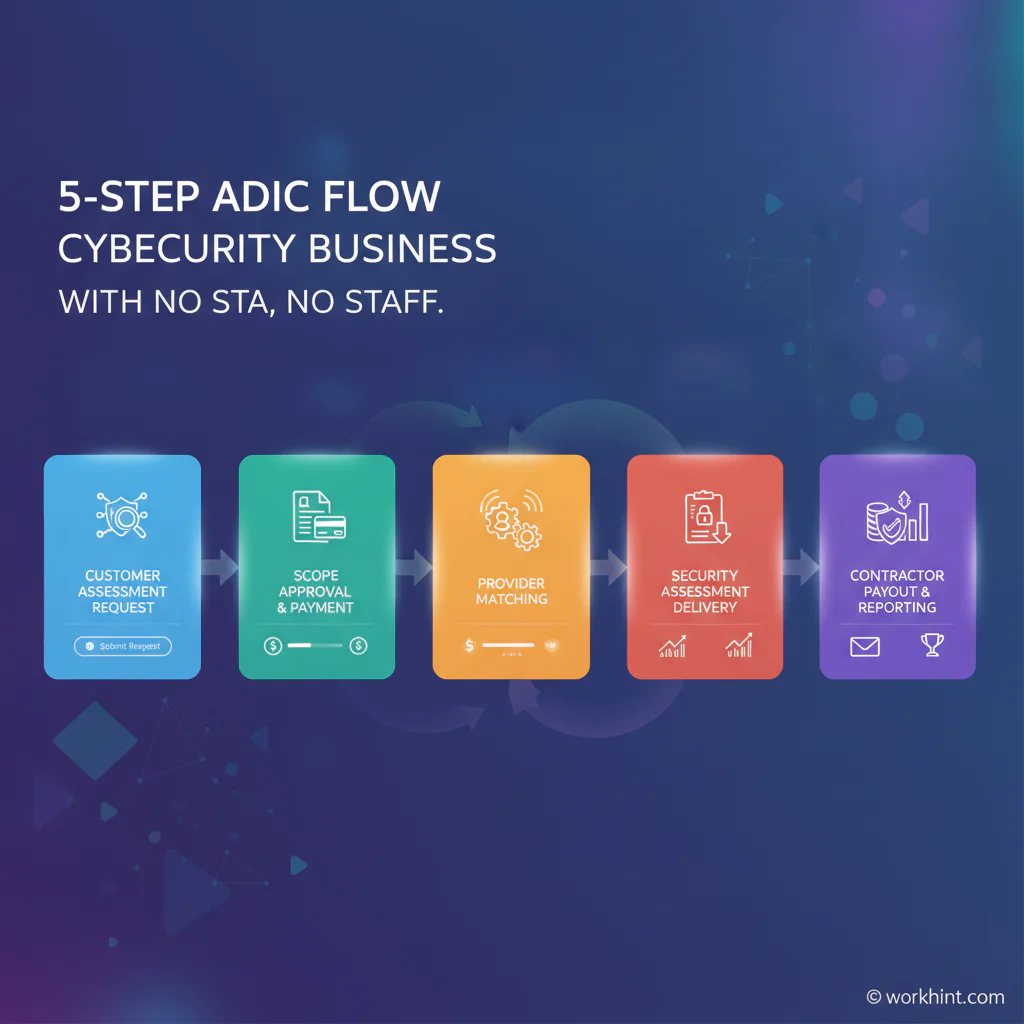
Workhint lets you launch the branded operating platform before building custom software or hiring staff. A prospect can request an assessment through your portal, answer intake questions, upload details, approve scope, pay online, and see the engagement move through clear stages.
Behind the scenes, Workhint can route the request to the right provider, assign checklist-based work, collect documents, schedule interviews, track findings, manage approvals, generate invoices, and handle contractor payouts. The founder can see every client, provider, task, approval, and payment from one dashboard.
Cybersecurity work needs trust and coordination. Customers need a professional process. Providers need clear assignments. The founder needs visibility before adding employees. Workhint becomes the launch foundation: customer portal, provider network, workflow, scheduling, approvals, payments, and reporting in one branded system.
First 7-day launch plan
- Day 1: Pick one customer segment, one launch market, and one starter offer.
- Day 2: Set up the branded Workhint platform with intake, client profile fields, and request forms.
- Day 3: Build the quote, approval, scheduling, payment, provider assignment, and payout flow.
- Day 4: Recruit three to five independent security specialists or resource partners.
- Day 5: Contact referral partners and 25 targeted prospects with a specific diagnostic offer.
- Day 6: Route every response through the platform and book discovery calls or assessment requests.
- Day 7: Review demand, pricing, provider readiness, and delivery quality before investing more.
Avoid expensive tools before the offer is proven. The signal is whether a specific customer type will pay for a clear security outcome.
Final launch checklist
- Choose a narrow cybersecurity niche and customer segment.
- Register the business and prepare service agreements.
- Confirm insurance needs before handling client systems or data.
- Create one fixed starter package with a clear deliverable.
- Configure the branded Workhint portal, intake, approvals, scheduling, payments, and provider payout flow.
- Recruit and vet the first independent specialists.
- Create a short website page that explains the offer and sends prospects into the intake flow.
- Contact referral partners and targeted prospects.
- Validate demand before hiring employees or buying advanced tools.
FAQ
How much does it cost to start a cybersecurity business?
A lean cybersecurity business can start with a few hundred to a few thousand dollars for registration, insurance, a website, platform setup, and basic tools. Costs rise when you buy advanced security software, hire employees, or target regulated enterprise clients too early.
Can I start a cybersecurity business with no employees?
Yes, if you use a narrow offer and a vetted independent provider network. The founder can own sales, client process, quality control, and operations while qualified contractors perform specialized work.
Do I need cybersecurity certifications?
Certifications are helpful for credibility, especially in technical or regulated markets. They are not the only requirement. Clients also look for experience, clear scope, references, insurance, and a professional delivery process.
What is the easiest cybersecurity service to sell first?
A small business security assessment is often the easiest first offer because it gives the customer a clear starting point. Cloud account hardening, employee security training, and vendor risk reviews can also work well.
How should I find the first clients?
Start with one niche and build referral relationships with MSPs, accountants, attorneys, insurance brokers, and local business groups. Offer a focused diagnostic instead of a broad consulting pitch.
Can cybersecurity consulting become recurring revenue?
Yes. A one-time assessment can lead to monthly retainers for security reviews, vendor questions, compliance support, training, and roadmap execution.
Conclusion
The fastest way to start a cybersecurity business is to sell a focused outcome, validate demand, and avoid building a traditional firm before the market asks for it. A branded platform plus an independent provider network lets you look organized, deliver consistently, and stay lean.
Workhint gives that model an operating foundation from request through provider assignment, approvals, payment, delivery tracking, and payout. That lets the founder focus on the hardest part: choosing the right niche, earning trust, and turning early demand into repeatable revenue.
Leave a Reply