


You can launch a wedding officiant brand before you hire staff, rent an office, or build custom booking software.
If you are researching how to start a wedding officiant business, the opportunity is simple: couples need a trusted person to run the ceremony, handle the legal steps, and keep the experience calm. The mistake is assuming you have to build a traditional local service company first.
A faster model is to launch a branded officiant platform, validate demand in one market, and build a small network of independent officiants you can route qualified wedding requests to. You can start lean, learn what couples actually book, and only add overhead after the demand is real.
What’s in this article?
- Why a wedding officiant business can work as a low-overhead service brand
- What you need before accepting bookings
- How to price ceremonies and packages
- How to find the first couples and vendor partners
- How Workhint can become the branded operating platform
- A 7-day launch plan and final checklist
Why this business works
Wedding officiating has three useful traits for a new founder: clear demand, low fixed costs, and a service that can be packaged. Couples already search for officiants, venues need reliable ceremony partners, and planners prefer vendors who respond quickly and follow a clean process.
The business can also expand beyond your own calendar. Once you understand the service, scripts, pricing, and customer expectations, you can recruit independent officiants who serve different ceremony styles, locations, and languages. Your job becomes building the brand, generating demand, qualifying couples, managing bookings, and keeping delivery consistent.
That does not mean skipping legal diligence. Officiant rules vary by state and county, and some locations require registration before a ceremony can be legally performed. The lean approach is to verify those rules first, then launch a narrow offer you can deliver confidently.
What you need to launch
Start with the minimum needed to book and deliver a professional ceremony. You need legal eligibility, a clear service offer, basic insurance, a customer intake process, a payment process, and a way to coordinate the ceremony details. You do not need an office, full-time employees, or a large advertising budget.
| Startup item | Lean launch estimate | Why it matters |
|---|---|---|
| Ordination and local registration checks | $0-$250 | Confirms you can legally perform ceremonies in your market. |
| Business registration | $50-$500 | Creates the legal foundation for invoices, contracts, and taxes. |
| Insurance | $300-$1,100 annually | General liability and professional liability protect against avoidable risk. |
| Brand and simple website | $150-$750 | Gives couples a credible place to inquire and review packages. |
| Portable ceremony gear | $150-$500 | A microphone, speaker, and professional binder improve delivery. |
| Workhint platform setup | Start lean | Runs intake, quotes, scheduling, payments, provider onboarding, and reporting. |
| Local marketing tests | $100-$500 | Validates whether couples and vendor partners respond before you scale spend. |
If you want to build a network, define your provider standards early. Decide which ceremonies you will offer, what training or experience independent officiants need, how scripts are reviewed, how license paperwork is tracked, and how payouts are handled.
How to price it
Most wedding officiant businesses can start with simple packages. Avoid custom pricing for every inquiry at the beginning. Couples want clarity, and clear packages make it easier to route work to independent providers later.
| Package | Example price | Best for |
|---|---|---|
| License signing | $100-$250 | Couples who only need a legal signing and minimal ceremony. |
| Simple elopement | $250-$450 | Small ceremonies with a short script and limited travel. |
| Custom ceremony | $500-$900 | Couples who want a personalized ceremony, planning call, and script work. |
| Premium ceremony plus rehearsal | $800-$1,500 | Formal weddings with rehearsal attendance, extra coordination, and travel. |
Protect your calendar with a deposit, a written cancellation policy, travel fees outside your core radius, and final payment before the wedding date. When you work with independent officiants, define the provider payout by package so margin is clear before a booking is accepted.
How to get first customers
Your first goal is demand validation, not looking like a large agency. Start with a tight market, one or two ceremony types, and a simple intake form. Then test where couples and referral partners already look.
- Create complete profiles on wedding directories where couples search locally.
- Contact venues, photographers, planners, florists, and elopement vendors with a clear partner note.
- Offer a fast-response elopement package for couples who need a simple ceremony quickly.
- Publish local pages for searches like city wedding officiant, elopement officiant, and courthouse wedding officiant.
- Ask every early couple for a review and permission to use ceremony photos.
Do not discount heavily just to fill the calendar. A better test is whether couples respond to your positioning, book a clear package, and complete the process without confusion.
How Workhint helps launch it
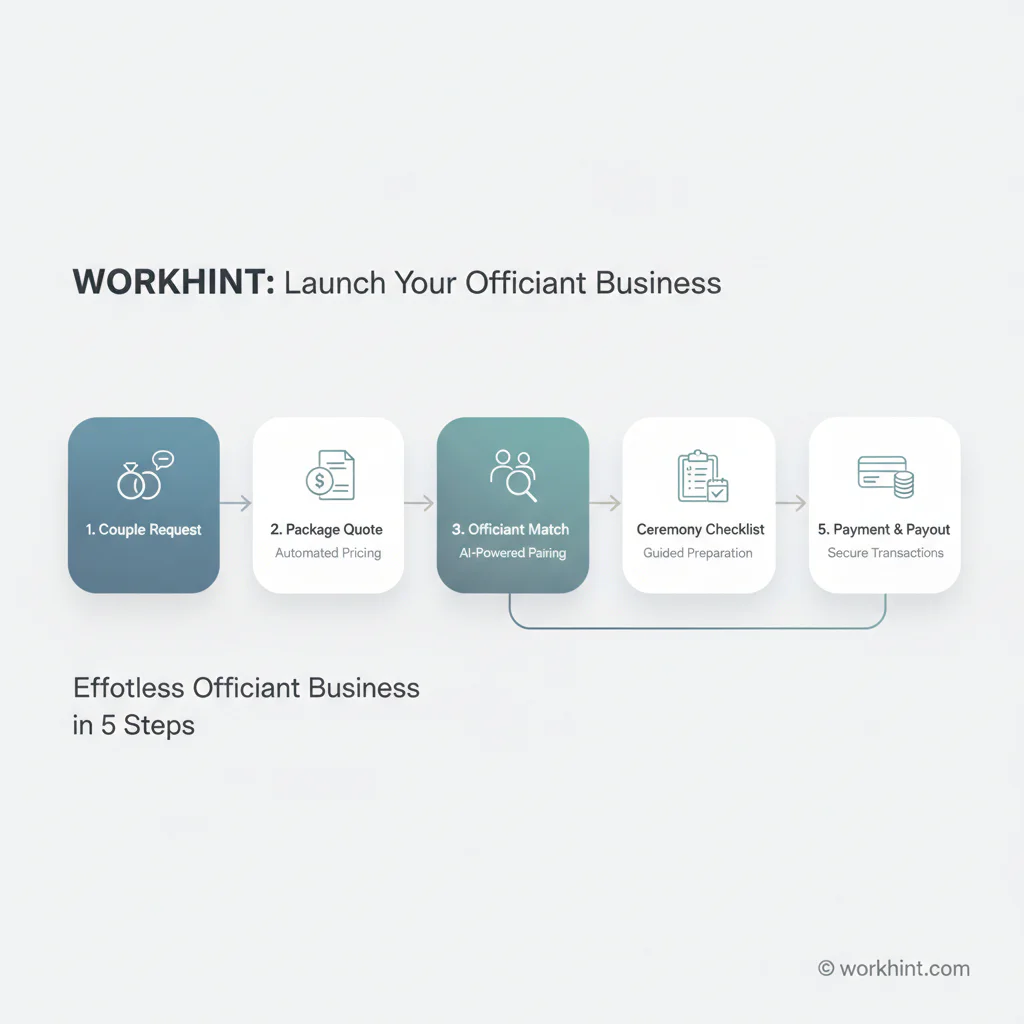
Workhint can generate the branded operating platform for the wedding officiant business before you invest in a custom portal or assemble disconnected tools. A couple can submit a ceremony request through your branded customer portal, choose the ceremony type, share the date and venue, answer script questions, upload documents, approve the quote, pay the deposit, and track next steps.
Behind the scenes, you can invite independent officiants into the provider network, collect their credentials, set service areas, assign qualified requests, manage calendars, track license paperwork, send ceremony checklists, collect final payments, and handle contractor payouts. The platform connects the customer experience, provider workflow, internal dashboard, approvals, payments, and reporting in one operating system.
That changes the launch sequence. Instead of hiring employees first, you validate demand with a branded platform, recruit a small group of independent officiants, and keep service quality consistent through standardized intake, scripts, checklists, scheduling, and payment rules.
First 7-day launch plan
- Day 1: Choose the launch market, ceremony types, and customer segment. Keep the first offer narrow.
- Day 2: Check ordination, state, county, and business registration requirements.
- Day 3: Set up the branded Workhint portal, intake form, quote approval, payment, and scheduling flow.
- Day 4: Build packages, contracts, ceremony questionnaires, provider standards, and payout rules.
- Day 5: Recruit two to five independent officiants or ceremony partners who fit the brand.
- Day 6: Contact venues, planners, photographers, and elopement vendors with the launch offer.
- Day 7: Review inquiries, booking friction, provider readiness, pricing, and whether demand justifies more marketing.
Final launch checklist
- Confirm local officiant and marriage-license rules.
- Register the business and choose the service area.
- Create three simple ceremony packages.
- Set deposit, cancellation, travel, and final-payment policies.
- Configure the branded Workhint customer portal and provider workflow.
- Recruit the first independent officiants or ceremony partners.
- Create intake, quote, script, scheduling, payment, and payout flows.
- Launch directory profiles and local partner outreach.
- Validate demand before hiring staff or expanding into new markets.
FAQ
How much does it cost to start a wedding officiant business?
A lean launch can often start in the low hundreds to a few thousand dollars, depending on registration, insurance, website, gear, and marketing. Keep the first version focused on legal readiness, a credible brand, a booking process, and demand validation.
Do I need a license to become a wedding officiant?
Rules depend on the state and county. Many officiants become ordained through a recognized organization, but some counties require registration before you can legally perform ceremonies. Always verify local requirements before booking clients.
Can I start with no employees?
Yes. You can start solo or build a network of independent officiants. If you use independent providers, create clear standards, assignment rules, contracts, payment terms, and quality controls.
How do wedding officiants get clients?
Common channels include wedding directories, venue referrals, planner relationships, local SEO, elopement pages, reviews, and partnerships with photographers or florists.
How much should I charge as a wedding officiant?
Pricing depends on the market, travel, customization, rehearsal needs, and ceremony complexity. Simple signings may be low-cost, while custom ceremonies with rehearsal support can command much higher fees.
What equipment do I need?
Start with a professional ceremony binder, reliable microphone, portable speaker for outdoor venues, backup script copy, and clean attire. Avoid buying advanced gear until bookings prove demand.
Conclusion
A wedding officiant business is attractive because the first version can be simple, profitable, and fast to validate. The stronger opportunity is building a branded platform around the service: couples get a smooth booking experience, independent officiants get organized work, and you build the operating model before adding heavy overhead.
Leave a Reply