


Contractor screening works best when risk, consent, scope, and records are handled before access is granted.
An independent contractor background check process helps companies vet external workers without turning screening into a messy, one-off request. The goal is not to run the same check on every contractor. The goal is to decide when screening is appropriate, collect consent, use a consistent standard, route exceptions, and keep a clear record before the contractor starts work.
This article is operational guidance, not legal advice. Background checks can trigger federal, state, local, and industry-specific rules, so involve qualified counsel when designing the policy.
What’s in this article?
- When contractor background checks make business sense.
- A step-by-step workflow for screening independent contractors.
- A responsibility table for operations, legal, HR, security, and managers.
- Where Workhint fits when screening needs to connect to onboarding, access, and approvals.
Why independent contractor background checks matter
Companies often bring in contractors for work that touches customers, systems, homes, facilities, financial data, health information, minors, regulated environments, or sensitive intellectual property. In those situations, a background check may be part of responsible risk management.
The compliance side matters just as much. The Federal Trade Commission explains that employers using background reports must follow Fair Credit Reporting Act requirements, including disclosure, authorization, and pre-adverse and adverse action steps when applicable. The Equal Employment Opportunity Commission also warns that background check practices must be applied in a way that does not discriminate. For contractors, the same practical lesson applies: define the business reason, use consistent criteria, and document the decision path.
Screening also intersects with contractor classification. A background check alone does not make someone an employee, but the broader way a company controls work can affect classification analysis. The Department of Labor’s worker classification guidance focuses on economic realities, while the IRS looks at behavioral control, financial control, and the relationship of the parties. For compliance-sensitive contractor work, contractor compliance software can keep classification, required documents, approvals, audit trails, and renewal checks organized.
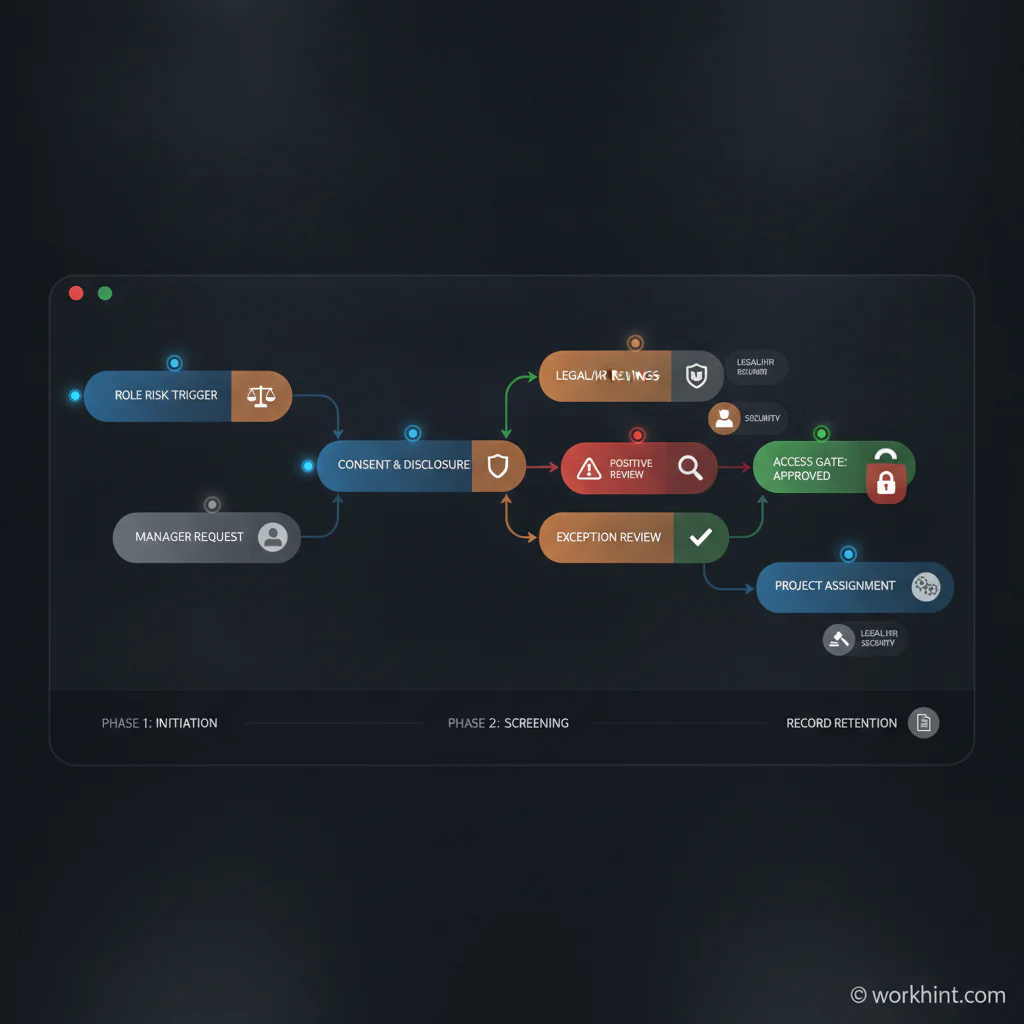
Independent contractor background check process
A useful process starts before the contractor receives systems access or a project brief. Use this workflow as a practical operating model.
- Define the screening trigger. Decide which contractor roles require checks based on risk: customer contact, worksite access, regulated duties, financial authority, sensitive data, vulnerable populations, driving, or safety-sensitive work.
- Confirm the engagement model. Identify whether the person is a direct independent contractor, agency worker, vendor employee, consultant, marketplace worker, or subcontractor. The screening owner may change by model.
- Choose the check type. Match the screen to the role. Examples include identity verification, criminal history, motor vehicle records, professional license verification, sanctions screening, employment verification, or education verification.
- Get proper disclosure and authorization. Before using a consumer report, confirm the required notice and consent steps. Do not bury authorization inside a general contractor agreement.
- Route exceptions to the right reviewers. Managers should not make sensitive eligibility decisions alone. Legal, HR, compliance, security, or the staffing/vendor partner may need to review depending on the issue.
- Complete adverse action steps when required. If a report may affect the engagement, follow the applicable pre-adverse and adverse action process before making a final decision.
- Connect screening to onboarding gates. A contractor should not receive restricted access, customer assignments, field work, or regulated tasks until required screening is complete and approved.
- Store only necessary records. Keep the decision evidence, completion status, approval owner, and retention schedule. Avoid spreading sensitive background report details across email, spreadsheets, or chat.
- Review the policy periodically. Update the process when roles, jurisdictions, vendors, screening laws, data access patterns, or customer requirements change.
Contractor screening responsibility table
Background checks stall when every team assumes another team owns the hard parts. Use a responsibility table before launching the workflow.
| Step | Primary owner | Key question | Record to keep |
|---|---|---|---|
| Risk trigger | Operations or business owner | Does this role justify screening? | Role risk tier and screening reason |
| Legal process | Legal or HR | What disclosure, consent, and adverse action rules apply? | Approved policy and templates |
| Vendor or provider setup | Procurement or compliance | Who performs the screen and protects the data? | Provider contract and data handling terms |
| Security gate | IT or security | What access waits for screening completion? | Access approval and activation log |
| Exception review | Legal, HR, compliance, or designated reviewer | Can the engagement proceed, change scope, or stop? | Decision note and reviewer |
| Closeout | Operations | When should records be retained, refreshed, or archived? | Retention status and renewal trigger |
What to include in the policy
The policy should be short enough that managers actually use it. Include covered worker types, role-based triggers, approved check types, consent requirements, provider responsibilities, exception routing, adverse action workflow, data access limits, retention rules, and refresh cadence.
For example, a contractor handling public marketing design may need no screening beyond business identity and agreement completion. A contractor entering customer homes, driving company vehicles, handling payments, or accessing sensitive systems may need a higher review. A staffing agency worker may already be screened by the supplier, but the host company still needs proof of completion.
Common mistakes with contractor background checks
- Screening everyone the same way. Overbroad screening can create cost, delay, and legal risk without improving safety or trust.
- Starting the check too late. If screening begins after the kickoff, managers may pressure teams to grant access before approvals are complete.
- Letting managers improvise decisions. Sensitive results need consistent review criteria, not ad hoc judgment inside a project team.
- Mixing report details into normal work tools. Background report information should not be copied into project management comments, shared drives, or public notes.
- Forgetting vendor and agency roles. If a staffing firm, agency, or subcontractor is involved, clarify who screens, who confirms completion, and who handles disputes.
Where Workhint fits
Workhint fits when contractor screening needs to become part of a broader external workforce workflow. A team can use Workhint to create risk-based intake, route legal or HR review, collect required acknowledgements, track screening status, block access until approvals are complete, assign project work after clearance, connect records to payment readiness, and remind owners when a check, license, agreement, or access permission needs review.
The value is connecting the background check process to onboarding, permissions, assignments, approvals, closeout, and reporting so contractors start work only when the right gates are complete.
FAQ
Can companies run background checks on independent contractors?
In many cases, yes, but the process may be subject to federal, state, local, and industry-specific requirements. Companies should use proper disclosure, authorization, consistent criteria, and qualified legal or HR guidance.
Do all contractors need background checks?
No. Screening should usually depend on role risk, customer requirements, access level, worksite exposure, regulated duties, safety sensitivity, and the type of data or people the contractor will interact with.
Who should own contractor background checks?
Ownership is usually shared. Operations or the business owner defines the need, legal or HR approves the process, procurement or compliance manages providers, security controls access, and managers wait for clearance before assigning restricted work.
What should happen if a contractor background check raises an issue?
The result should go to the designated reviewer, not directly into ordinary project channels. The company should follow applicable adverse action or review procedures, consider the role-related risk, document the decision, and avoid inconsistent treatment.
How do background checks connect to contractor onboarding?
Background checks should be one onboarding gate. Agreements, tax or payment setup, access approvals, scope confirmation, safety or security training, and screening completion should be tracked together before sensitive work begins.
Conclusion
An independent contractor background check process should protect the business without creating a loose, invasive, or inconsistent screening habit. Start with role risk, use the right consent and review steps, keep sensitive records controlled, and connect screening to access and assignment gates. When the workflow is clear, companies can move faster while giving legal, HR, security, operations, and managers the visibility they need before external work begins.
Leave a Reply